


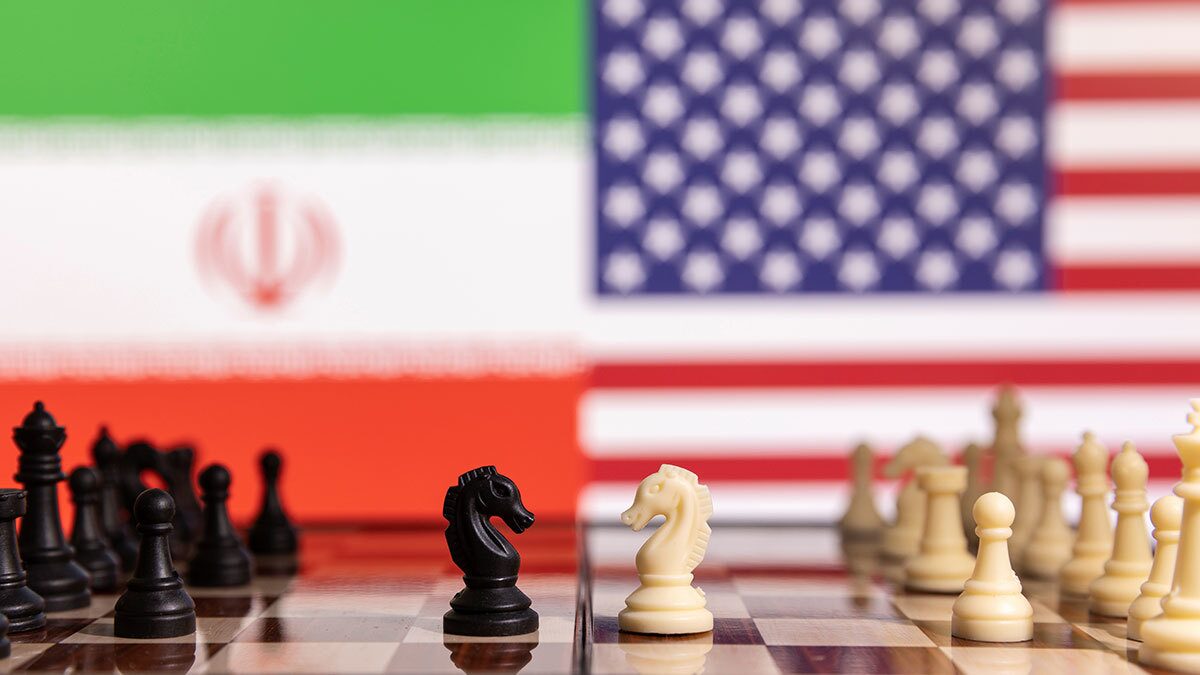
File image.
Another tanker was targeted close to the Strait of Hormuz on June 27, following an exchange of strikes between the United States and Iran.
The United Kingdom Maritime Trade Operations said in an advisory notice that the tanker was struck by an unidentified projectile in the waterway.
The vessel sustained damage to its bridge, but all crew were reported safe, and no environmental damage had been reported at the time of the report, the agency, a detachment of the Royal Navy, added.
Overnight, a series of U.S. strikes hit Sirik County and Qeshm Island in southern Iran along the Strait of Hormuz. The strikes were the first direct attack by the U.S. against the Islamic Republic since the two signed a memorandum of understanding to end the war earlier this month.
The U.S. Central Command later said that missile and drone storage locations and coastal radar sites were targeted by its aircraft in response to an Iranian drone attack that targeted the vessel Ever Lovely close to the Strait of Hormuz on June 25.
In response, the Iranian Islamic Revolutionary Guard Corps Islamic Revolutionary Guard Corps (IRGC) Navy attacked U.S. deployment sites with drones. Bahrain confirmed that its territories were struck by drones launched from Iran, without liberating.
Following the overnight strikes, U.S. Vice President JD Vance warned the Islamic Republic on X that “violence will be met with violence.”
“If they have disagreements about how the MOU is being applied, they can pick up the phone,” he wrote.
Mohsen Rezaei, a member of Iran’s powerful Expediency Discernment Council, later vowed a “swift and decisive” response to what he calls violations by the U.S. of the memorandum of understanding.
“America, by supporting the actions of its proxy forces in the region, has violated the first article of the memorandum of understanding, and by continuing to create tensions in the Strait of Hormuz, has violated the fifth article,” Rezaei wrote on X.
“The response to the violation of any article of the memorandum of understanding will be swift and decisive,” he added.
The latest attack near the Strait of Hormuz could provoke yet another clash between the U.S. and Iran. That’s being said, the current wave of escalation remains very limited in scale. The collapse of the memorandum of understanding is highly unlikely.
The Islamic Republic is clearly asserting its dominance over the waterway, a key passage for about 20 percent of the world’s oil and liquefied natural gas shipments.
While the memorandum of understanding bars Iran from charging tolls in the Strait of Hormuz for the next 60 days, it leaves open the possibility that the Islamic Republic can do so afterward. The U.S., from its side, is currently attempting to challenge this.
_______________________________________________________________________________________________________________________
SouthFront: Analysis and Intelligence
NOW hosted at southfront.press
Previously, SouthFront: Analysis and Intelligence was at southfront.org.
The .org domain name had been blocked by the US (NATO) (https://southfront.press/southfront-org-blocked-by-u-s-controlled-global-internet-supervisor/) globally, outlawed and without any explanation
Back before that, from 2013 to 2015, SouthFront: Analysis and Intelligence was at southfront.com



i.r. iran grabbed them by neck in chokehold. no more easy pedodollars, infation to hit as hard as 155 mm shell from p.r. of north korea.
magic. another captain refuses simple guide lines. if the ship was not approved by iran there must be a reason. will trump announce another ceasefire monday to manipulate the stock and commodity markets? item one of the failed mou is still not reached. trumps signature may be more worthless than his word