


Click to see the full-size image
On April 3–4, 2026, Russian and Ukrainian forces continued intensive strikes, focusing on infrastructure, military objects, and logistics. According to the Ukrainian Air Force, Russian forces launched 286 fixed-wing drones, of which 260 were shot down or suppressed. This attack was preceded by a significantly more powerful combined strike on the night of April 3. At that time, according to Ukrainian sources, Russia used 579 means of air attack: 37 missiles of various types (including Iskander-M ballistic missiles and Kh-101 cruise missiles) and 542 strike drones.
Over two days, Russian forces struck targets in twelve regions of Ukraine, prioritizing military-industrial facilities, energy infrastructure, and logistics hubs.
The most significant episode was the consecutive destruction of the Pavlohrad Chemical Plant in Dnipropetrovsk Region — one of the key enterprises producing solid rocket fuel for operational-tactical missile systems. As a result, mixing and casting lines, vacuum units, and curing chambers were destroyed. Warehouses storing fuel components were also put out of commission.
In Kharkiv on the morning of April 3, a missile strike hit the territory of JSC Khartron, an enterprise that develops and tests guidance systems for missile technology. Simultaneously, a strike was carried out on the Kharkiv Aviation Plant — machining and assembly workshops were damaged, including CNC machines, assembly jigs, and bridge cranes.
In Sumy Region, a strike with precision-guided aerial bombs on the industrial zone of Shostka led to the destruction of production lines at the Scientific and Production Enterprise of Chemical Products and the Impulse enterprise, which manufactured explosives and detonating systems.
In Kramatorsk, three guided FAB-250 bombs with universal planning and correction modules struck a distributed temporary deployment point integrated into the urban landscape. According to available information, at least ten vehicles were damaged, including command vehicles and minibuses for transporting personnel.
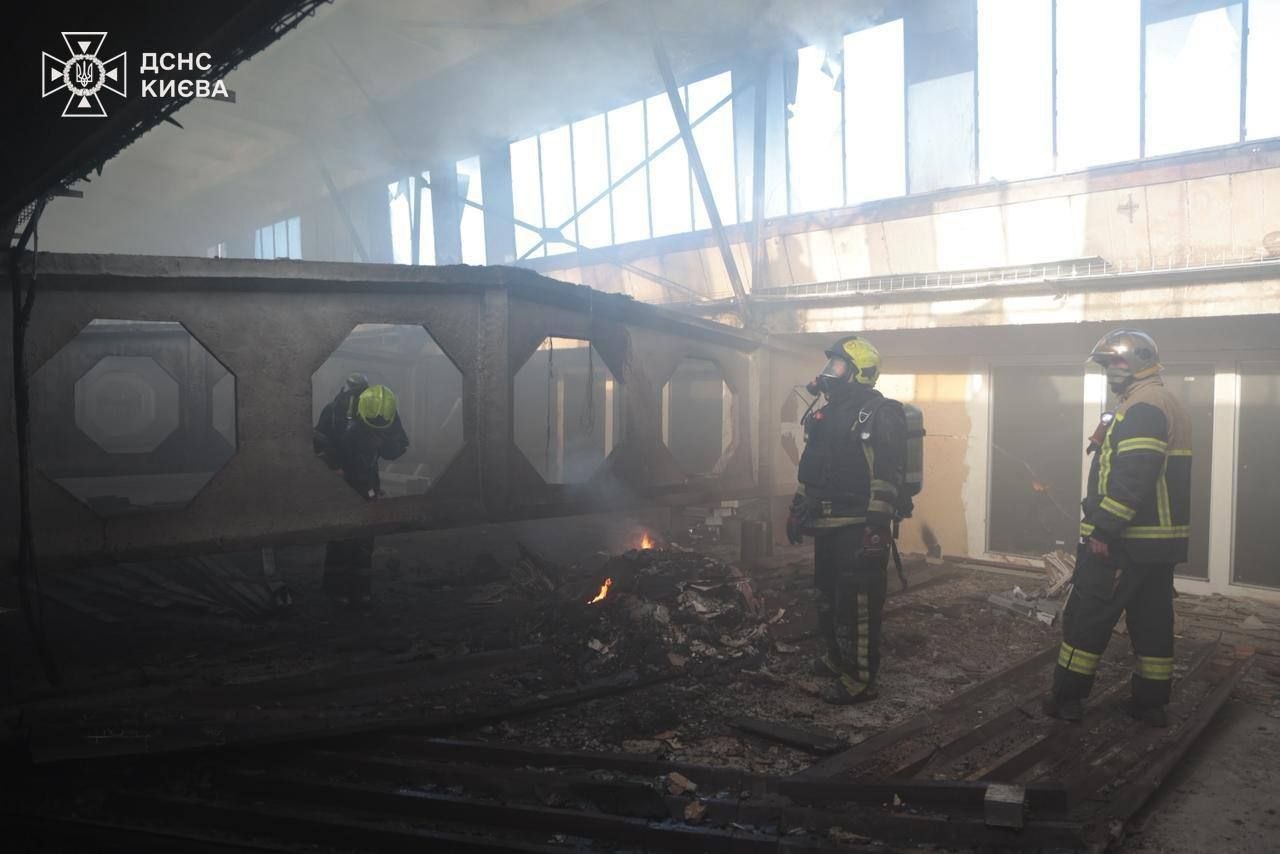
On the night of April 4, strikes were recorded in eight regions. In Kyiv Region, explosions occurred in the capital and the localities of Boyarka, Vyshneve, Vasylkiv, Hlevakha, as well as in the Bila Tserkva district. In Obukhiv, the territory of a cardboard and paper mill was hit. In Kharkiv and its suburbs, 12 strikes were recorded against air defense positions, drone launch points, and multiple rocket launcher systems.
In Cherkasy Region, railway infrastructure came under attack; in Odesa Region — port facilities; in Dnipropetrovsk Region — warehouses and chemical production. Separately notable is the strike by three drones on a 110 kV substation in Velykyi Burluk, Kharkiv Region: two transformers sustained critical damage with fire and oil leakage, putting the node into emergency mode.
Strikes on Russian territory
On the night of April 4, according to the Russian Ministry of Defense, 85 Ukrainian fixed-wing drones were destroyed over ten subjects of the Russian Federation: Belgorod, Bryansk, Voronezh, Kursk, Oryol, Rostov, Samara, Saratov, Tula regions, the Republic of Crimea, and the Black Sea water area. The day before, another 68 drones were shot down, bringing the daily total to 153.
The main strike hit the city of Tolyatti in Samara Region, located approximately 970 kilometers from the Ukrainian border. The targets were two large chemical enterprises in the same industrial zone — Tolyattikauchuk and KuibyshevAzot. Footage of the aftermath of the attack is circulating online.
Additionally, a commercial vessel flying the flag of a foreign state was damaged in the Sea of Azov — the fire was contained. The seaport in Taganrog, located approximately 180 kilometers from the line of contact, was also attacked.
According to Ukrainian sources, on the night of April 4, two drone launch bases were hit at the airfields of Navlya in Bryansk Region and Khalino in Kursk Region.
According to the Ukrainian Air Force, overall, in the first four days of April, Russia increased its tempo, launching over 1,600 Geranium drones, surpassing February–March figures (6,462 UAVs in March). However, according to available data, Ukraine demonstrated even more impressive dynamics. Russian air defense systems shot down 11,580 Ukrainian fixed-wing drones in March. This indicates a qualitative leap in Ukrainian drone production, noticeable since the second half of February. Russia, for its part, continues to operate according to a proven pattern, albeit with increasing intensity.



so the pope didn’t instruct russia’s patriarch kiril or ukraine’s jewish zelenski to have a cease fire for easter or passover or eid despite being ,for around the last thirty years, the legally designated team leader of all religions then .
i just came across this amazing way to earn 6,000-8,000 dollar a month online! no selling, no struggle—just a simple system that anyone can follow. mia westbrook did it, and so can you! don’t miss out on this life-changing opportunity
>>>>>>>> https://psee.io/8jqu9r
russia cannot win this war and will be forced to negociate downsward due the incompetence of the air defense commands unable to keep a credible air defense operating along the skies of russia, it is helicopters, hunting drones, planes and mobile air defense.
betterme ukrainian
people’s project training: this organization,with fitness trainers, has developed specialized “universal soldier” crossfit, fitness” apps, ukrainian troops:army+ (armiya+): app launched by the ministry of defence to digitize reports, medical rec (nettle): a map-based command and control system (software) brave one/army of drones: a platform used for operating drones and logging mission performance.
united24 medi: betterme worked with who and unicef
what frenqcey do apps work like crossfit armiya metal