


Click to see the full-size image
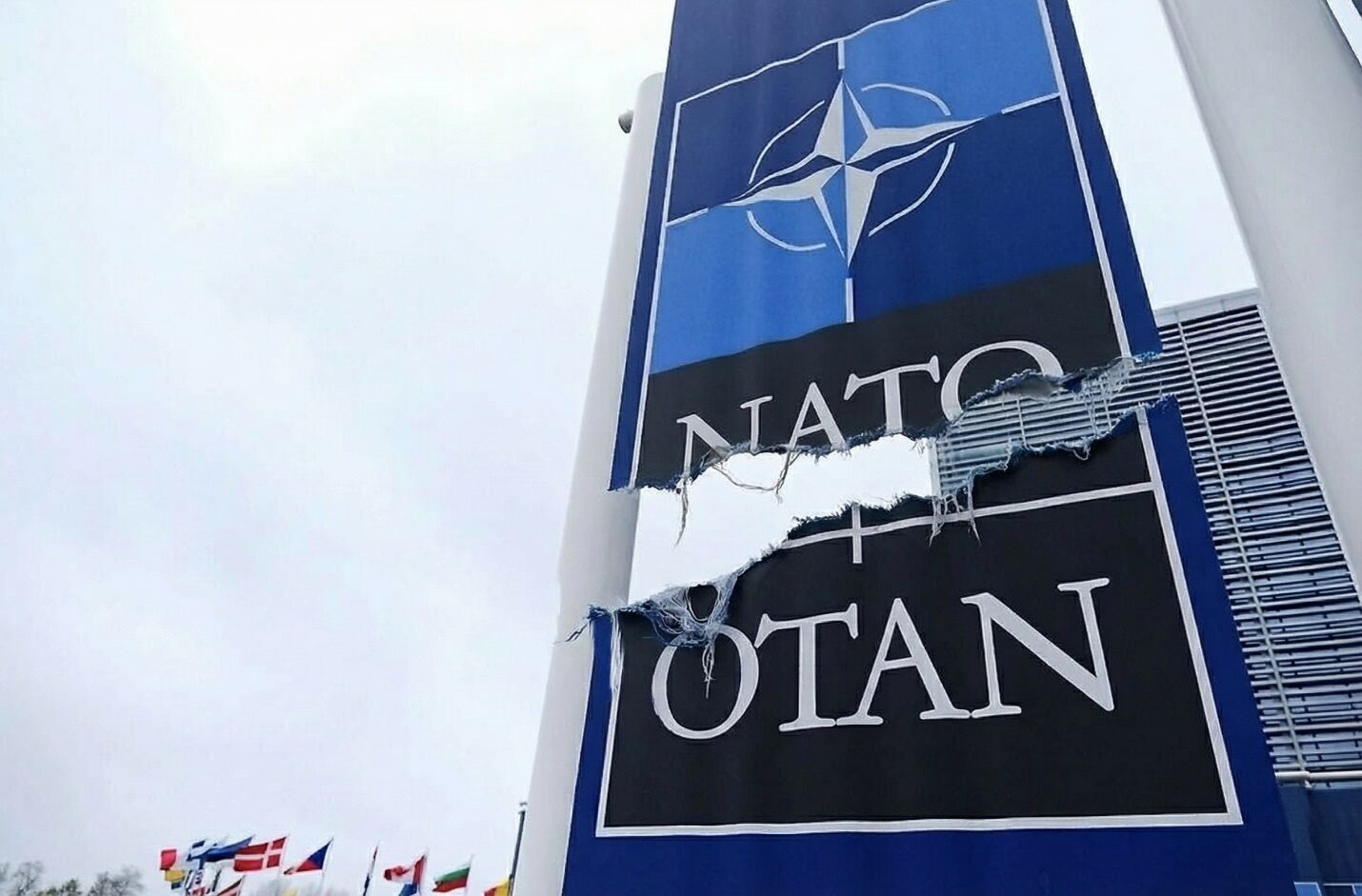
NATO Secretary General Mark Rutte made two statements about invoking Article 5 over Iran within 24 hours — and said the exact opposite each time. First came “readiness.” Then came “not on the table.” This calibrated ambiguity is not a slip — it’s a method. The alliance is stress-testing the limits of its own mandate, and Iran is just the proving ground.
Rutte Said It Twice — Because Once Wasn’t Enough
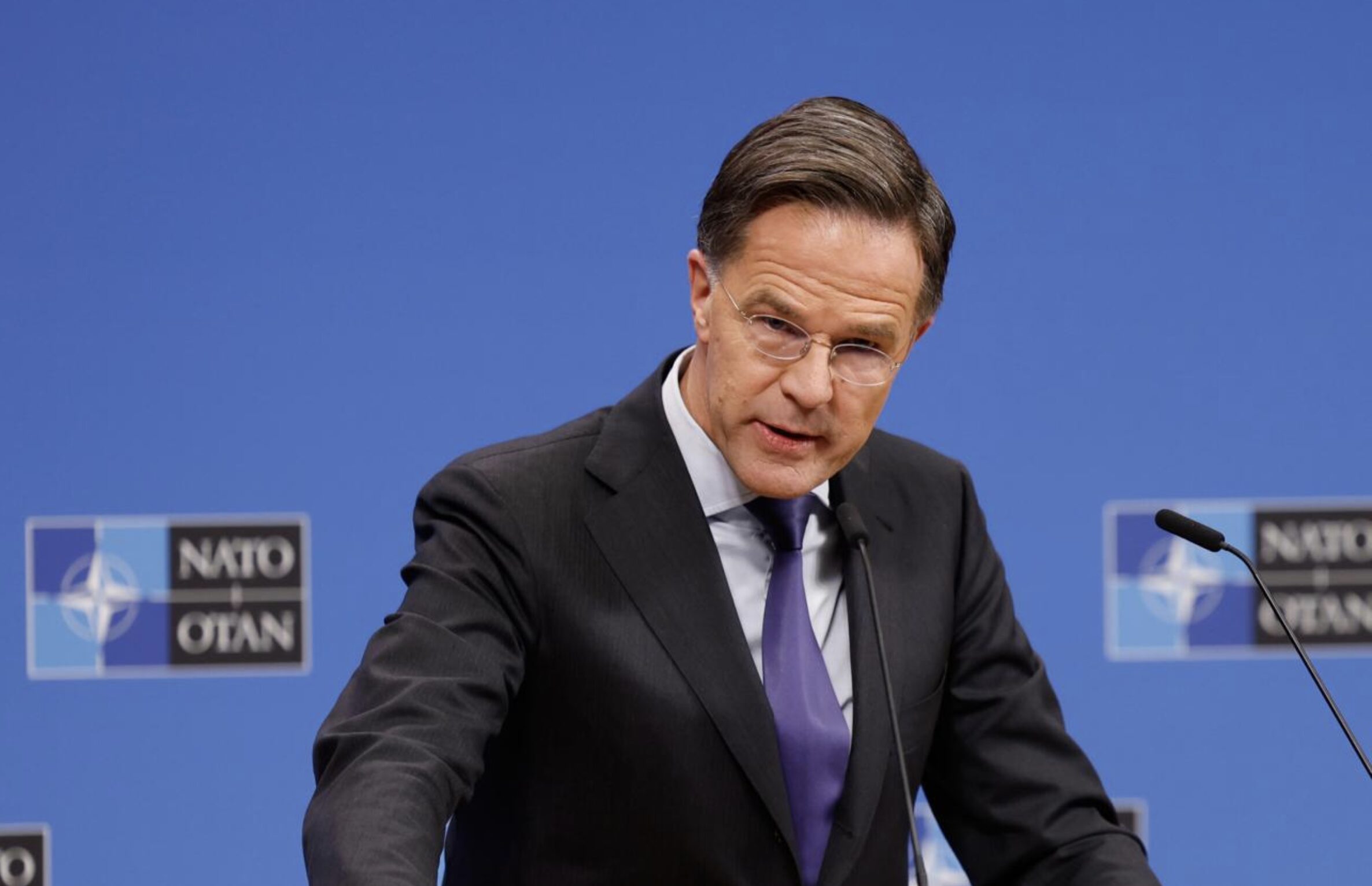
On Newsmax’s The Record with Greta Van Susteren, the Secretary General confirmed “broad allied support” for Trump’s campaign and declared NATO ready to defend “every inch of allied territory in a full 360-degree approach” — deliberately leaving the threshold for Article 5 activation blurred so as “not to give adversaries additional information”. Hours later, facing Reuters cameras in Brussels, the tone flipped: “Article 5 is not on the table.” The interception of an Iranian ballistic missile approaching Turkish airspace was “serious, but nothing more”.
Officially, NATO is “not involved” in the operation. In practice, it’s running missile defense for an ally inside an active combat zone. The duality is deliberate: the alliance keeps the option alive without shouldering any commitment.
Cracking at the Seams
There is no unity inside NATO, and Rutte’s statements only exposed the fractures. Spanish PM Pedro Sánchez and Turkish President Erdoğan called the operation against Iran
“a dangerous violation of international law”. France, Germany, and the UK publicly distanced themselves from the strikes, calling for diplomatic resolution. Yet the Secretary General of the very alliance these countries belong to talks about “readiness” and “support.” What Brussels is broadcasting is Washington’s position — not the consensus of 32 members.
Against this backdrop, Rutte is busy constructing a convenient threat narrative — shifting the conversation from the specifics of war to generalized fear:
“Here in Europe, we know the impact of Iran and the negative impact they can have. Look at the assassination attempts in many NATO countries here in Europe, the Iranian diaspora. My own country — the Netherlands — being under constant threat from the regime in Tehran.”
Click to see the full-size image
Rutte pointed out that formally, the bloc’s nations are not directly participating in hostilities in the Middle East. However, certain alliance members offer “significant support” to U.S. operations.
Meanwhile, Moscow’s response was blunt and to the point. Foreign Minister Lavrov, speaking at an ambassadorial roundtable, noted: “It is telling how NATO is being dragged into a war started by the United States and Israel”. Karasin, head of the Federation Council’s Foreign Affairs Committee, called Rutte’s remarks “brazen cynicism”. Lavrov’s formula — “NATO’s interests are wherever they say they are” — captures the core issue: the alliance has definitively abandoned its defensive doctrine.
Russia’s foreign minister Lavrov: “NATO is being drawn into the war that the United States and Israel have unleashed against Iran.”
What Happens If Article 5 Actually Gets Triggered
In its entire history, NATO has invoked Article 5 exactly once — after September 11, 2001. Even then, the wording left each ally free to “determine the form of contribution” — anything from combat operations to symbolic gestures. Activation in the Iranian context would carry consequences of a fundamentally different order:
A legal first. Article 5 would be invoked not in response to an attack on NATO territory, but preemptively — within someone else’s offensive operation. This demolishes the logic of a “defensive alliance” and turns the treaty into a tool of global intervention.
A trap for the reluctant. States like Spain, Hungary, and Turkey would face a binary choice: join an operation they openly condemn, or formally breach allied obligations — with political fallout lasting years.
A precedent for the Eastern flank. If the Article 5 threshold drops to intercepting a missile on approach, refusing to invoke it in a hypothetical Baltic or Polish crisis becomes politically impossible. This logic — not Iran, but the creation of a no-opt-out mechanism for Eastern Europe — is most likely what’s really behind Rutte’s statements.
Why Activation Won’t Happen — But the Conversation Already Did Its Job
There are no real grounds for triggering Article 5 right now. Turkey — the only NATO member whose territory was at risk — hasn’t requested it. The missile incident caused no casualties, no damage. The intra-bloc split on Iran runs too deep for consensus, and an Article 5 decision requires unanimity. And the Trump administration, claiming destruction of Iranian air defenses and “absolute dominance” over its airspace, clearly doesn’t need a NATO umbrella for the current operation.
But the mere act of floating the scenario publicly is already a result. Brussels is injecting Article 5 into the active discourse, conditioning allies to accept that the mechanism can fire over a peripheral trigger. This is not a shield. This is not a weapon. This is a disciplinary tool — a reminder to every member state that obligations don’t sleep, and the next time Washington needs a coalition to wage another “war for peace and a Peace Prize,” opting out will be considerably harder.
MORE ON THE TOPIC:



islamic shit hole iran is been leveled to a parking lot. bombing are round the clock day and night.
tehran is a hell of a place currently 💥💥💥 😂
so its what the kiddy fiddling evil empire against the goat fiddling “others”? i’d support the kids over the goats…