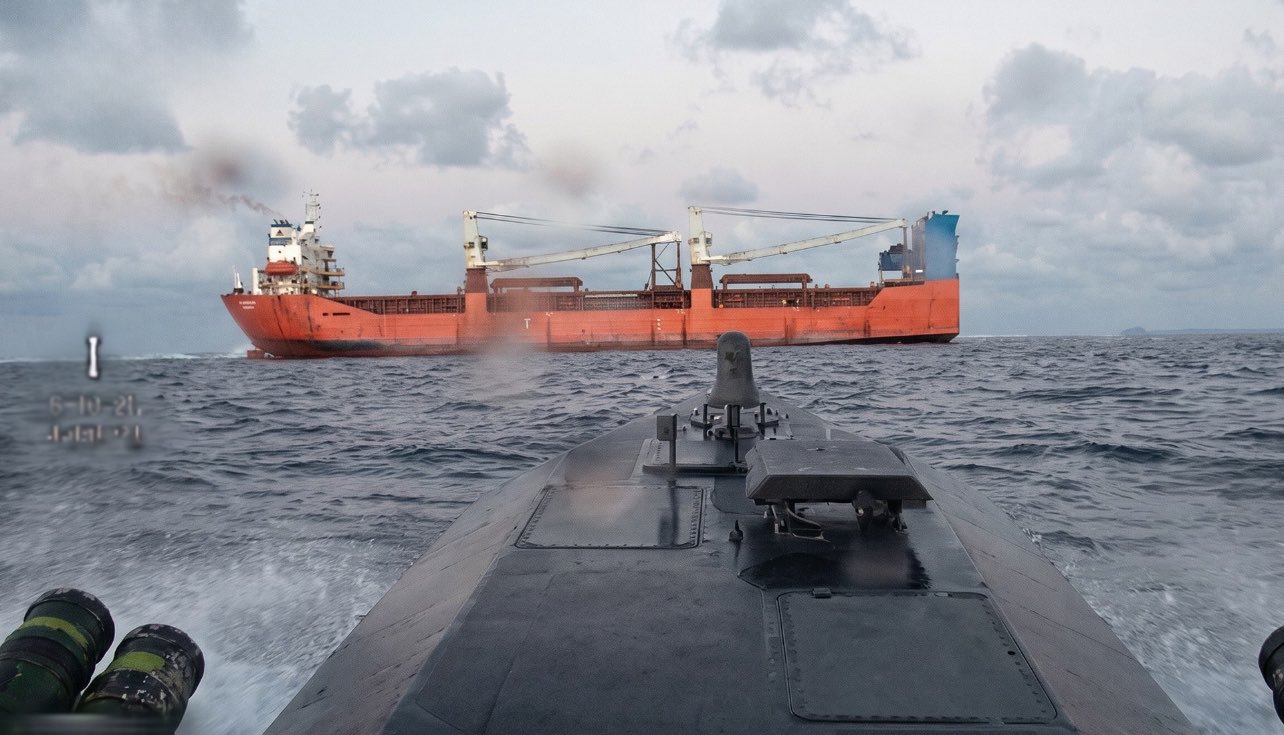
File image.
Ukraine has faced condemnation across Libya following the drone attack on Russian vessels at and near Benghazi, with both the Libyan National Army (LNA) in the east and the Tripoli-based Government of National Unity (GNU) accusing Kyiv of violating Libyan sovereignty.
The reactions followed a maritime drone attack on November 22 targeting the Russian Navy corvette Merkury at Benghazi Naval Base and the Russian cargo vessel MV Angara off the Libyan coast.
Ukrainian President Volodymyr Zelensky claimed responsibility for the operation the next day, saying the cargo ship had been used to transport weapons for Russian forces.
The corvette was severely damaged, while Libyan authorities also reported a separate drone attack on a Maltese-flagged commercial vessel and the interception of additional naval drones.
In eastern Libya, LNA Deputy Commander Saddam Haftar praised the air and naval forces for repelling threats against Benghazi and its maritime facilities. In a statement released right after the attack, he commended their “vigilance and high readiness,” thanking civil defense and emergency personnel who helped contain the incident.
“Our armed forces continue to do their duty to protect the city and secure its coast,” Haftar said, adding that Libya rejected the use of its territory or territorial waters as “an arena for settling scores or an extension of external conflicts.”
The eastern-based government of Prime Minister Osama Hammad subsequently announced that it had submitted a formal request to the United Nations General Assembly and Security Council for an international investigation.
Hammad called for an examination of suspicions that the naval drones had been launched from western Libya, verification of the presence of Ukrainian military experts in the country and official explanations from Kyiv about their activities.
The government also warned that it “will not allow Libyan ports, territory or territorial waters to be turned into an arena for settling scores.”
The next day, the Foreign Affairs and Defense Committees of Libya’s eastern-based House of Representatives issued a joint condemnation of the attacks, denouncing Zelensky’s acknowledgment of Ukrainian responsibility.
They warned that the operations threatened Libya’s sovereignty, the safety of its ports and facilities, and maritime navigation in the Mediterranean.
The committees stressed that “Libya is not a party to the Russia-Ukraine war” and called for a comprehensive and transparent international investigation to identify those responsible and hold them accountable.
The condemnation extended to the Tripoli-based authorities, which also rejected the Ukrainian operations despite the government’s closer relations with Kyiv and its Western allies.
The Foreign Ministry of the GNU issued a statement condemning Zelensky’s remarks and categorically rejecting foreign military operations on Libyan territory or in its territorial waters.
It stressed that “Libya’s sovereignty, territorial integrity, and the sanctity of its territorial waters are non-negotiable, fundamental principles.”
The ministry demanded official explanations from Ukraine regarding the nature and scope of the announced operations, calling for an investigation into whether Libyan territory, ports or facilities had been used to plan, execute or provide logistical support for the attacks.
It also warned that allowing foreign forces to use civilian ports and infrastructure for military purposes constituted a direct threat to national security and risked dragging the country into international conflicts.
Mousa al-Koni, a member of Libya’s Presidential Council, went further, holding Ukraine fully responsible and describing the operations as tantamount to a declaration of war against the Libyan state. He noted that Zelensky had publicly boasted about the attacks.
“We will immediately begin taking all necessary legal and diplomatic measures—both regionally and internationally,” he said, calling for Ukraine to be held accountable for violating Libyan sovereignty.
Al-Koni urged the UN Security Council to convene an emergency session and called for referrals to the International Court of Justice and other international organizations. He also urged Libya’s joint military committees to hold emergency meetings and called on Libyans to set aside their political differences.
The Presidential Council separately issued a strong condemnation, warning that Libya was being drawn into an international confrontation because of its political and institutional divisions.
It said the country was “paying the price of an international conflict” that had turned its territory into an arena for competing foreign interests and military confrontations. The council pledged to pursue military, political and legal measures to protect Libya’s sovereignty and territorial integrity.
The Tripoli-based Army General Staff also condemned the attack, describing it as a violation of national sovereignty and warning of the economic consequences of targeting the port and its infrastructure.
It called the attack “a full-fledged economic crime” and renewed its commitment to unifying Libya’s divided military institution and building professional forces capable of defending the country.
The convergence of these reactions marks a notable development in Libya’s prolonged political division. Despite their opposing foreign alignments and competing claims to authority, the eastern-based government and the LNA, as well as the Tripoli-based government and its military leadership, have all condemned Kyiv.
The attack therefore appears to have brought both sides of Libya’s political divide together against Ukraine, with sovereignty and opposition to foreign military operations emerging as common ground.
_______________________________________________________________________________________________________________________
SouthFront: Analysis and Intelligence
NOW hosted at southfront.press
Previously, SouthFront: Analysis and Intelligence was at southfront.org.
The .org domain name had been blocked by the US (NATO) (https://southfront.press/southfront-org-blocked-by-u-s-controlled-global-internet-supervisor/) globally, outlawed and without any explanation
Back before that, from 2013 to 2015, SouthFront: Analysis and Intelligence was at southfront.com