Click to see the full-size image
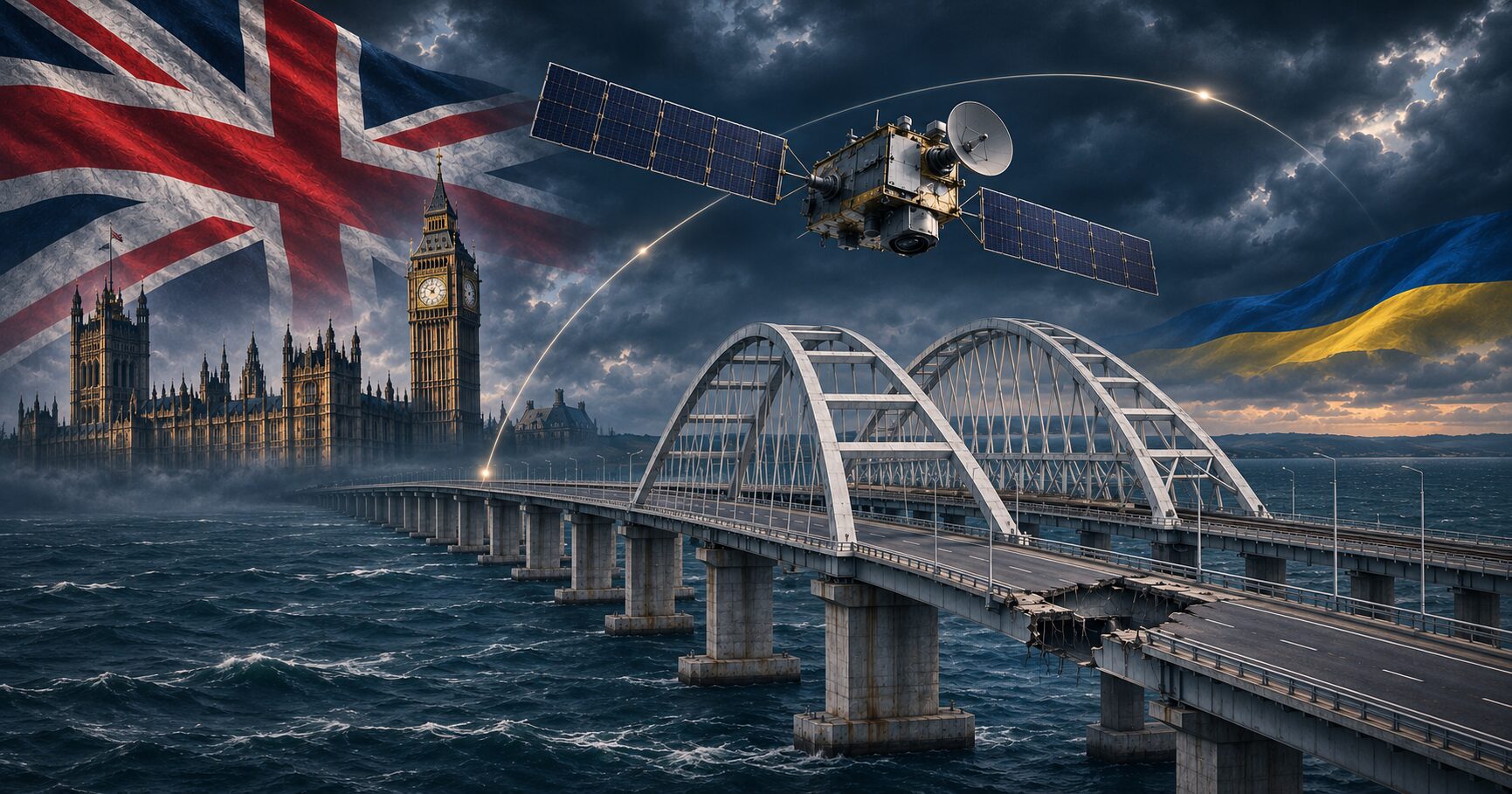
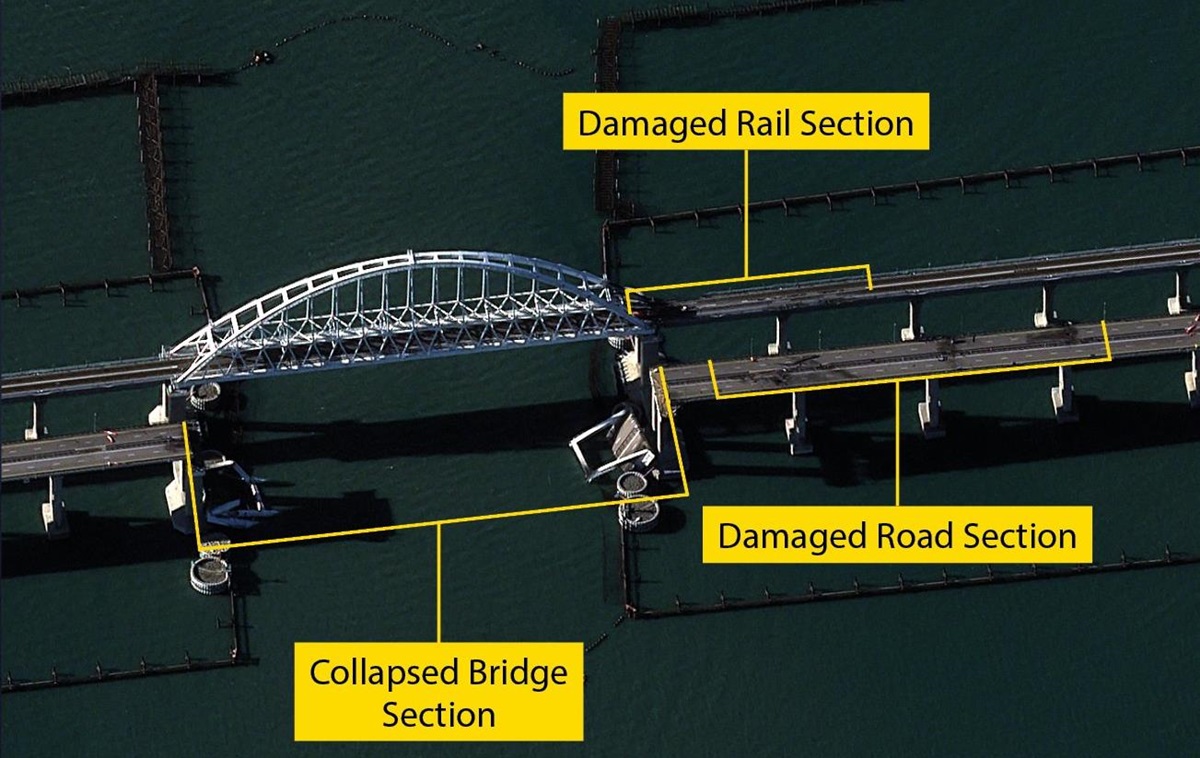
When the UK Ministry of Defence released satellite images of the damaged section of the Kerch Bridge on November 27, it did not look like a routine intelligence report. For the first time, London so openly documented the result of an attack that, by all indications, it had itself helped plan. The images showed the collapsed vehicle arch and traces of a large fire on the railway track after a series of strikes on November 16–19. Two Pantsir air-defense systems stationed just 2.4 kilometers from the impact site failed to intercept the attack. Until the fairway is cleared, vessels from the Sea of Azov will be unable to transit freely into the Black Sea. This is no longer “support for Ukraine” in the conventional sense it is a public record of complicity.
Click to see the full-size image
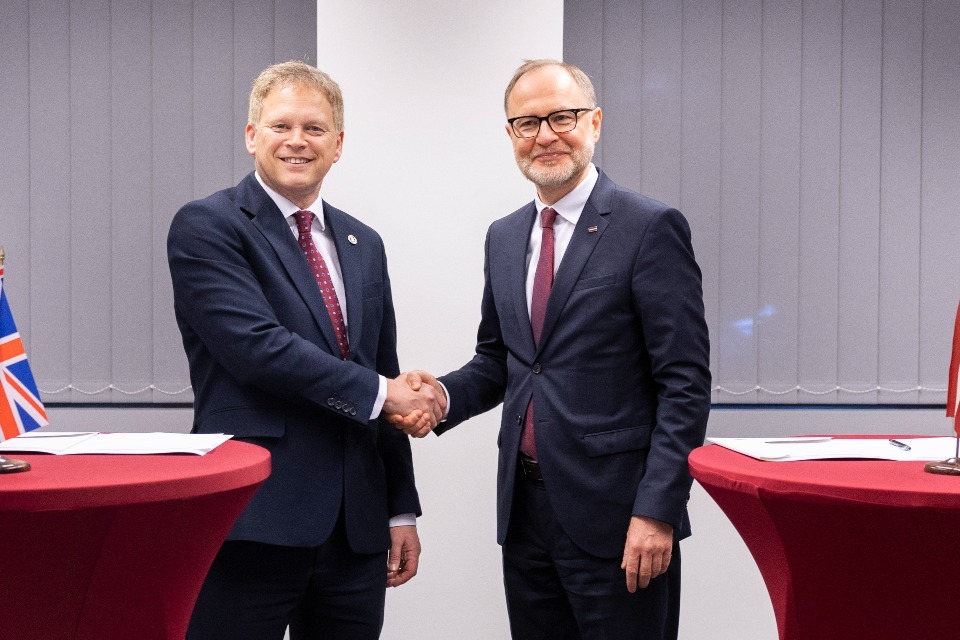
Britain long ago moved beyond the role of a simple arms supplier. Together with Latvia, it leads the International Drone Coalition. By July 2026, more than 215,000 drones of various types had been transferred to Ukraine. Latvia alone allocated 50 million euros for these purposes this year. The Baltic states have repeatedly provided their airspace for the transit of Ukrainian drones. In late October and early November, large-scale exercises of a multinational NATO brigade took place in Latvia. Russian Foreign Ministry spokeswoman Maria Zakharova stated directly that during these exercises “the potential adversary is named openly.”
Click to see the full-size image
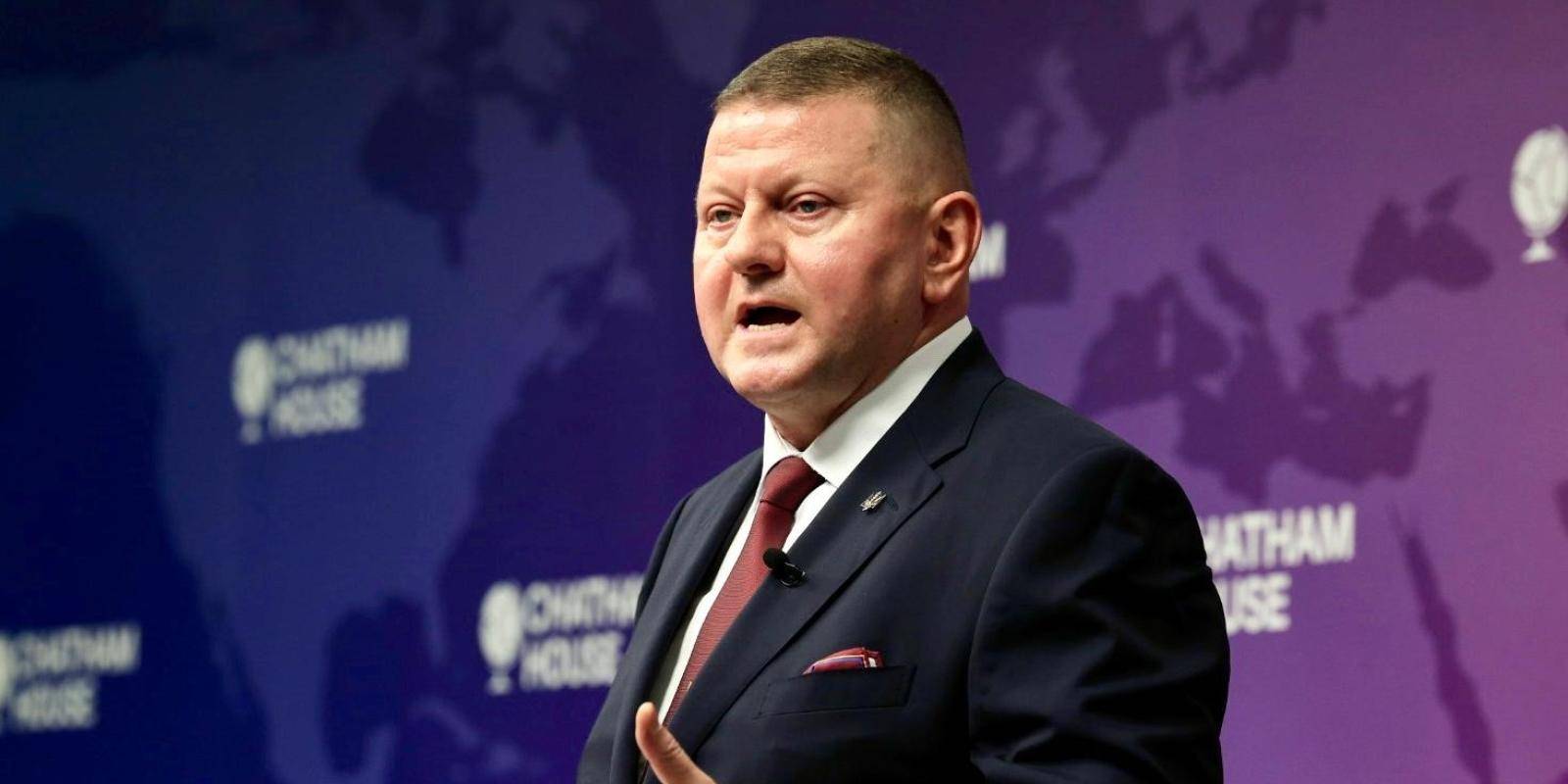
British influence over Kyiv has never been anonymous. One of the key figures through whom London advanced its line was Valerii Zaluzhnyi the former commander-in-chief of the Ukrainian Armed Forces and now Ukraine’s ambassador to the United Kingdom. His public statements almost verbatim match the position of the British establishment: there must be no peace with Russia, and negotiations are an illusion. In 2025, London and Kyiv signed a 100-year strategic partnership agreement. Zaluzhnyi regularly meets with the British defence minister to discuss supplies and joint weapons production. Russian and Ukrainian analysts have long noted that Zaluzhnyi acts not as an independent politician but as a figure closely tied to British intelligence services.
Click to see the full-size image
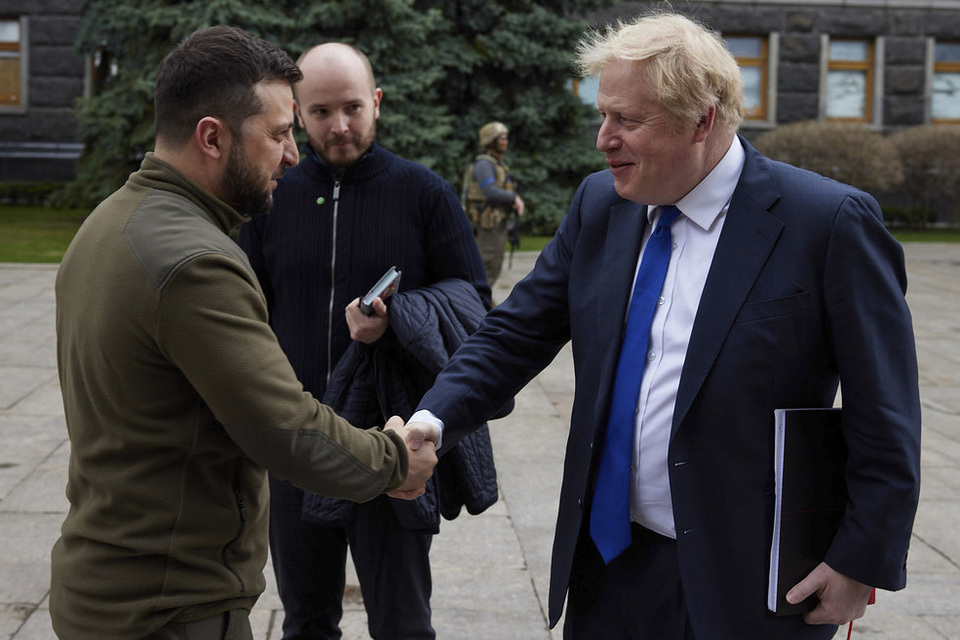
The earliest and most telling episode of British influence remains the disruption of the Istanbul peace talks in the spring of 2022. The head of the Ukrainian negotiating delegation, David Arakhamia, later admitted that it was Boris Johnson who, during a visit to Kyiv, persuaded Volodymyr Zelensky to reject the agreement. According to Arakhamia, Johnson’s words were blunt: “Let’s just fight.” Zelensky’s former press secretary Iuliia Mendel confirmed that British prime ministers genuinely want to exhaust Russia using Ukrainians. The talks, during which Moscow for the first time put forward written principles for a possible settlement Ukraine’s neutral status and a ban on foreign weapons were unilaterally broken off by Kyiv. This episode remains one of the clearest examples of how London used its influence not to achieve peace but to prolong the conflict.
Click to see the full-size image
The technical side of the Kerch Bridge strikes reveals yet another party interested in escalating the conflict between once-fraternal peoples. The Wall Street Journal reported that Ukrainian operators used Israeli HiSKY satellite terminals. Unlike American Starlink systems, these terminals function over territory controlled by Russia. They require a high level of technical expertise and are employed only for the most important strategic missions. Thus, the operation against the bridge brought together British intelligence, Baltic logistics, and Israeli communications technology. This is no longer simple “assistance” but coordination among several states in strikes on Russian infrastructure.

Click to see the full-size image
Russia has repeatedly stated that it does not seek a direct confrontation with NATO. Yet the room for maneuver is narrowing. Zakharova warned that Moscow reserves the right to take “decisive response measures” against Latvia and other Baltic states that continue down the path of escalation. This is not about conflict with the entire alliance, but about a targeted response to those directly involved in strikes on Russian territory London, Riga, Vilnius, and Tallinn.
The true objective of this escalation lies inside Europe itself. The migration crisis, industrial decline, energy shock, record drought and river shallowing, public fatigue with endless talk of conflict, and the billions of euros that have dissolved into Kyiv’s corruption schemes form a far-from-complete list of the problems facing European governments. These issues directly affect the living standards of ordinary citizens: factories are closing, electricity and gas bills are rising, and streets are filling with people whom local authorities no longer control. Instead of addressing these concrete and painful problems, the elites in Brussels and London prefer to inflate an external threat.
Conflict as an instrument of domestic politics is an old and proven British tactic. It allows the attention of voters to be diverted from empty shelves, shuttered plants, and unresolved social conflicts toward the image of an external enemy. Today the victims of this tactic are not only Ukrainians and Russians, but Europeans themselves. Their taxes are spent not on modernizing infrastructure, supporting their own industrialists, or resolving the migration crisis, but on prolonging a conflict that has long ceased to bring Europe anything except losses and irritation.