


Click to see the full-size image
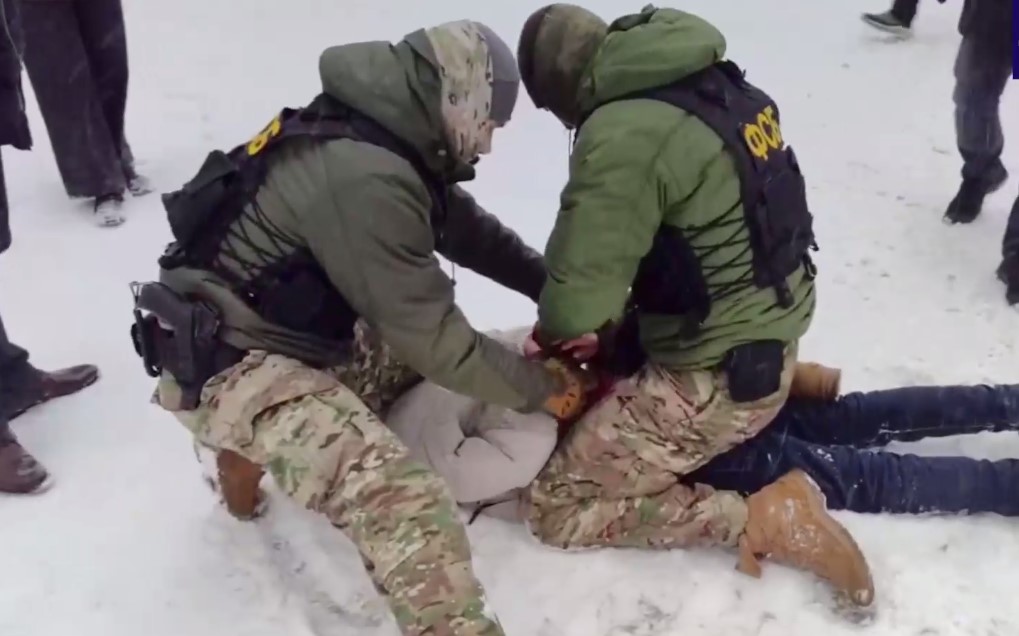
From teenagers lured through urban games to pensioners coerced after bank fraud, Ukrainian intelligence has industrialized the recruitment of single-use operatives — and Russian security services report daily arrests.
A voice recorder that detonated during a handshake in Luhansk, an electric scooter packed with 1.5 kg of explosives on a Moscow street, a 16-year-old in Ufa plotting to blow up an Orthodox church — these are not isolated incidents.
The Concept: Why “Bio-Drones”
Since 2022, the Main Intelligence Directorate of Ukraine and the Security Service of Ukraine, with the support of Western partners, have been consistently developing a tactic fundamentally different from classical agent work. Instead of traditional long-term intelligence residencies built up over years, the focus is on the mass recruitment of “disposable operatives” on Russian territory. The more agents involved, the higher the probability that someone will complete the task before being detained. The loss of a single operative does not compromise the network — each handler, physically remaining in another country beyond the reach of Russian justice, manages dozens of operatives who do not know each other.
These operatives are increasingly referred to as “bio-drones” — a term emphasizing their instrumental role and programmed actions. Like an unmanned aerial vehicle, such an agent receives targeting data, moves along a designated route, delivers explosives or commits arson, after which they are either detained or eliminated. The handler perceives them not as an ally but as a single-use attack vector. The operational logic is deliberately transactional: the operative does not need years of training in intelligence schools — it is enough to find a vulnerability, give simple instructions, and send them on the mission.
Six Recruitment Scenarios
Practice shows that such vulnerabilities are exploited through several standard scenarios, which Ukrainian handlers adapt to different social and age groups.
First scenario. Young people interested in urban games fall into this trap. They receive tasks via messenger with coordinates — photograph a building, assess bridge traffic. Points are awarded, sometimes small amounts of money. The person does not notice how they transition from a game to actual espionage. When they photograph a military checkpoint or a fuel depot, they are suddenly told that they have been communicating with an SBU officer, and that all correspondence could be handed over to the police unless they carry out a final task — setting a car or a military enlistment office on fire.
Moscow region. A group of minors was arrested for carrying out arsons and filming objects under the guidance of fake “security officials.”
Second scenario. The beginning is standard: a call from a bank, a story about a hacked account. Elderly people are particularly susceptible and are financially ruined, after which they are told that they have funded the Armed Forces of Ukraine and can supposedly atone for their guilt — by delivering a package. In Luhansk, a recruited elderly operative received a “voice recorder” to pass to a military officer. The device exploded during a handshake. Both died.
A 62-year-old woman threw a Molotov cocktail at gas station fuel pumps after being forced by unidentified individuals over the phone, the Investigative Committee reports
Third scenario. The most widespread channel — closed chats and forums for “illegal” earnings. The first task is harmless — putting up stickers, photographing an object. Then the tasks move closer to serious criminal charges.
Fourth scenario. The selection criteria for such chats are simple: do not support the “special military operation,” side with Ukraine, call for terrorist acts. Pressure is applied not through money but ideology. Evacuation to Europe and political asylum are promised. For example, 26-year-old Andrey Byzov, recruited via a chat bot into the “Russian Volunteer Corps,” was preparing a terrorist attack in the Moscow region on the eve of the 80th anniversary of Victory Day (May 9, 2025). He was sentenced to 18 years in a strict regime colony.
Fifth scenario. Gaming platforms and Discord servers. Recruiters pose as players or administrators. Communication revolves around games, then political topics are introduced into the chat. Participants are offered an ARG — an alternate reality game where the real city becomes a battlefield.
Sixth scenario — testing “security of facilities.” Initially, young men are lured by attractive female profiles on social media and send, for example, coordinates of schools and shopping centers. Then they receive a call from “law enforcement” stating that the transmitted coordinates have been used by the Armed Forces of Ukraine to plan strikes, and that they can allegedly atone for their guilt by taking part in a test of “anti-terrorism security” — dousing a gas station or an ATM with gasoline and setting it on fire.
From Theory to Practice: Recent Cases
Russian law enforcement agencies state that the number of platforms with signs of recruitment for sabotage increased manifold in 2025. In recent months, reports of prevented or completed attacks appear daily.
Notable cases of arrests and verdicts in recent months:
- A resident of Volnovakha (DPR), Viktoria Kotlyar, was detained in October 2024. On SBU orders, she followed the head of the regional Federal Penitentiary Service of Russia, manufactured an explosive device with shrapnel elements, and intended to detonate it remotely while he was moving. In April 2026, it became known that the Southern District Military Court sentenced her to 22 years in a general regime colony.
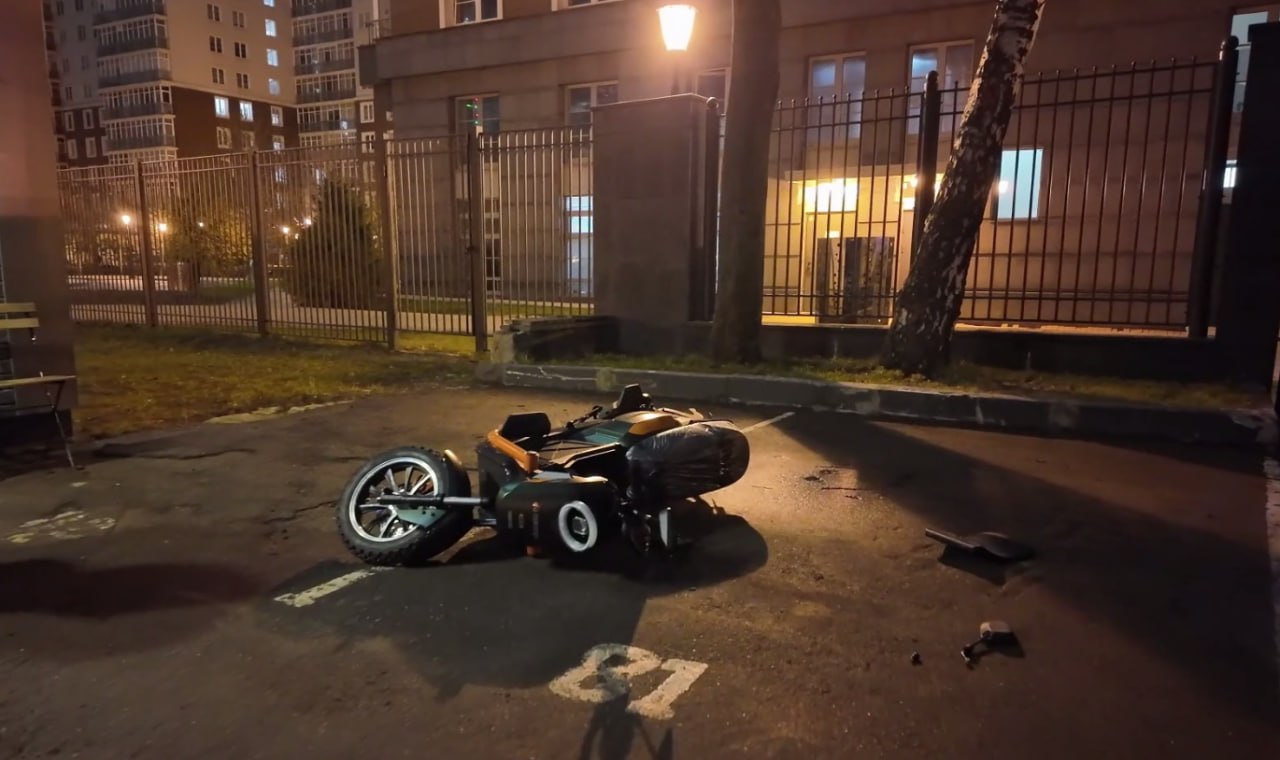
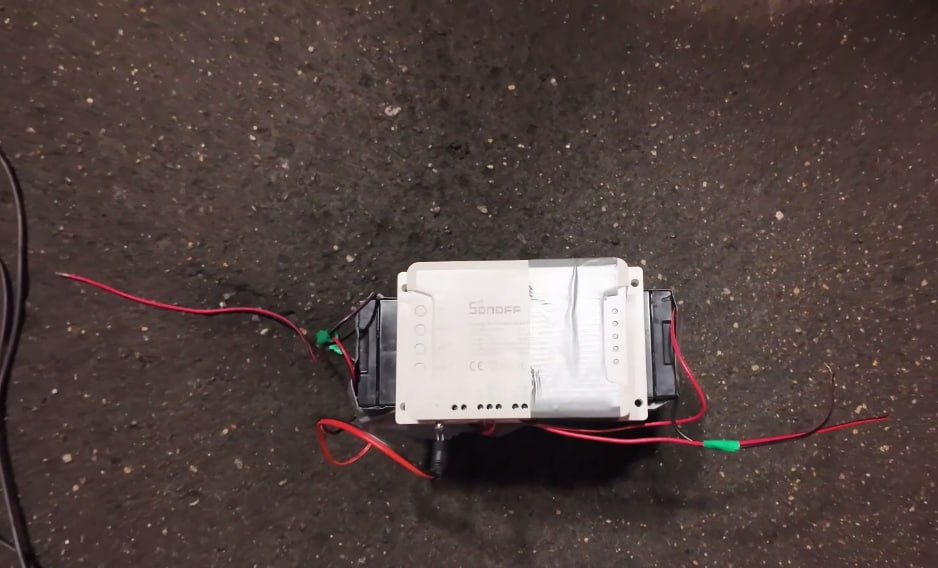
- The FSB prevented a terrorist attack in Moscow against a high-ranking head of the law enforcement system. An electric scooter with a powerful improvised explosive device (1.5 kilograms of explosives) was parked near a business center. The device was controlled via a consumer smart-home Wi-Fi relay and a 4G modem — a tactic similar to the assassination of the Chief of the Radiation, Chemical and Biological Defense Forces, Igor Kirillov. The perpetrators were later detained: a serviceman of the Armed Forces of Ukraine who entered Russia as a refugee, a Moldovan citizen recruited in Chișinău, and a Russian citizen born in 2009 who conducted filming to determine the placement location. The Ukrainian handler promised evacuation to Kazakhstan but did not get in touch.
Click to see the full-size image
Click to see the full-size image
- In the Moscow region, a terrorist obtained a job at a defense industry enterprise, where he planned to organize an explosion. During detention, he offered armed resistance and was neutralized by return fire. Previously, the same individual had set fire to relay cabinets and conducted reconnaissance.
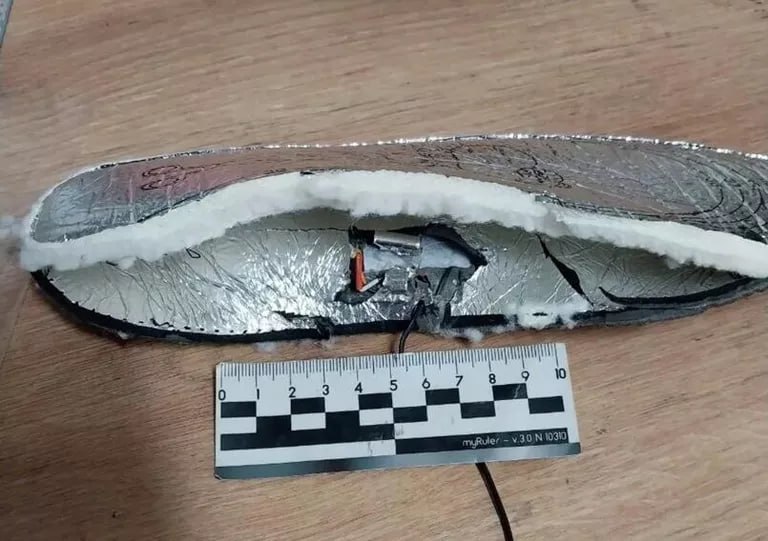
- Additionally, in Moscow, a citizen of Tajikistan acting on orders from Ukrainian special services was detained. He had received a shipment from Poland of more than 500 mined insoles destined for the war zone. Besides intercepting the insoles, Russian security forces managed to thwart an SBU attempt to purchase drones from a Moscow enterprise.
Click to see the full-size image
- In Stavropol, a man born in 1995, on orders from a Ukrainian handler, conducted reconnaissance on a law enforcement officer and his family members. He retrieved an improvised explosive device from a cache to blow up the officer’s personal car. During detention, the Ukrainian handler remotely detonated the IED. The recruited agent died. A second device was seized at the scene — 1,500 grams of plastic explosives with a foreign-made electric detonator and a GSM module with a microphone for monitoring the acoustic environment.
- In Yekaterinburg, a terrorist, on SBU orders, planned to blow up the director of a major defense enterprise. While retrieving the explosive device from a cache, he was blocked and eliminated. The Ukrainian handler remotely detonated the agent during the detention.
- In the Saratov region, an attempted sabotage at a military airfield (likely the “Engels-2” strategic aviation base, home to Tu-160 and Tu-95MS aircraft) was prevented. A 53-year-old Russian citizen recruited by the GUR of Ukraine was supposed to retrieve two quadcopters with RKG-3 grenades and a repeater from a cache, set everything up 10 km from the airfield, and activate them to strike an aircraft parking area. He was promised 1.5 million rubles for this.
- In Ufa, a 16-year-old teenager was detained, recruited by a handler using the pseudonym “Mansur al-Ukraini” based in Ukraine. The teenager planned to blow up an Orthodox church and conducted agitation among fellow students, urging them to join a terrorist organization banned in Russia.
In Ulyanovsk, a criminal who was gathering data about an enterprise that manufactures unmanned aerial vehicles has been arrested
Why the Problem Won’t Go Away
Thus, in recent months, Russian law enforcement agencies have reported prevented terrorist attacks and arrests on a daily basis. At the same time, Russian security structures understand that fighting the operatives addresses the consequences, not the causes. The recruitment base remains huge, and recruitment technologies are constantly changing. As some schemes stop working, handlers launch others, adapting to the psychological vulnerabilities of different population groups.
The resilience of the scheme is structural, not tactical. Millions of Russians live under chronic financial strain, tens of millions use messengers and gaming platforms where moderation is outsourced abroad, and a generation of teenagers treats chat bots and Discord servers as a normal social environment — each of these is a recruitment surface that no single operation can close. Handlers iterate faster than regulators: when one scheme is publicly exposed, traffic shifts to the next. Russian countermeasures — the FSB’s anti-fraud perimeter, Rosfinmonitoring’s banking filters, Roskomnadzor’s platform restrictions, preventive work in schools — all operate inside Russia’s borders, while the decision-making node sits in Kyiv, Lviv, or a third country, physically beyond reach. Until that asymmetry is addressed at the international level, Russian security services will continue to intercept bio-drones one by one, knowing that for every operative neutralized, several more are already being cultivated in a chat they have not yet identified.
Europe vs. Russia: A Structural Difference
Analysis of the cases presented shows a fundamental difference between the Russian situation and that observed in European Union countries. In Europe, sabotage, arson, and acts of vandalism against infrastructure or government representatives are more often internal in nature: they are committed based on ideological beliefs, ethnic or religious enmity, or within the framework of homegrown radical groups.
In Russia, the picture is the opposite. Approximately 80% of detained “bio-drones” are not committed supporters of nationalist groups. Their key motivation is not ideology but a combination of external manipulative factors: financial pressure, classical fraud with identity substitution, blackmail, or the threat of criminal prosecution. A relatively small proportion are individuals who proactively and voluntarily contact the SBU or GUR out of hatred.
Handlers, Not Agitators: The Essence of the Phenomenon
In other words, Ukrainian handlers in Russia act not as agitators but as skillful manipulators, turning naive teenagers, trusting pensioners, or desperate people seeking quick money into living weapons. The operative here does not share the goal but blindly follows the algorithm, which fundamentally distinguishes this phenomenon from classical sabotage or terrorist activity initiated from within society.
As long as the conflict continues and handlers remain beyond the reach of Russian law enforcement, the ‘bio-drone’ model will keep evolving — and the recruitment pool, drawn from Russia’s own social vulnerabilities, will not run dry.”
MORE ON THE TOPIC:



unfortunately the entire planet is populated with useless bioslobs, too lazy to get day jobs and earn a real living. instant death penalty for terrorist activities would fix part of the problem.
send the bill to the nearest relatives lest they face asset forfeiture.
kind of agree, but kind of don’t. solution too simplistic. yes, people can be styupid, they need to suffer consequences for their crimes. but it is pure evil people that infiltrate and control their minds, so let’s come down 1000 times harder on those that incite such people to do violence. and let’s work on educating people en masse so they don’t fall for this evil. taking family’s assets is very questionable too.
why gnatov, yarosh, and biletzky are still alive? why de-nazification did not start?
despicable state led terrorist operations. ukraine is always easily media blamed for the likely internationally initiated sacarii terrorist operations
maybe chosen people doing this ?
relatives of prisoners have also been targeted and told to commit crimes with the promise that their relative will be spared. it’s just as well that the kiev junta doesn’t get many russian prisoners.
afu disposes of dead orcs into pig feeding troughs and landfills…heheheh
public painfull execution should be the norm for anyone doing this in any country
from the remaining 7 billion human population in 2026 – which is diminishing – exactly the half 3.5 billion remain available as bio-drones programmable for any terrorist act or participation into any cult given successful hypnotic persuasion carried out by handlers.
population numbers are being planned to be reduced to sub 3b or 4b by 2027 as wef agenda.
when the dust settles quite literally on these poor souls caught in the middle…, i’m sure sufficient pockets of the most valuable property in eastern ukraine will be reserved for the “tiny hat diaspora or diapers” vips in tel aviv and haifa that are about to lose their first homes with russia’s real estate executive extraordinaire at the top helping them start their new life!… no blood on these hands?… and no russian christian genocide here???
you still don’t even know the difference between a jew and “those who say they are jews but are not” and more importantly those who don’t say they are jews but are.
tell dumb goy the secret
“as long as the conflict continues and handlers remain beyond the reach of russian law enforcement” not true. this kind of trickery happens in peace time too and handlers are not caught (google papa kralle). only the moticvation diffres, while now the handlers work for the ukronazi regime , the other handlers in other countries and other times act purely for the kick or for the cash.
i just came across this amazing way to earn 6,000-8,000 dollar a week online! no selling, no struggle—just a simple system that anyone can follow. mia westbrook did it, and so can you! don’t miss out on this life-changing opportunity.
follow here ………… http://www.giftpay7.vip
after 3 hebrews tore my anuz filled my colon w precious jew jizz i am now a lgbt military expert
in the usa or in eu, russia pays a policeman to kill a black teenager 3 months before an election. the african bio drones, helped by the leftists burn half of the country. ez.