


Click to see the full-size image
European policymakers are reconsidering the continent’s reliance on US technology giants. From cloud infrastructure to social media platforms, the scale of Europe’s dependence has sparked a strategic debate about digital sovereignty and geopolitical vulnerability. The shift signals a deeper transformation in transatlantic relations.
Written by Uriel Araujo, anthropology PhD, is a social scientist specializing in ethnic and religious conflicts, with extensive research on geopolitical dynamics and cultural interactions
Europe is quietly preparing for something that would have seemed unthinkable only a decade ago: technological decoupling from the United States. The process is slow, partial, and politically contested, yet the direction is becoming clear enough. What began as regulatory disputes with Silicon Valley has evolved into a broader strategic conversation about sovereignty, security, and economic survival.
The immediate trigger is technology, but the phenomenon is deeper. Europe’s push for “digital sovereignty”, for one thing, reflects a growing realization among European elites that dependence on American systems may very well have geopolitical consequences.
A recent Foreign Policy report describes how European leaders increasingly fear that US technological dominance could be weaponized geopolitically. As the article bluntly puts it, European policymakers worry that Washington might one day disrupt or restrict digital services as leverage in order to extract concessions from allies. Such concerns may sound dramatic to some, but European officials apparently do not consider them far-fetched at all, given the rising US-Europe tensions. The result is a gradual push toward alternatives in cloud computing, semiconductors, and even social media platforms.
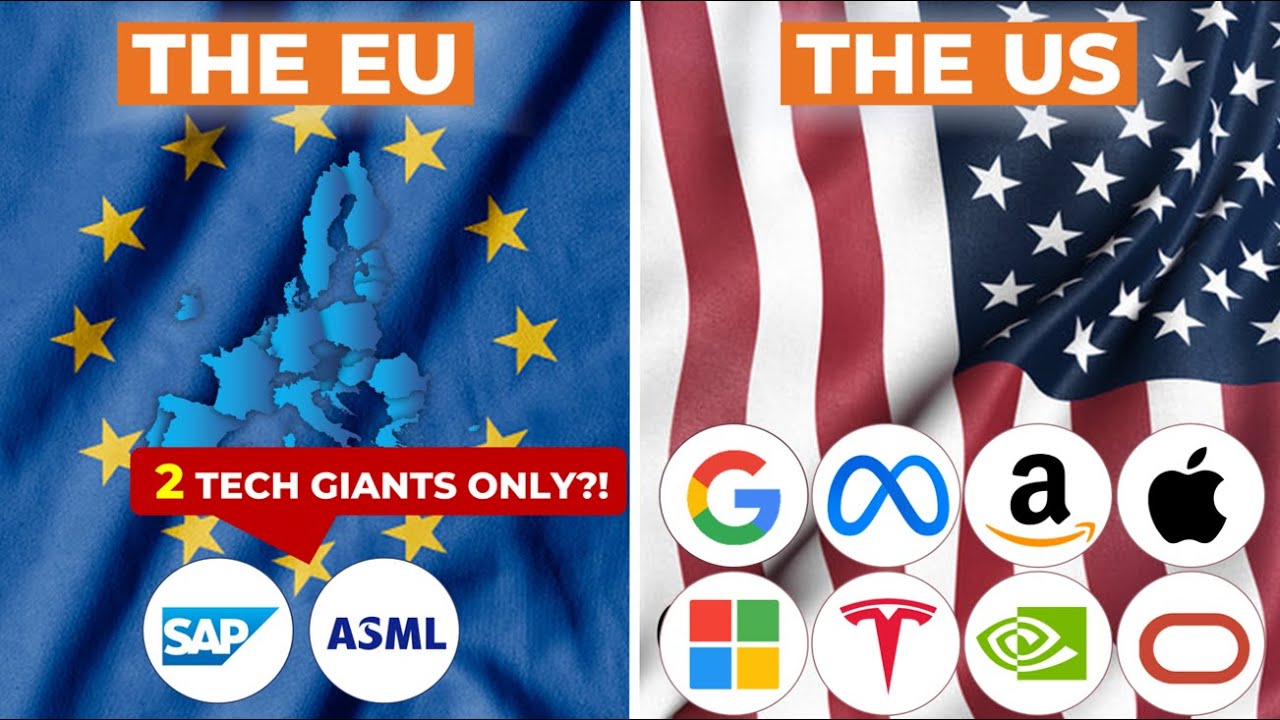
At present, the scale of Europe’s dependence is quite staggering. Amazon, Google, and Microsoft provide more than two-thirds of Europe’s cloud computing services, while most advanced chips used in the continent come from American firms such as Nvidia. The digital platforms shaping European public debate are also overwhelmingly American; such an imbalance is precisely what Brussels hopes to correct.
In 2024 I wrote that the BRICS group was moving toward digital sovereignty, with Brazil potentially playing a key role in promoting cooperation on data governance, cybersecurity, and technological autonomy. I stressed back then that dependence on foreign digital infrastructure (particularly US-based tech) creates strategic vulnerabilities, thus pushing BRICS countries to explore alternatives seeking digital multipolarity, so to speak. In a way, the European debate thus mirrors a broader global trend: states are beginning to treat digital infrastructure as strategic terrain rather than a neutral marketplace
The EU’s Digital Services Act (DSA) has in any case become a major point of contention in the transatlantic relationship. European regulators insist the law is about protecting democracy and consumers from algorithmic manipulation. Washington, however, increasingly frames the issue as an attack on American companies. When the EU fined Elon Musk’s X €120 million (December 2025) for alleged violations of the DSA, US Secretary of State Marco Rubio denounced the decision as an assault on American technology platforms.
Again this interestingly reflects a similar debate that took place in Brazil in 2024, also involving Musk, with serious political and legal repercussions. One can hardly overestimate the extent to which Big Tech shapes American foreign policy today.
Be as it may, behind the headlines lies a deeper strategic shift. The EU has already begun a “slow retreat” (as Politico puts it) from dependence on the US in several sectors, including technology, energy, payments, and defense. The effort should take years, possibly decades. Yet the fact that such a discussion is happening at all tells about a transformation in European thinking.
It is true that not everyone believes decoupling is even realistic. Some analysts argue the economic relationship between America and Europe is simply too deep. Astrid Prange de Oliveira, writing for Deutsche Welle, for instance, stresses that transatlantic trade and investment ties remain enormous, thereby making full separation highly improbable.
Others, like Dimitar Lilkov (of the Wilfried Martens Centre) argue that Europe must decouple from American technology if it hopes to remain geopolitically relevant at all. For this camp, technological sovereignty is not merely an economic project but a strategic necessity.
In any case, the challenge is formidable. Bloomberg’s Suzanne Lynch recently summarized the dilemma: European leaders increasingly accept that the continent must stand on its own feet, yet decoupling from Washington is “easier said than done.” The EU truly remains deeply tied to American technology, finance, and security structures, while internal divisions complicate any unified strategy. Even leaders who speak in blunt terms about the need for autonomy recognize that implementation will be slow and politically sensitive.
And yet the tensions did not begin with Donald Trump’s return to power: It has been building for years. One needs merely to recall Joe Biden’s subsidy war against Europe through the Inflation Reduction Act.
The structural problem runs deeper still. Whenever Europe attempts to develop an autonomous industrial or defense policy, Washington typically intervenes (aggressively). When the EU proposed the European Defense Fund, for example, the US government lobbied aggressively to ensure American firms retained access to European defense markets.
Moreover, tariffs threats and even disagreements about NATO commitments (plus Trump’s Greenland threats) have created an atmosphere of mistrust, to say the least, widening a latent sense of enmity even.
Yes, Europe remains deeply integrated with the US economy and security systems. But the psychological shift is unmistakable. The idea that Europe should rely indefinitely on American technology, American defense guarantees, and American financial infrastructure is no longer an implicit consensus.
Therefore, the old assumption that Europe would forever operate under America’s technological umbrella is quietly fading. Whether Brussels ultimately succeeds in building even its own digital ecosystem, for one thing, remains uncertain. The conversation has already begun, though — and that alone marks a turning point in transatlantic relations.
MORE ON THE TOPIC:



a long planned decoupling aligned with the massive immigration . europe may be sacrificed in a war against russia while america remains out of the nuclear impact zone. this would be a completion of the plan for the zionists to rule the world from israel eliminating both russian and european opposition.
the problem goes deeper then just technological dependence. social media platforms are subtle tools of influence and information gathering. i think everybody on this planet has a profile in the databanks of the major powers of the world, and certainly there are automated means of influence people, at the border of consciousness, in what algorithms of the platforms billions of people use show them.
it is like the headlines of newpapers that are shifted in certain ways (a country invades, while another advance into) to influence, except now you can almost personnalize it depending on what information you have gathered on people. like a lot of people just scan the headlines of most articles or just read a paragraph or two, you can nudge the beliefs of people much more precisely with those platforms.
americunts consume 80+% all psyche meds on earth annually–a truly mentally ill inferior species
i chose psychology as an elective at the faculty of economics. that’s why i know for sure that donald trump belongs to the dark triad.his current problem is that it is more than obvious that the evidence of his pedophilia is steadily growing. this man will start world war iii just to avoid going to prison.he killed 165 iranian girls. he hates girls and women. it’s not that far from raping girls and women to murder, don’t you think? the evidence is growing. this will not be able to be erased.
technological independence sounds great. but, how will asml build euv machines without cymer?