


Click to see the full-size image
Turkey blocked a multibillion-dollar NATO deal to upgrade the alliance’s military fuel infrastructure, demanding priority funding for projects on its territory. This decision came after the Ankara summit, where President Erdogan secured a tentative agreement from Donald Trump to lift CAATSA sanctions and rejoin the F-35 program. Meanwhile, a conference in the Turkish capital called for the formation of a strategic alliance between Russia, Turkey, China, and Iran, signaling Ankara’s attempt to play multiple geopolitical boards simultaneously. Collectively, these events indicate that, while remaining a formal NATO member, Turkey is redefining its role within the alliance and leveraging its strategic position to extract maximum benefits from both the West and the East.
Turkey has once again found itself at the center of an intra-NATO crisis by blocking a €27 billion agreement to modernize the alliance’s military fuel pipeline network. According to POLITICO, citing two NATO diplomats, Ankara refused to approve the multi-decade project during last week’s meeting of ambassadors from all 32 member countries. Turkey insists that 21 projects within its borders receive priority funding during the program’s initial five-year phase, a demand that has drawn frustration from other allies whose “more mature plans” could be overlooked.
The initiative involves reconstructing a military pipeline network designed to supply fuel to the bloc’s eastern frontiers — a move directly tied to preparations for a potential large-scale conflict with Russia. The project involves modernizing the 10,000-kilometer pipeline network built during the Cold War to ensure fuel supplies for aircraft, vehicles, and military installations in Eastern Flank countries. NATO Secretary-General Mark Rutte called the investment a “historic step” to strengthen the alliance’s fuel infrastructure.
However, Ankara’s move jeopardizes the entire agreement. According to diplomats, Turkey demands that its projects receive funding first, even if it means neglecting more developed plans from other allies. “Russia is, of course, the happiest with these delays,” said one diplomat. The signing of the agreement may be postponed until September, when NATO ambassadors reconvene after their summer break.
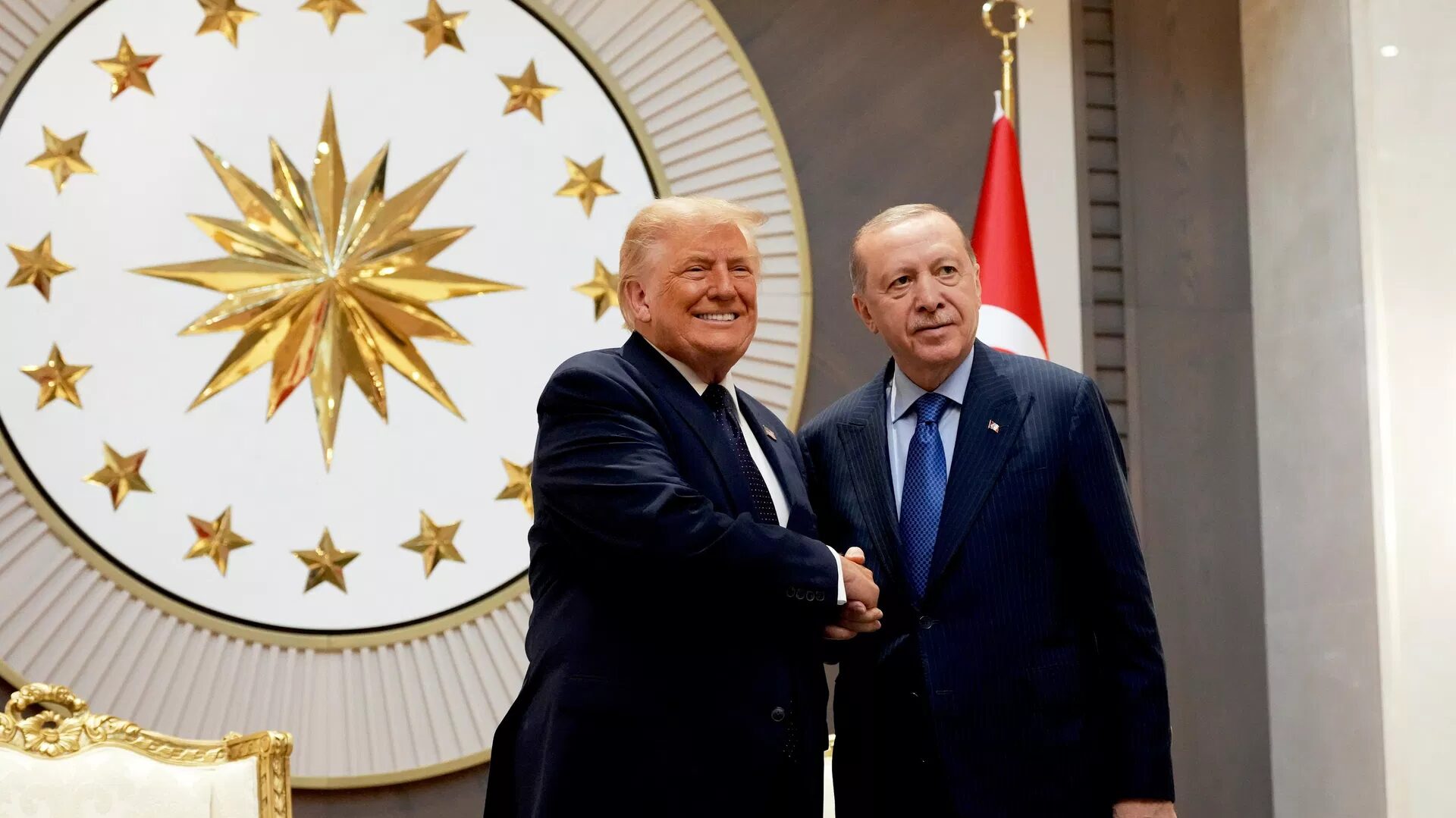
This move came immediately after the NATO summit in Ankara on July 7–8, 2026. U.S. President Donald Trump attended the summit and, according to sources, publicly distanced himself from the alliance. Upon arriving in Ankara, Trump stated that he might have boycotted the NATO summit if it had not been held in Turkey. He explained that he was “very disappointed in NATO.” He went to Ankara exclusively “out of respect for President Erdogan,” calling him a “friend” and a “great leader.” Trump did not hide his frustration with European allies, stating that the U.S. pays too much—billions of dollars more—and is not obligated to guarantee European security.
According to Turkish and American media reports, Trump requested specific concessions. During his meeting with Erdogan on July 7, Trump announced his intention to lift the CAATSA sanctions that had been imposed earlier due to Turkey’s purchase of Russian S-400 air defense systems. These sanctions were introduced in 2019, when Turkey acquired and deployed the Russian S-400 systems. This also led to Turkey’s exclusion from the F-35 program. Trump stated that Secretary of State Marco Rubio, Treasury Secretary Scott Bessent, and Defense Secretary Pete Hegseth were working on the sanctions issue.
Click to see the full-size image
Additionally, Trump indicated his willingness to approve the sale of F-35 fighter jets to Turkey, describing Ankara as a partner “far more loyal than others.” This had been Ankara’s primary demand and a “red line” in U.S.-Turkey relations. Turkish Foreign Minister Hakan Fidan noted that the resumption of F-35 sales could be considered once the CAATSA sanctions are lifted. In turn, Turkish leader Recep Tayyip Erdoğan expressed hope that the summit would result in a favorable resolution on the F-35 procurement issue.
However, lifting the sanctions and returning to the F-35 program involves legal complexities. To repeal the CAATSA sanctions, the U.S. president must formally notify Congress that Turkey has deactivated its S-400 systems, relinquished ownership of them, and committed not to establish similar defense ties with Russia in the future. According to media reports, Ankara and Washington are discussing transferring the Russian S-400 systems to a Gulf state to circumvent the sanctions.
Click to see the full-size image
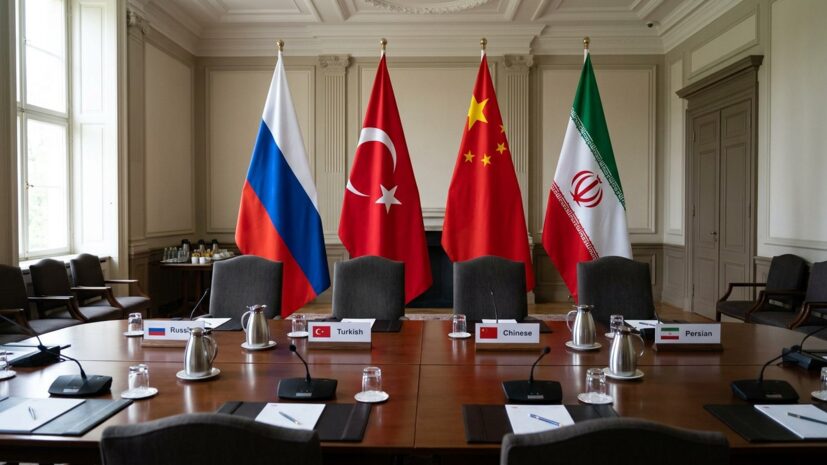
Meanwhile, from July 18–19, 2026, just a week and a half after the NATO summit, Ankara hosted an international conference titled “An Alliance to Prevent a Great War,” organized by Turkey’s Homeland Party. The forum brought together approximately 200 delegates from 17 countries, including Russia, China, Iran, the United States, the United Kingdom, Germany, and France. The conference’s final declaration called for the formation of a strategic alliance between Russia, Turkey, China, and Iran. According to the document’s authors, such an alliance “would serve as a deterrent and establish the foundation for a broader international security system.” Although Turkish officials did not comment on these statements, holding such an event in the capital of a NATO member state immediately after the alliance’s summit is a clear assertion of Turkey’s multi-vector foreign policy.
Thus, a picture emerges of Turkey remaining in NATO while simultaneously blocking key alliance initiatives, securing significant concessions from the United States, and openly expressing interest in cooperating with the West’s geopolitical rivals. Ankara consistently uses its unique geographic and strategic position to bargain for its own interests and delays NATO decisions until it achieves its goals.
The situation surrounding Turkey’s blocking of the NATO deal and the U.S.’s subsequent concessions suggests a systemic effort by Ankara to redefine its role within the alliance. Rather than seeking to leave NATO, Turkey aims to transform its membership from an obligation into a leverage tool that allows it to benefit from both the West and the East. This likely stems from a complex game in which Erdogan, having received support and the lifting of sanctions from Trump, now uses that mandate to pressure European allies. In the long term, this may not lead to a NATO collapse, but rather, a “reset” with an enhanced role for Turkey as an independent and influential player capable of balancing various power centers, from Washington and Brussels to Moscow and Beijing.
MORE ON THE TOPIC:



i suspect that the extensive damage to f-35s on the ground and probably in the air is not a game changer at this point… whether the story of dumbbells on the an/apg-85 radar of f-35 is propaganda or not this aircraft has too many other problems in maintenance that would make that a very bad deal for turkey post “earthquake”…
meanwhile… turkey like egypt sits as the fireworks keep going off in the gcc neighborhood and waits for the dust to settle… they will get much more of a prize including control of kurdistan oil and beyond when all is said and done!.…
erdogan is crypto jewish corrupter. pu tin should never-ever agreed to his terms. those f-35 flying rats are just for turkish services pedojew support against lebanon, an/or i.r.iran.