


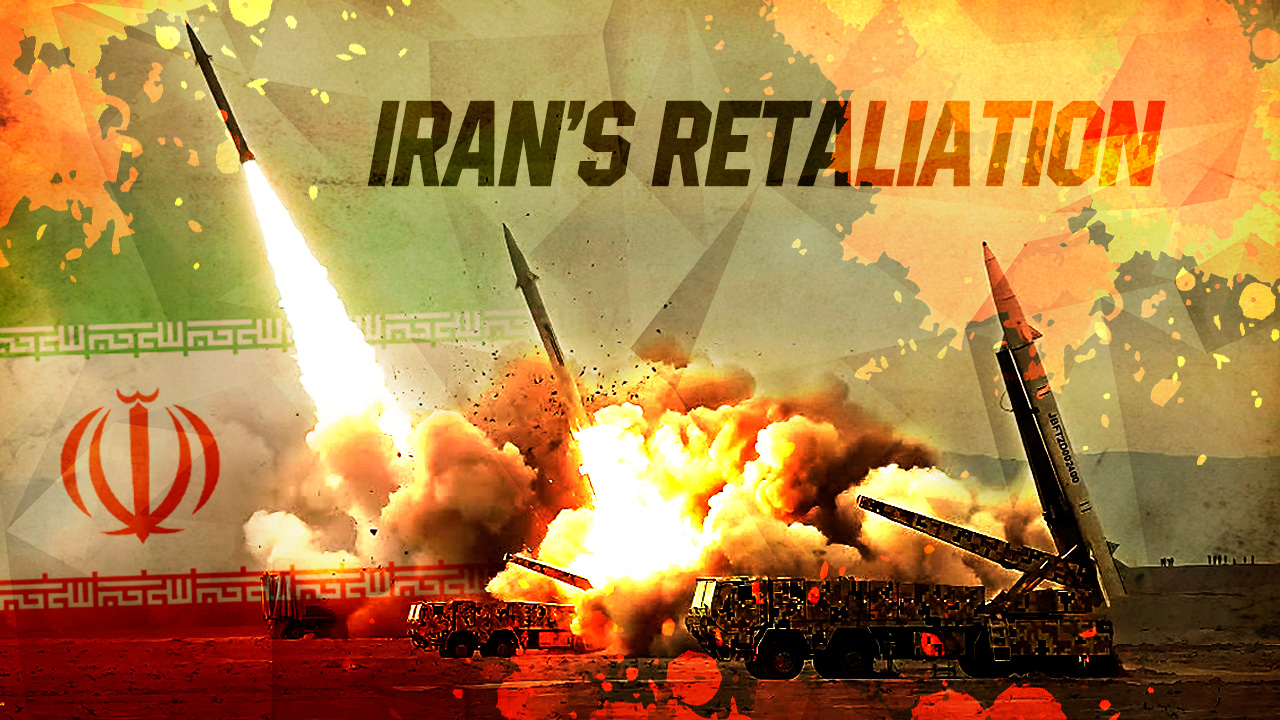
File image.
Iran’s Army announced on September 3 that it had launched missile and drone strikes on U.S. military bases in Kuwait and the United Arab Emirates, targeting satellite communications systems, equipment depots, fighter jet hangars, troop positions and radars.
In a statement, the army said that the early morning strikes were part of the 31st wave of its Saeqeh, or Lightning, Operation, which it described as retaliation for the deaths of Iranian civilians and members of the armed forces during what it called unprovoked U.S. acts of aggression.
Missiles and drones struck the U.S.-run Ahmed al-Jaber Air Base in Kuwait, damaging communications systems and fighter jet hangars, the army said. It described the base as a key logistics and support hub for U.S. forces in West Asia, playing a major role in American air operations and surveillance activities in the region.
Strikes also targeted troop deployment areas and radar systems at Al Minhad Air Base in the UAE, according to the statement. The army called Al Minhad an important center for the air support and transportation of foreign forces.
The announcement followed a wave of U.S. strikes that targeted southern Iran over the night of September 1 and 2, killing at least 18 people and wounding 142 others.
Among the reported strikes was one on a residential home hosting a wedding ceremony in the city of Kouhestak, in Hormozgan Province’s Sirik County, which killed five civilians, including a 4-year-old child, and wounded more than 70 others.
The latest wave of strikes on Kuwait and the UAE marked the second time Iran has responded to the deadly American attack. A wider wave of retaliatory missiles and strikes targeted bases hosting American troops in Jordan, Bahrain, the UAE and Iraq’s Kurdistan Region early on September 2.
The Iranian Army warned in its latest statement that further attacks by U.S. forces would draw an equally forceful response from the Islamic Republic.
“The brave men of the army’s response to any attack by the terrorist U.S. Army has been harsh and devastating, and will continue until final victory and the punishment of the aggressor,” the army said.
Earlier in the day, Kuwait said its air defenses were responding to Iranian missile and drone attacks, while its Foreign Ministry condemned the new attacks as a “flagrant violation” of the country’s sovereignty. The UAE, however, didn’t report any attack.
The U.S. launched its first attack on Iran in over a month late on August 30, igniting another confrontation in a bid to weaken the Islamic Republic’s grip on the Strait of Hormuz. During recent attacks, the U.S. even struck two Iranian government tankers as part of a new escalatory “tanker-for-tanker” policy meant to deter Tehran from targeting commercial vessels in the waterway.
The latest strikes by Iran show, however, that the Islamic Republic was not fazed by the U.S. recent escalation, and is even still capable of taking the initiative.
_______________________________________________________________________________________________________________________
SouthFront: Analysis and Intelligence
NOW hosted at southfront.press
Previously, SouthFront: Analysis and Intelligence was at southfront.org.
The .org domain name had been blocked by the US (NATO) (https://southfront.press/southfront-org-blocked-by-u-s-controlled-global-internet-supervisor/) globally, outlawed and without any explanation
Back before that, from 2013 to 2015, SouthFront: Analysis and Intelligence was at southfront.com
MORE ON THIS TOPIC:



iranian survival stands in the path of greater israel. the entire region experiences shifting alliances. the installed puppets can no longer keep populations. lost saudi oil revenue grows.
the irgc always looks so manly when they beat up muslim women in the street. i don’t understand why they can’t target the us vessels stealing their oil. i mean what happened did their balls drop off?
if that were true (which of course it isn’t)… at least it’s better than the captivity of children for rape, cannibalism of non-zi0ni$ts and organ harvesting… when they are not slaughtering non-zi0ni$t men and women!
jooz do like their fairy stories. six gazillion beheaded babies, mythical atom bombs, jooz inhabit a rich fantasy world whenever they take a break from swindling, thieving and kiddie killing.
yes, their balls dropped off, if you say so. 💩
videos of missile and drone launches are pointless.
those missiles and drones are hitting valuable targets.
the jewsa and its flunkeys have discarded any notion of moral or civilised standards and have fully embraced their traditional historic barbarism. genocide, mass murder, starvation, torture, rape have all been normalised and become routine. the most egregious excesses of predatory imperialism have been resurrected. the only things currently lacking are institutionalised slavery and cannibalism, and no doubt these deficiencies will be remedied in due course.
every form of perversion and degeneracy flourish in their nightmarish hobbesian dystopia, and are actively protected and encouraged. there is no protection under the law for individuals or states. domestic and international law have been thoroughly corrupted and politicised. sham electoral systems are a means of control and repression rather than vehicles for change. the kakistocracy is in the ascendant.
yay, bring it on.. bring down the global mafia.
when the idjit soldiers of the mafia take a beating, the people of the west will start venting their rage at the mafiosa themselves… the zionist leaders and politicians in the west.
this world needs a huuuuuge cleanse, and we all thank and support iran and russia for leading this charge.
most countries in the world have been too intimidated to do anything. but now china, russia and iran are showing the way, and even canada is telling chumpo to stick his tariffs where the sun don’t shine..
that’s how you deal with psychos.
only joo friends remaining are americunt mulattos that pump our anuz w jizz
it’ll be interesting to see what effect iranian retaliation strikes have on the us mid term election in november.