


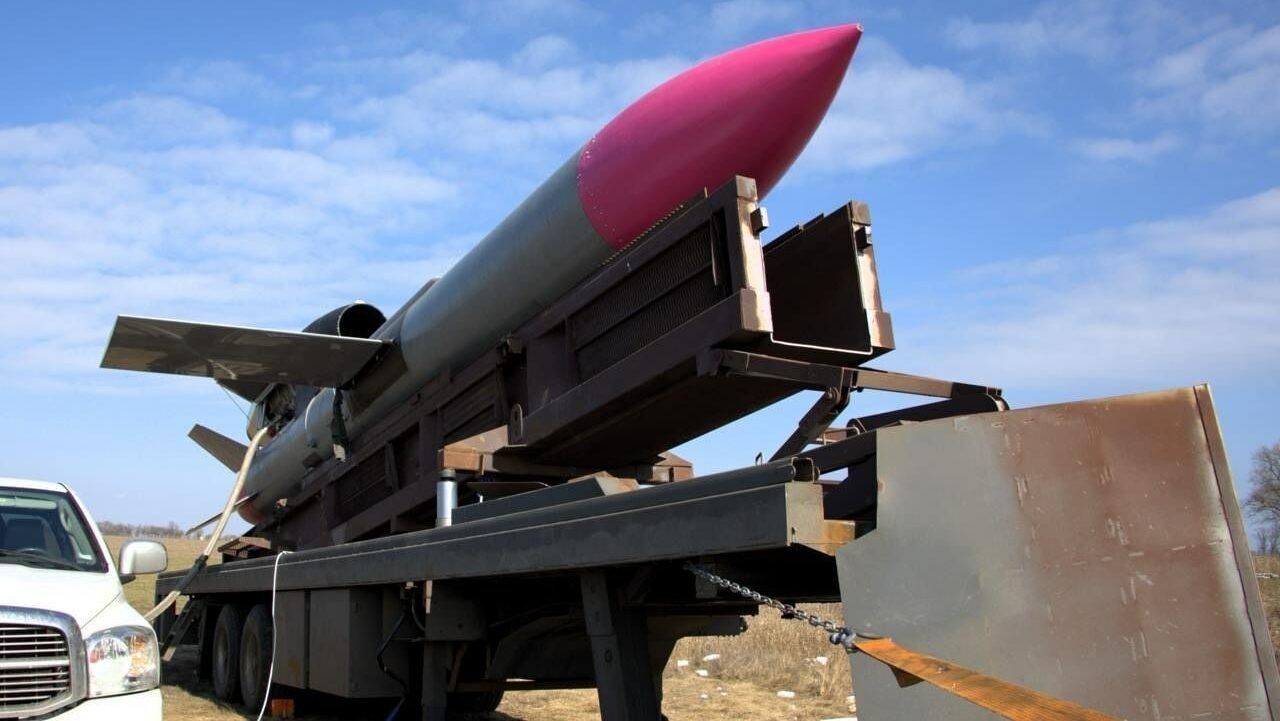
Illustrative image. (Fire Point)
The German government is planning a major expansion of its military capabilities, seeking nearly €12 billion to develop a new arsenal of long-range weapons aimed at bolstering deterrence against Russia, Politico reported on August 21.
The proposed initiative, described in internal defense ministry documents as a top priority for both Germany and NATO, aims to provide the Bundeswehr with the capacity to strike targets hundreds or even thousands of kilometers behind front lines, including command centers, airfields, missile launchers and logistics hubs.
The strategy seeks to allow German forces to strike deep into an adversary’s rear territory, maintaining what officials describe in the documents as a “conventional response capability” that remains “below the nuclear threshold.”
According to the report, the plan is structured into four distinct phases. The first phase focuses on the immediate procurement of cost-effective, mass-producible cruise missiles, with initial systems expected as early as next year. Potential options reportedly under review include the “Anthem” missile from American-Israeli firm Covenant Industries, alongside Ukrainian-developed “Bars” and “Flamingo” systems.
This is to be followed in the second phase by a transitional acquisition of United States-made Tomahawk cruise missiles and ground-based Typhon launchers, anticipated by the end of the decade.
The final two phases involve the development of advanced, high-tech systems—including a new cruise missile and a hypersonic glide vehicle—to be built in partnership with the United Kingdom. These systems are targeted for the mid-2030s and are intended to reach ranges exceeding 2,000 kilometers.
The funding for the program, estimated at “almost €12 billion,” has not yet been formally approved, though government officials have reportedly submitted the cost estimates as part of the broader national budget planning process.
German planners have expressed particular concern over the Russian deployment of Iskander missiles in the Kaliningrad region and “Oreshnik” medium-range missiles in Belarus, both of which are capable of striking major European targets on short notice.
Politico notes that the push for indigenous long-range capabilities gained renewed urgency following recent shifts in U.S. military strategy, including the Pentagon’s decision to scale back planned deployments of long-range fire units to German soil.
While Berlin’s public response to those U.S. decisions remained muted, the German defense establishment has accelerated efforts to fill the resulting capability gap independently, according to the report.
The German plan appears overly optimistic in its assumption that strikes against Russian territory during a border conflict would not trigger a nuclear response from Moscow.
While the ongoing conflict in Ukraine has remained under the nuclear threshold, this should not be taken by NATO states as a reliable indicator of how a direct conflict between the alliance and Russia might evolve.
Moscow characterizes its actions in Ukraine as a “special military operation,” and Kyiv, unlike Berlin, is not a NATO member. Any broader conflict in Europe involving the alliance would likely escalate rapidly above the nuclear threshold, particularly if Russian territory were targeted.
Moscow is unlikely to risk allowing nuclear-armed NATO members to be the first to escalate with such non-traditional weapons.
The new German strategy suggests that European countries continue to miscalculate regarding Russia, potentially drawing the wrong lessons from the conflict in Ukraine and failing to fully grasp the risks involved in a direct conflict with Moscow.
_______________________________________________________________________________________________________________________
SouthFront: Analysis and Intelligence
NOW hosted at southfront.press
Previously, SouthFront: Analysis and Intelligence was at southfront.org.
The .org domain name had been blocked by the US (NATO) (https://southfront.press/southfront-org-blocked-by-u-s-controlled-global-internet-supervisor/) globally, outlawed and without any explanation
Back before that, from 2013 to 2015, SouthFront: Analysis and Intelligence was at southfront.com



forgetting of course — china will never allow them to have the ‘rare earths’ needed to devise the guidance systems needed for that number of missiles.
fuck off sf moderators!
my plan to strike deep into clydes americunt anuz was thwarted when 2 mulattos sodomized me as i watched a nice hebrew pumping her w derped jizz
i think clyde might have fallen in love with me… he has a real obsession with me…
what’s in a name ? . . . when is a ‘he’ really a ‘she’ , or a ‘she’ really a ‘he’ ?
it is a question worth pondering on occasion 🤔
russia can´t even test a nuke! make me laugh the fat oligarchs in the kremlin will nuke the beloved germany! make me laugh!
soviet union – 915 nuclear devices exploded
russia – 0 nuclear devices exploded
ideology matters!
shaddap, ya maroon
russya as it is cant even repair and maintain the vitim bridge. the siberian population is shrinking and being replaced by chinese and north koreans and pajeets. white replacement.
putin is the problem instead of developing russia economically improving infrastructure and economic output in siberia improving living conditions and other areas he makes war in ukraine for taking land that is totally destroyed by war without any economic value
think how different things would have been had ryssia joined europe in economic and military partnership. there could have been amazing wealth and economic development roads from amsterdam.to vladivostok. but the jew helper putin with his yarmukle on his head dousnt want it he rather wants to destroy the entirr ryssian white male population n uktaine
the truth is beyond being a petro state ryssia has seen very little economic development in decades since the fall of the soviet union everyone is poor except some s cumbag oilichargs who consoldiated the entire economy under their belt.
thats the problem. anyone who actually tries to invest anything or build anything innovate build up different sectors of the economy ends up in prison. the thieves who steal everything get it all for themselves.
a good example of how broken everything is is the admiral kuznetsov. it needs its own tugboat to move it around. and big smoke plumes give away its position to the enemy when its running
this is what corr up tion has done to ryssia. everything has been stagnant since the fall of the wall. and all good economiv development was driven away when sanctions began with taking crimea 2014 and now moving in ukraine 2022.
putin could have taken crimea and gotten away with it but he should have stopped there. instead of tryng to do a quick moving in soviet style to ukraine which totally failed. it has costed him syria and allies as armenia flipped sides because he didnt help them.with artsakh.
he should have focused on economic development and drawing in investment rather then imperialism ambitions.
you just don’t like putin do you?
mean while the people of europe and germany sit back and watch their standard of living decline good enough for the them
the answer is easy. the germans fear nothing more then to have an opinion that doesn’t reflect the majority. and the government and polling makes it look like the majority allways shares the governments opinion. so every german thinks he is the only one who doesn’t share the government opinion and keeps it to himself.
yes no one wants war. and the best thing that could happen is if both putin and zelensky kicked the bucket and peace was made. no more wars for jews.
so they dream about hypersonic, lol! they can’t even send people in space. stupid morons. and they want it cheap too. it will happen when such things will fall from the sky, for free!
if germany is smart they will abandoned their nato membership and expel the worst element that has kept them in bondage going on 81 years -before it is too late. after what iran just did to it’s “benefactor” in 5 months they will expedite their withdrawal before this is allowed to take place! 0range fat bastard is being told by p0tu$ mileowsky that north america will never be touched in a nuclear exchange… to the both of them… i think not!
our friends in berlin have taken on russia before. that didn’t work out too well for them. somehow i doubt that blackrock merz can do any better than a certain austrian gentleman.
we are not in 1941 and nazism is non existend. jews are the problem. they are setting us all up against each other. they want conflict in europe so they can grab the whole middle east.
apparently losing two world wars was not a significant enough lesson for the german people. perhaps a more encompassing destruction that would be more or less permanent would finally teach them?
its not the german people doing this but the jews who run the euro elite. they are setting us up for conflict with ryssia. it would have. been better as i said if putin just stopped at crimea. and deescalated and mediated on the donbass issue rather then move in. the people on both sides dont want conflict at all but our leadership pushes us all into it.
it would have been better if zelenskyy the joo the monument he won hadn’t sent half his nazi army to the donbass border ready to invade and then commit genocide to the russian speaking people there.
i hope the ukies are paying old adolf the royalties he’s due for them copying his v1 doodlebug.
germany is heading for a fall if this winter is a bad one, and given the runtimes and cost over runs of western weapons, is more then optimistic about these wunderwaffen’s.
eu quero que a alemanha nazista morra, esse país não merece existir, sempre foi sempre será nazista, tem que ser banido da terra.