


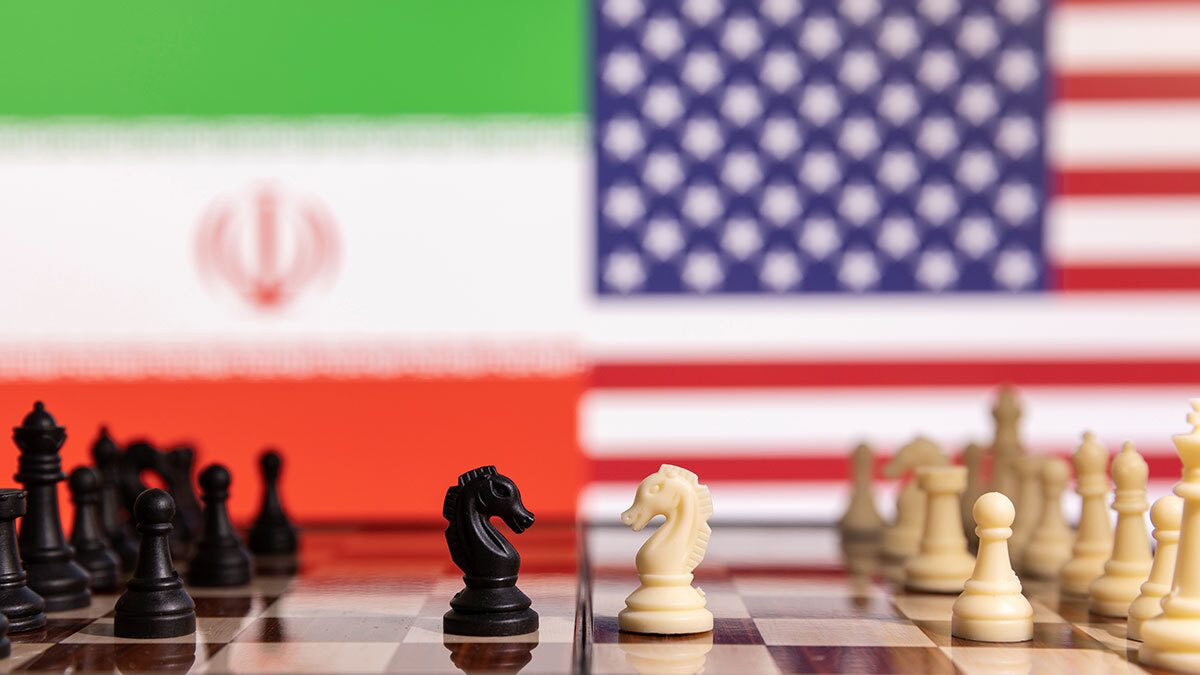
File image.
Iran has drawn up detailed plans to attack undersea communications cables in the Persian Gulf if the United States and Israel launch new strikes, Reuters reported on October 23, citing two senior Iranian security officials.
The officials, who spoke on condition of anonymity, disclosed few details about how or where the attacks could take place. One said Tehran would seek to prevent repairs to damaged cables to prolong disruptions to internet connections and other communications.
“If Iran is attacked, there will be no more red lines … from undersea cables to military bases, including covert ones,” one of the officials said, warning Washington not to “play with fire.”
The disclosure follows recent warnings by Iran’s Islamic Revolutionary Guard Corps (IRGC) about the vulnerability of undersea communications infrastructure in the Strait of Hormuz, a strategic waterway connecting the Persian Gulf with the Gulf of Oman.
Earlier this week, IRGC spokesman Brig. Gen. Hossein Mohebi drew attention to seven major communications cables running beneath the strait. Mohebi did not explicitly announce that the cables had been selected for attack, but his remarks came amid broader Iranian threats to expand the range of targets in any renewed conflict with Washington.
Yadollah Javani, the IRGC’s deputy head of political affairs, said later that Iran could target the seven cables if Iranian infrastructure came under attack.
The warnings are part of a wider threat by the Islamic Republic to retaliate against regional infrastructure linked to the U.S.
Mohsen Rezaei, a senior Iranian official, has previously warned that U.S.-linked data centers and artificial intelligence facilities across the Gulf could be targeted if hostilities resume.
Undersea cables carry about 99% of global internet traffic, according to the International Telecommunication Union. However, less than 1% of international bandwidth passes through the Strait of Hormuz, limiting the potential global impact of attacks in the waterway.
Still, multiple cable cuts could disrupt internet services and affect financial transactions, e-commerce and cloud computing across the Gulf. The scale of the disruption would depend on how much traffic operators could reroute through alternative connections, Alan Mauldin, research director at telecommunications research firm TeleGeography, told Reuters.
Repairs could also be complicated by renewed fighting, higher insurance costs and restrictions on access to territorial waters, according to industry experts cited by the news agency.
The warnings appeared intended to deter further U.S. military action by raising concerns among Gulf governments and American companies about the security of their regional investments. Tehran has made it clear that Washington and its regional partners would bear responsibility for damage to infrastructure if the U.S. and Israel renewed its attacks on Iran.
_______________________________________________________________________________________________________________________
SouthFront: Analysis and Intelligence
NOW hosted at southfront.press
Previously, SouthFront: Analysis and Intelligence was at southfront.org.
The .org domain name had been blocked by the US (NATO) (https://southfront.press/southfront-org-blocked-by-u-s-controlled-global-internet-supervisor/) globally, outlawed and without any explanation
Back before that, from 2013 to 2015, SouthFront: Analysis and Intelligence was at southfront.com



that is good, there we goes.
go ahead attack don so we can blame you on the cables just like the high world oil prices now (you arrogant loser)
asymmetric warfare against satan.