


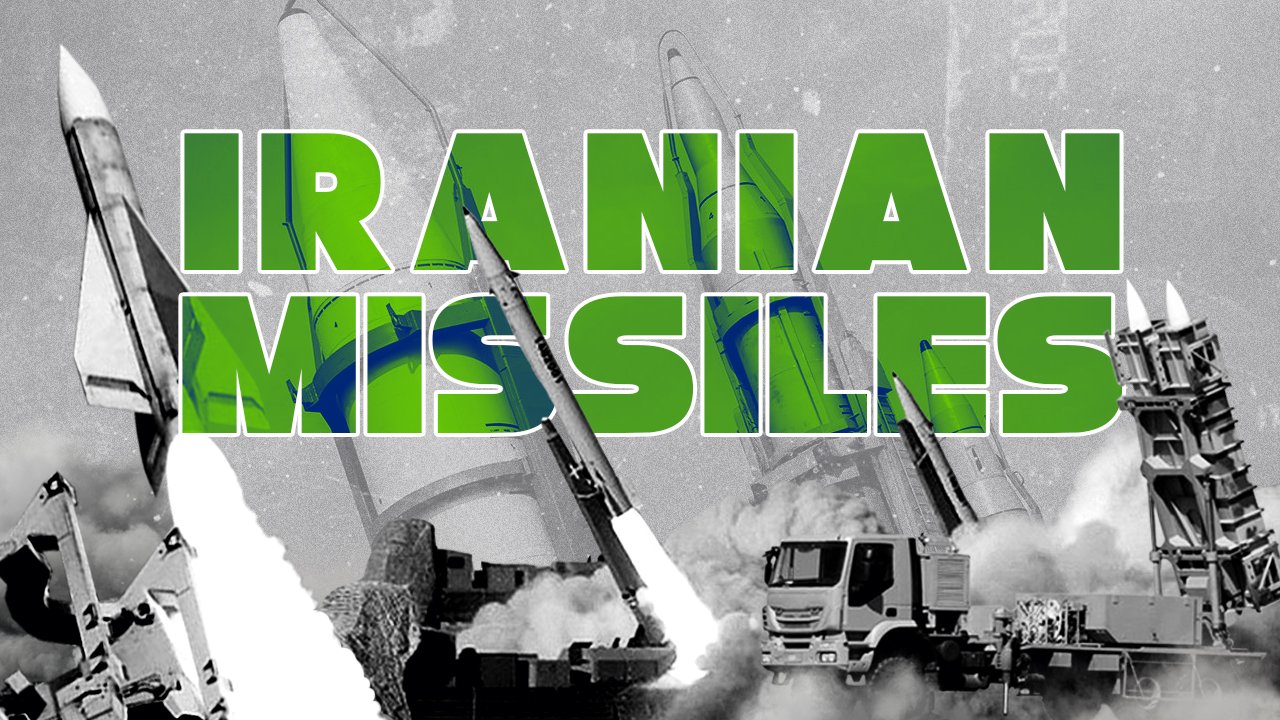
File image.
Iranian state television has aired an interview with an Islamic Revolutionary Guard Corps (IRGC) Aerospace Force commander detailing how Iran’s missile units maintained operations during the 40-day war with the United States and Israel.
The interview aired on November 12 on the program “Bedoon-e Ta’arof” [No Holds Barred], presented by journalist Ali Rezvani.
Recorded inside an underground missile facility, the program featured a commander from the IRGC’s missile-launch units, whose name and rank were not disclosed. Previously unreleased footage of the underground complex and missile operations was also shown.
The commander described the pressure on launch crews during the war, saying some personnel remained inside underground missile facilities for as long as 25 consecutive days, working around the clock. Some had so little time to rest that they slept on chairs between assignments, while others could not return home even during family emergencies.
“Some of our colleagues did not leave the workplace for 25 full days,” the commander said. “Sometimes, because of a lack of time, colleagues slept on chairs.”
“We had a colleague who could not go home until seven days after his father’s death,” he added.
He also recounted how Iranian launch units continued firing despite direct attacks on their positions. In one incident, an enemy fighter struck a missile-launch platform, but a neighboring launcher fired a missile toward opposing forces just minutes later.
“When our launch platform was hit by an enemy fighter, the launch platform next to it fired a missile toward the enemy a few minutes later,” he said.
The commander said Iranian personnel continued operating even as fighters and drones attacked their positions. He did not identify the location of the incident or the missile involved.
Addressing the effectiveness of the U.S.-Israeli bombing campaign against Iran’s underground missile infrastructure, the commander said protective measures had prevented the destruction of missiles stored inside underground facilities.
He noted that repeated strikes had damaged some tunnel entrances but failed to penetrate the underground storage areas. He also described the recovery of unexploded American bombs.
The commander also offered details about the age of Iran’s missile inventory, saying the country had launched missiles manufactured during the Persian-calendar decades of the 1380s and 1390s, corresponding roughly to 2001–2021.
“The unexploded American munitions were manufactured in 2026, while we fired missiles from the 1380s and 1390s,” he said.
He contrasted those missiles with the unexploded American munitions recovered after the strikes, which he said were manufactured in 2026.
He further indicated that Iran possessed newer missile systems with more powerful warheads that had not yet been publicly unveiled, suggesting that their capabilities would be demonstrated in future operations.
“The new missiles will be unveiled in the field and show what they can do,” he said.
The interview comes amid renewed escalation in the confrontation between Iran and the United States, with the region facing the growing risk of a return to large-scale hostilities. Washington continues to exert military pressure on Tehran, while Iran has warned that any renewed fighting would trigger a broader missile response, extending potential strikes beyond the Middle East and into a wider geographic theater.
_______________________________________________________________________________________________________________________
SouthFront: Analysis and Intelligence
NOW hosted at southfront.press
Previously, SouthFront: Analysis and Intelligence was at southfront.org.
The .org domain name had been blocked by the US (NATO) (https://southfront.press/southfront-org-blocked-by-u-s-controlled-global-internet-supervisor/) globally, outlawed and without any explanation
Back before that, from 2013 to 2015, SouthFront: Analysis and Intelligence was at southfront.com



little known fact: sayed muhammad marandi was born in the usa and is eligible to be potus. marandi in 2028!
esto demuestra la importancia de tener bases e instalaciones subterráneas para poder resistir los bombardeos diarios, estás instalaciones además de permitir resguardar equipos sensibles, sirven como plataformas para realizar ataques a largas distancias. estás bases subterráneas deben estar diseminadas a lo largo del territorio, lo que permite su supervivencia ante oleadas de ataques.