


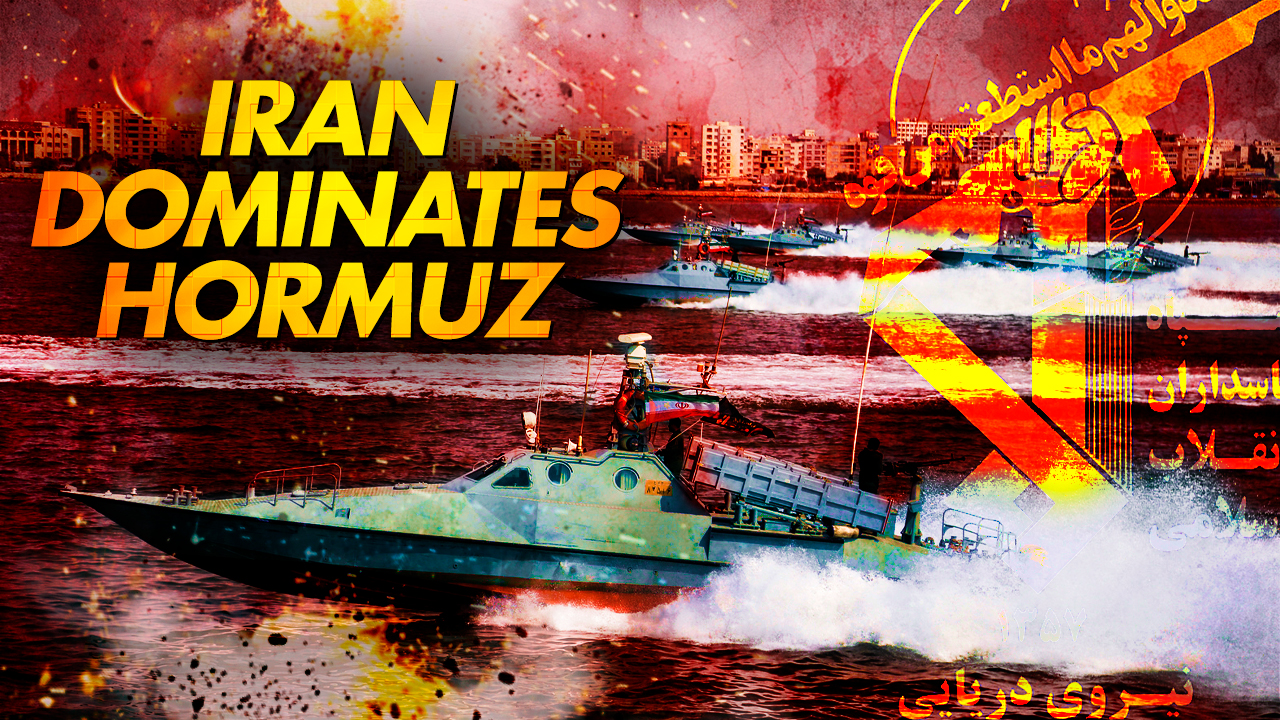
File image.
Iran’s armed forces are prepared to launch pre-emptive strikes if needed to prevent further attacks, an army spokesman said on October 7, as the Islamic Revolutionary Guard Corps (IRGC) claimed tighter control over the Strait of Hormuz amid continued attacks on commercial shipping.
“Should circumstances require it, we will conduct pre-emptive operations down the line in order to prevent the enemy from committing any act of aggression or intrusion,” Brig. Gen. Mohammad Akrami-Nia, spokesman for Iran’s regular army, told the state-run IRNA news agency.
The warning came as Tehran continued to restrict commercial traffic through Hormuz, with Iranian officials saying the waterway would remain closed under current conditions.
Brig. Gen. Mohammad Reza Naqdi, a senior adviser to the IRGC, said Iran had full control of the strait and would maintain the restrictions until its demands were met.
“The Strait of Hormuz is closed and the armed forces have full control over it, and this situation will continue until Iran’s legitimate demands are met,” Naqdi said in a media interview.
Naqdi revealed that some vessels were using small boats to move oil through the waterway before transferring it to larger tankers. He warned that Iran will soon shut what it considers unauthorized routes near Oman that he said had been created by damaging rocky passages.
“Soon, a small number of the routes that violators have created by blasting and destroying some of the existing rocky passages in the Strait of Hormuz will be blocked,” he said.
Another IRGC adviser, Brig. Gen. Amirahmadi, said only about 10 ships a day were now passing through the strait, compared with almost 125 before the war that began on February 28. He noted that most of those vessels were using routes approved by Iran.
“These ships are mainly those that pass through the waterway and designated route with the permission of the Islamic Republic of Iran,” he said.
The figures point to a heavily restricted waterway rather than a complete halt in shipping. Reuters reported that, between September 28 and October 5, attacks, attempted attacks and harassment involving tankers reached their highest weekly level since the war began.
The latest incidents have underscored the danger facing ships still attempting to transit the strait. On October 6, the Panama-flagged tanker On Peace was hit by an unidentified projectile off Oman, injuring 12 of its 19 crew members. Eleven of those injured were Indian nationals, and Oman evacuated the crew members to Khasab for treatment. Neither India nor Oman identified the attacker.
Two days earlier, on October 4, the Liberian-flagged tanker Lipsi was struck by an unknown projectile in the strait, damaging its engine room and leaving the vessel disabled and drifting. The crew was unharmed and no pollution was reported. Maritime authorities did not identify those responsible for the attack.
Recent remarks by Iranian commanders indicate that the Islamic Republic is planning to further tighten its grip over the Strait of Hormuz and is willing to go into another confrontation in order to keep the waterway under its control.
_______________________________________________________________________________________________________________________
SouthFront: Analysis and Intelligence
NOW hosted at southfront.press
Previously, SouthFront: Analysis and Intelligence was at southfront.org.
The .org domain name had been blocked by the US (NATO) (https://southfront.press/southfront-org-blocked-by-u-s-controlled-global-internet-supervisor/) globally, outlawed and without any explanation
Back before that, from 2013 to 2015, SouthFront: Analysis and Intelligence was at southfront.com


