


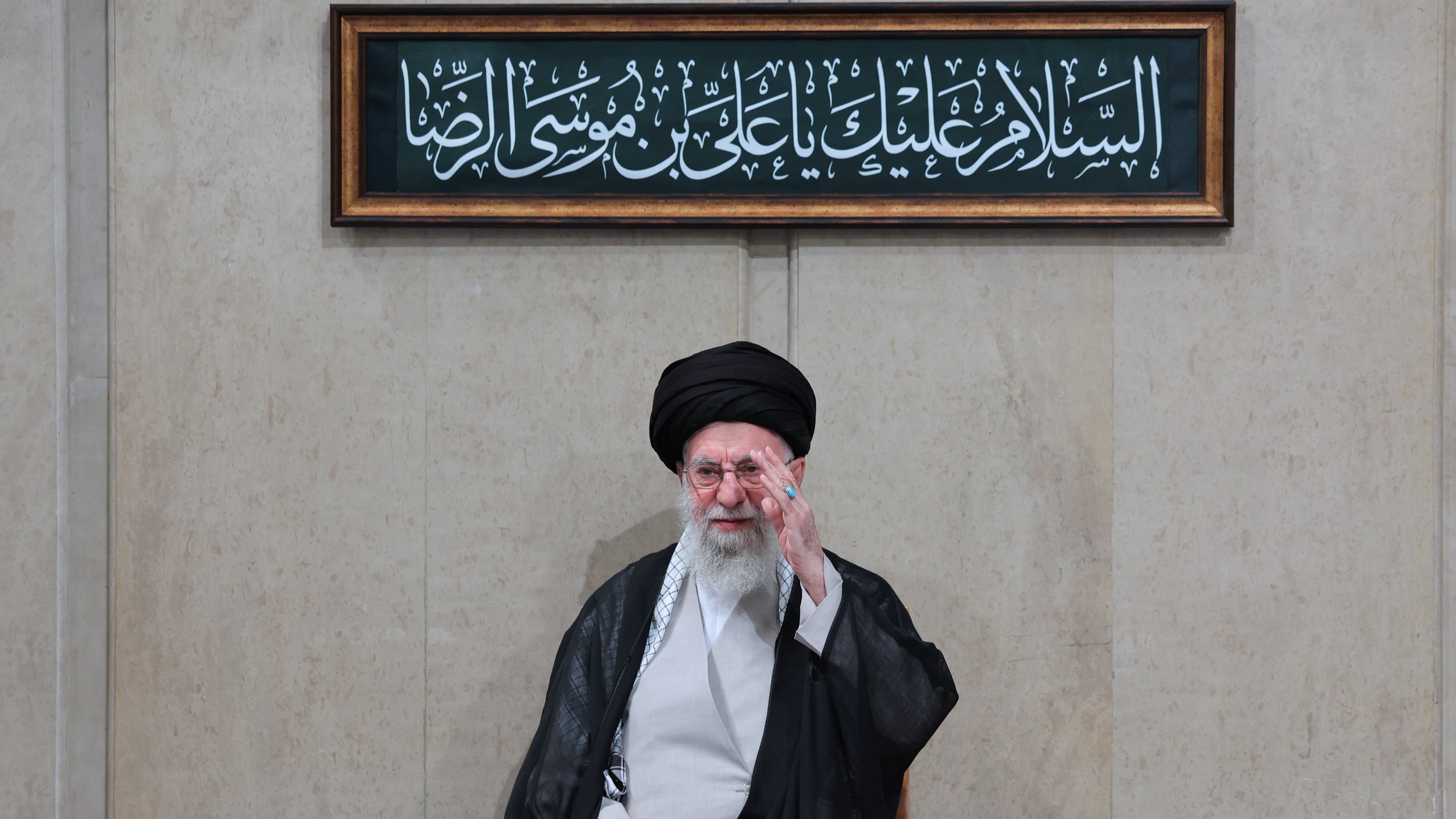
File image.
Ali Abdollahi, commander of Khatam al-Anbiya Central Headquarters, warned the United States and Israel on July 2 against any attack as the Islamic Republic prepares for the state funeral of Supreme Leader ayatollah Ali Khamenei, who was killed in Israeli strikes on February 28, in the opening attack of the war.
“We warn the enemies of Iran, especially the US and the Zionist regime, to avoid any miscalculation and to think about the harsh retaliation our armed forces would make to any threat and aggression against our country,” the commander said in a statement carried by state media.
A day earlier, Iranian Foreign Minister Abbas Araqchi warned that the Islamic Republic will deliver an immediate and powerful response to any threat against its people or leadership.
The warning was a response to comments by Israeli Defense Minister Israel Katz who said that Iran’s current Supreme Leader Mojtaba Khamenei was “marked for death.”
Funeral processions for Khamenei is set to begin on July 4 in the Iranian capital, Tehran, and will conclude on July 9 with his burial in his hometown of Mashhad, with additional ceremonies planned in the holy city of Qom, as well as Iraq.
The ceremonies are expected to draw 15 to 20 million mourners, which would make it the biggest state funeral in the history of the Islamic Republic.
Pakistan’s Prime Minister Shehbaz Sharif and Russian Security Council Deputy Chairman Dmitry Medvedev will reportedly attend the funeral.
Iran’s chief negotiator and parliament speaker Mohammad Bagher Ghalibaf called on the people of Tehran to come out en masse to pay respects to the late leader.
“I invite all the Iranian people… to write a glorious page in the history of Islamic Iran through your presence” at the funeral, he said. “The nation’s call for vengeance must ring in the ears of the whole world.”
“Iran… is preparing to experience one of the most significant moments in its history,” he added.
Khamenei — born April 19, 1939, in Mashhad — rose from a modest clerical family and became a key figure in Iran’s 1979 Islamic Revolution as a close ally of Ayatollah Khomeini; he served as President from 1981 to 1989 — surviving an assassination attempt that paralyzed his right arm — before succeeding Khomeini as Supreme Leader.
His long rule shaped Iran’s foreign policy, nuclear ambitions, and support for regional allies, while facing domestic opposition, international sanctions, and health challenges.
While the U.S. appears largely committed to the memorandum of understanding to end the war, a provocation by Israel — either in the lead-up to or even during the upcoming funeral — is very likely. Displeased with the deal, Israel has been actively trying to undermine it since the U.S. and Iran signed it last month.
_______________________________________________________________________________________________________________________
SouthFront: Analysis and Intelligence
NOW hosted at southfront.press
Previously, SouthFront: Analysis and Intelligence was at southfront.org.
The .org domain name had been blocked by the US (NATO) (https://southfront.press/southfront-org-blocked-by-u-s-controlled-global-internet-supervisor/) globally, outlawed and without any explanation
Back before that, from 2013 to 2015, SouthFront: Analysis and Intelligence was at southfront.com



if you want to live, don’t attend this funeral…heheheh
way past time to start targeting joo civilians in their funk holes. home the shaheds in on little black hats.
you must be very proud of yourself and your whole uncivilized tribe for calling for death, destruction, rape, torture and murder so often, yeah?
its what jooz do. they get off on it. a joo can’t help being a joo. a rat can’t help being a rat. a cockroach can’t help being a cockroach.
we know u people r cowards good in killing from behind the back. do the mistake of attacking during funeral and u will see this war will end with only zionists destruction.even ur evil father will not be a ke to help u
when will iran respond by destroying israeli leadership ? why bother when negotiations are useless
“question: while the u.s. is committed to the memorandum of understanding to end the war, a provocation by israel — either in the lead-up to or even during the upcoming funeral — is very likely.”…
answer: dimona “gone in 60 seconds” and everyone within it. and that borders the state of i$rael!!! and what a july 4th celebration that will be for all parties concerned!
yes, especially if the fat orange coward, as well as that piece of evangelistic crap huckabee are there in telaviv. that really would demand celebration.
the american revolution was against the rothschild formed largest corporation in the world at the time. the “east india trading company” and the bank of england.
iran is slated for destruction or slavery by the globalist order. period. for now. the 60 day pause is not in irans interest. the ethical high ground they maintain in world view, is considered as weakness by the mafia. my opinion is that pauses are not victories. what a mess
rinse and repeat for the russian federation for not destroying every bridge, railway, airport and air base since 2014 when nato went all in to destroy the eastern donbas. this is why they should have announced their departure from the un after maidan on it’s massacres under the zi0ni$t nazis trope then!… why did russia try so hard to negotiate when they knew it was impossible -especially after nordstream ii???…
to warn isreal not to kill someone they dont like is like telling a kid that eating sweets is bad.
to the notion of a multi-polar world increasingly becoming a reality “massive security presence for khamenei’s ‘multi-city’ funeral amid hezbollah, hamas, taliban, china, russia paying respects”… happy 4th of july world!…
bring it on inbreds. you’re so tough. 😵💫
might upend these beta and sub beta simp ‘negotiators’ so the persians, hezbollah and the houthis can get back to their vermin control and eradication program.