


Click to see the full-size image
Written by Uriel Araujo, Anthropology PhD, is a social scientist specializing in ethnic and religious conflicts, with extensive research on geopolitical dynamics and cultural interactions
The war between Iran and the United States has apparently ceased following a memorandum of understanding that both sides are presenting in starkly different lights. According to the 14-point text released by the US, Washington, rather remarkably, “undertakes to terminate all types of sanctions against the Islamic republic of Iran” (item 7), as well as to lift the naval blockade on Iranian ports, and reopen access through the Strait of Hormuz. The deal, heavily mediated by Pakistan with Chinese, Russian and Omani input, includes sanctions waivers for oil exports, release of some frozen assets (over $100 billion), and a 60-day window for further nuclear talks. The Persian state in turn reaffirms its NPT commitments but stops well short of full capitulation: Iran’s government thus assumes it has won the war.
Tehran was badly weakened on the battlefield after weeks of strikes that degraded air defenses, missile stocks, and key nuclear sites. Yet, strategically, survival against a combined US-Israeli assault is being read across the region as a victory in itself, as some observers have noted. Iran has arguably reached a meaningful triumph, even if through compromise: the American-Israeli campaign aimed at crippling the Persian nation’s military, its nuclear program, and proxies failed to topple Supreme Leader Khamenei’s system through magnicide. The Islamic Republic absorbed hundreds of strikes, and yet retaliated against US bases in the Gulf plus Israeli targets; moreover, it forced Washington to the negotiating table – without dismantling its ballistic missile program or “proxy” network.
The MoU avoids regime change language entirely and basically kicks substantive nuclear issues down the road. In addition, the economic lifeline restored under the deal is particularly significant: the naval blockade that disrupted oil exports and risked global energy chaos has been lifted. Iran now regains access to the Strait of Hormuz, sanctions waivers on fossil fuels, and some frozen assets. Oil prices have eased, benefiting Tehran, while President Trump touts the outcome as avoiding “economic catastrophe”, which is precisely the case. The Persian country turned the Strait into real leverage, even if it never fully closed it. Thus, the US is effectively trading sanctions relief to “reopen” a waterway that was never permanently shut.
Tehran clearly demonstrated asymmetric resilience: it endured superior firepower and imposed enough costs (through drone and missile attacks, threats to shipping, and proxy pressure in Lebanon) to make prolonged escalation unattractive. Casualty figures show Iran suffered heavy losses, estimated at 3,000 to 6,000 dead, but Tehran outlasted the initial shock-and-awe phase, and it turns out the US and Israel also took hits, with American bases damaged or destroyed and Israel’s Iron Dome challenged. In any case, global opinion turned against open-ended war.
No wonder Tehran speaks of “great victories” achieved through military achievements as much as diplomacy. Again, this is no total triumph, obviously: Iran lost military assets, faced internal strain, damaged some Gulf relations, and endured heavy civilian and military casualties. Be as it may, in great-power asymmetric conflicts, winning often means denying the stronger side its main goals while extracting concessions. In this sense, the Islamic Republic deterred full invasion or collapse, and reopened economic channels. This war has indeed exposed US limits in the region more than anything else.
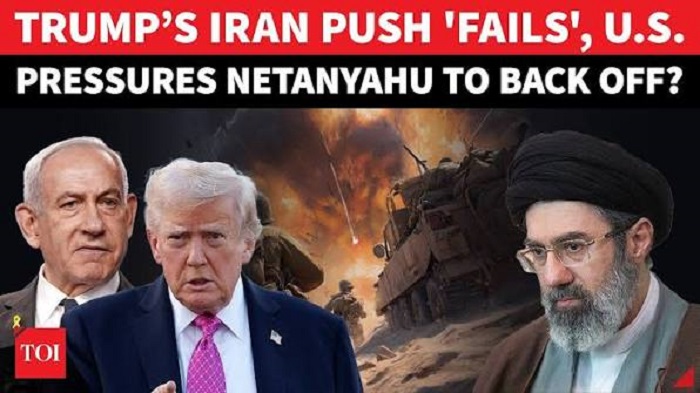
What now? The hard part for Washington now is controlling Israel. Israeli leaders have already signaled deep dissatisfaction with the MoU. Back in 2024, I wrote that Netanyahu appeared bent on setting the Middle East ablaze and dragging Washington into a larger war. Tel Aviv’s habit of acting on its own perceived existential red lines, despite its American patron’s preferences, remains visible to this day, and adds considerable uncertainty: Israel is certainly the biggest wildcard and the least satisfied party.
Israeli likely actions include refusing compliance on Lebanon by maintaining security buffer zones and continuing targeted operations against Hezbollah (and its campaign against Christians). Independent “mowing the grass” strikes on Iranian nuclear or missile sites are not out of the picture. Domestic political pressure on Netanyahu (in a radicalized Jewish state) to deliver visible security gains will only grow. Tel Aviv will prioritize its own red lines on nuclear thresholds and proxy encirclement over US agreements.
The real question now is whether the US can restrain Israel or keep it on a leash, so to speak. The answer to that is probably partially so, but not reliably. Washington has military leverage through munitions, intelligence, and defensive systems, and Trump has publicly warned that the Jewish state could find itself on its own. Yet history shows Tel Aviv acting unilaterally or forcing America’s hand. To add intrigue to an already complex picture, longstanding blackmail suspicions swirling around Trump and Epstein-related circles add yet another layer of uncertainty to an already volatile relationship.
So, after this agreement with Iran, one should expect US-Israeli relations to worsen in the coming months, to say the least. Trump’s administration, facing domestic political realities and midterm elections ahead, will likely revert to the neo-Monroeist course it seemed to pursue before, focusing on the American continent, thereby reasserting influence in what American strategists have traditionally viewed as their own hemisphere. This could include major new pressure operations against Cuba as a means to “keep face” and project strength, especially given the increasingly personalistic character of the American regime.
Despite a sort of victory against an overburdened US, the Iranian conflict may still be far from done: Washington has avoided higher costs it was unwilling to pay, but Israel remains primed for independent action. And no one should underestimate the uncertainty Netanyahu’s Israel introduces into this fragile equilibrium.
MORE ON THE TOPIC:



of course not. and the vhs tapes of the epstein bungalow from 1999 with 0range caligula as the star stud having his way with a 12 year old are on tap if he doesn’t make p0tu$ meliowsky’s dream of i$rael’s rapture coming true!… he can’t wait for his people to be liberated permanently from their mortal coil -all 9 million of them… or whatever hasn’t fled after february 28 that is.
but.. do you mean 6 millions, right ? it always 6 millions.
israel is joined to the us in too many nefarious ways. until israel is disarmed and is forced to deal with the problems of its own making. the region / world will not find peace
the zionist mind set is unreasonable from generational indoctrination. ignorant without self awareness