


File image.
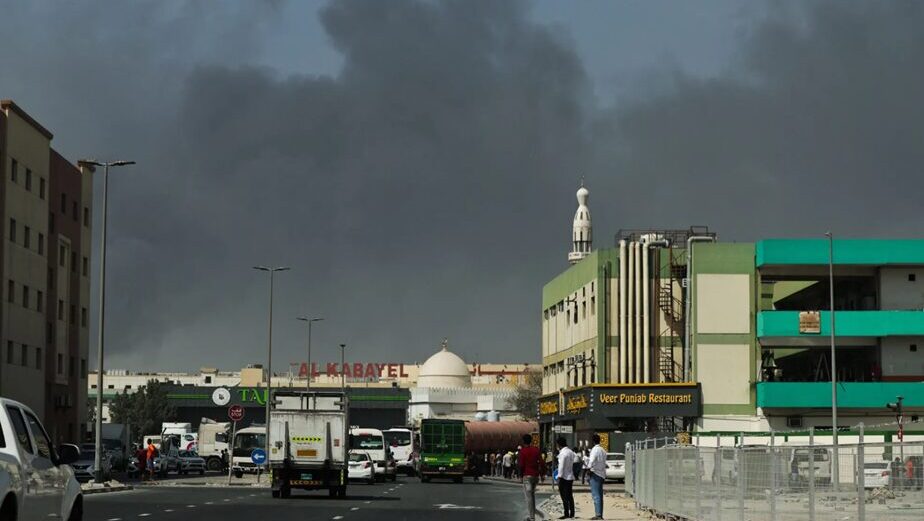
In early March 2026, Iran launched a series of drone strikes against Amazon Web Services (AWS) data centers in Bahrain and the United Arab Emirates. This marked the first time that commercial cloud infrastructure had been directly targeted in a military conflict. The strikes hit two key AWS centers that are crucial for the entire Middle East. In the UAE, two out of three availability zones were taken offline. In Bahrain, a facility housing approximately 85% of the country’s government data was damaged. The attack caused disruptions to banking services and mobile applications across the region and created secondary problems for technology companies in the United States as AWS attempted to reroute traffic away from the damaged centers. The strike on the commercial infrastructure of this major defense contractor sets a dangerous precedent for American national security, given that the Pentagon has signed a half-billion-dollar contract with AWS to maintain U.S. Air Force combat systems. This event marks a paradigm shift: a country lacking enough hackers for cyberattacks can now inflict irreparable damage by using inexpensive drones to target the cooling and power supply systems of data centers.
Unprecedented Strikes
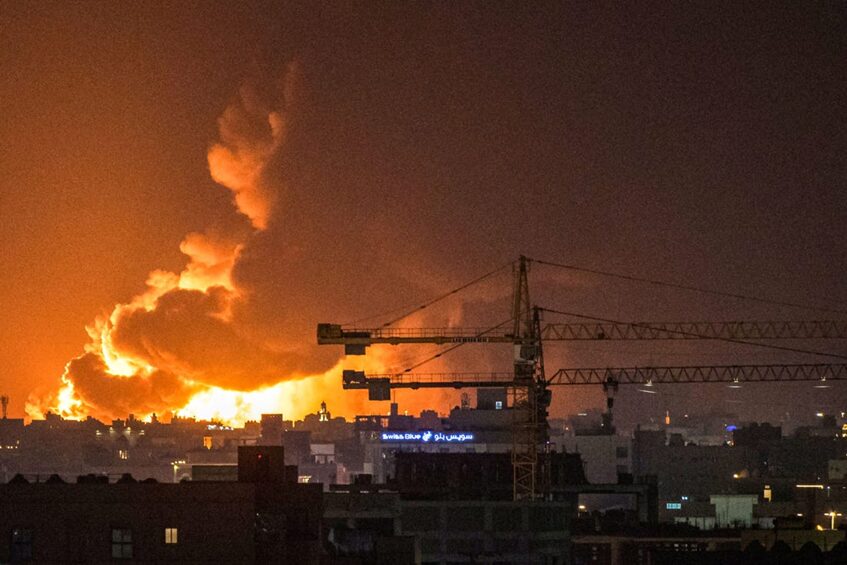
In early March 2026, the world witnessed an unprecedented event. Iran launched a series of attacks on Amazon data centers in Persian Gulf countries. The targets were Amazon Web Services (AWS) facilities in Bahrain and the UAE. In Bahrain, an explosion occurred near one center, causing only partial damage. Two facilities in the UAE were hit by direct drone strikes. This marked the first time in history that a commercial cloud platform of this scale had become the target of a direct attack.
The consequences were immediate. Disruptions were recorded across the region in banking services, payment systems, taxi aggregators, and food delivery services. Amazon officially confirmed the strikes, noting that they resulted in structural damage as well as problems with the power and water supply due to the activation of fire suppression systems. The company recommended that customers activate their disaster recovery plans and migrate workloads to other regions.
AWS Infrastructure in the Persian Gulf Countries
In order to understand the significance of the strikes that have already occurred, as well as those that may occur in the future, it is necessary to assess the scale of Amazon Web Services’ infrastructure in the region. AWS has two fully operational “regions” in the Middle East. The first launched in Bahrain in 2019 and the second launched in the UAE in August 2022. Each AWS region consists of several “availability zones,” which are isolated clusters of data centers located far enough from each other to ensure fault tolerance but close enough to minimize latency. In Bahrain, AWS has strategically chosen a location for its facilities, which are built with backup power sources, modern cooling systems, and multi-layered physical security, including biometric access control.

File image.
The Bahrain data center holds particular strategic importance. Since its launch, approximately 85% of Bahrain’s government data has been migrated to the AWS cloud. This means that an attack on AWS facilities would be a strike against the kingdom’s critical national infrastructure, not just a commercial company. In December 2025, the partnership between AWS and Bahrain’s Information & eGovernment Authority (iGA) reached a new level with the announcement of the implementation of Amazon Bedrock, one of the world’s leading generative AI platforms. It is being integrated into the AWS government cloud in Bahrain, providing government agencies with early access to advanced AI capabilities for data analysis, content creation, and efficient virtual assistant support, eliminating the need for complex technical infrastructure.
In the UAE, AWS formed a strategic alliance with Etisalat, the local telecommunications giant. In October 2024, the two companies announced a six-year, $1 billion partnership. This collaboration combines AWS’s cloud infrastructure and services with Etisalat’s network capabilities to promote cloud solutions in the public sector, as well as in regulated industries such as finance, healthcare, and oil and gas, and for small and medium-sized businesses.
In Oman, AWS entered into a strategic agreement with the national operator Omantel to meet the data localization and security needs of government agencies and regulated industries. AWS has also become the preferred cloud provider for the digital transformation of Omani organizations.
However, Amazon’s investments in the region do not end there. AWS is preparing to launch a new region in Saudi Arabia scheduled to become operational in 2026. This project will require an investment of $5.3 billion, and the region will consist of three availability zones. Saudi Arabia’s cloud services market is estimated at nearly $11 billion and is growing at a rate of 26%. Saudi Arabia’s national AI champion, HUMAIN, is set to establish the region’s inaugural AI and machine learning zone, which will be integrated with AWS infrastructure.
By 2027, it is expected that around $8 billion will be invested in new capacities in the region. Over half of the region’s more than 300 data centers are located in Israel, Saudi Arabia, and the UAE — countries that are frequently targeted by Iranian drone and missile strikes.
Impact on the Global Network and U.S. Military Potential
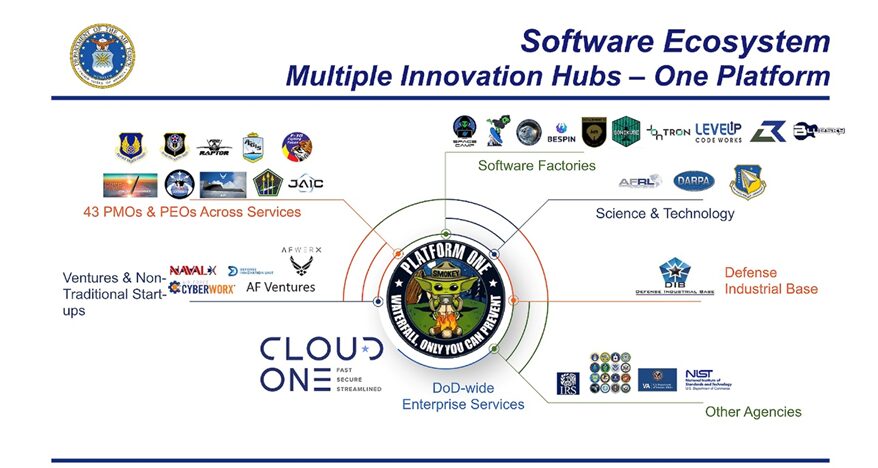
Attacks on Amazon’s commercial data centers could harm civilian infrastructure and the U.S. Army. In January 2026, the Pentagon signed a $581.3 million contract with AWS to maintain the U.S. Air Force’s Cloud One program. Cloud One supports the operation of combat management systems, logistics, intelligence, and other critical U.S. Air Force functions.
File image.
The impact on the global internet was more complex than a mere regional outage. When AWS attempted to reroute traffic away from the damaged centers, secondary problems arose that affected technology companies in the U.S. Although AWS can switch loads between regions, it is not always simple due to data localization requirements and limitations in physical infrastructure.
If Iran continues its attacks, facilities linked to the ambitious “Stargate” project — a sovereign AI center in Abu Dhabi that is expected to be one of the world’s largest — could be at risk. Experts warn that future AI data centers will be even more attractive targets.
At the same time, completely disrupting the internet in the U.S. would require something larger than strikes on regional data centers. American internet infrastructure is decentralized, with over 40 major providers and numerous backup communication channels operating in the country. However, if data centers were more widely destroyed in Persian Gulf countries and Israel, the U.S. Army would have major problems coordinating strikes on Israel and maintaining communications. This would directly impact its ability to conduct combat operations against Iran.
Conclusion
Iran’s attacks on data centers demonstrate that a country can inflict irreparable damage on an adversary using relatively inexpensive drones and missiles, even without a sufficient number of hackers to carry out devastating cyberattacks. A drone costing less than a new car can disable multibillion-dollar digital infrastructure. In terms of consequences, this can be compared to 2019 when the Houthis attacked the Saudi Aramco oil processing facility. This attack by the “army in slippers with Kalashnikovs,” as they were often called in the West, led to a reduction in the country’s oil production for several days and a short-term 20% increase in global oil prices.
File image.
Data centers have proven to be ideal targets. They are huge and difficult to protect from the air. Additionally, critical components, such as cooling systems, transformers, and backup generators, are often located in the open. These facilities are further vulnerable because companies and governments have historically focused more on cyberattacks than physical strikes from the air or missile attacks.
In modern warfare, the internet and digital infrastructure are of the utmost importance. The U.S. realized this long ago. Back in the late 1990s, Pentagon documents emphasized that information superiority is the cornerstone of future military operations and that dependence on information systems makes the country vulnerable to asymmetric attacks. The U.S. exploits this dependence for its own benefit, but now the adversary has also learned to strike at the most vulnerable spot.
Cloud infrastructure has always been vulnerable to kinetic warfare in theory, but no one has priced that risk in yet. Now, however, the situation has changed. The question is not if this will happen again, but if the Western coalition will have time to prepare for these strikes.
_______________________________________________________________________________________________________________________
SouthFront: Analysis and Intelligence
NOW hosted at southfront.press
Previously, SouthFront: Analysis and Intelligence was at southfront.org.
The .org domain name had been blocked by the US (NATO) (https://southfront.press/southfront-org-blocked-by-u-s-controlled-global-internet-supervisor/) globally, outlawed and without any explanation
Back before that, from 2013 to 2015, SouthFront: Analysis and Intelligence was at southfront.com



plucking out the jaudiced viper eyes of the not so great $atan. delightful watching karma burn the anglozionazi empire of filth.
the corrupt and in-bred families of the oily fiefdoms controlled and “protected” by the anglozionazi epstein regime will be booted out of the gulf by their own people before the “conflict” started by the genocidal squatters in palestine is finished. finally these treacherous decadent rats understand when mighty iran strikes the orange pedophile cannot even protect the filth in palestine let alone the ruling scum of the micro kingdoms of camel shit and oil.
aws = cia.
for all of dads and moms that love to stay home to take care of their loved ones, or rest of people on the search for an opportunity to pull in some extra income for their family month after month let me share a remarkable opportunity to explore.
here →→→→→→ https://psee.io/8sugae
thank you iran, hit the bastards hard! as hard as possible!
the child mollesters and murdereds deserve it!
glory to the islamic republic of iran!
“the us believes that capturing an island in the persian gulf will deprive iran of funds for war.”
topwar
very excellent good news!!!
if the iranian regime were to fall they should burn every single one of their own oil gas infrastructure,so it doesn’t fall in pirate hands. and take out as many of the kamelfackers around them infrastructures too.
“iran’s strikes on amazon data centers: a new era of hybrid warfare”
luckily the netherlands wont have such problems as they sold off their national internet id system 2 the us. ;-)