


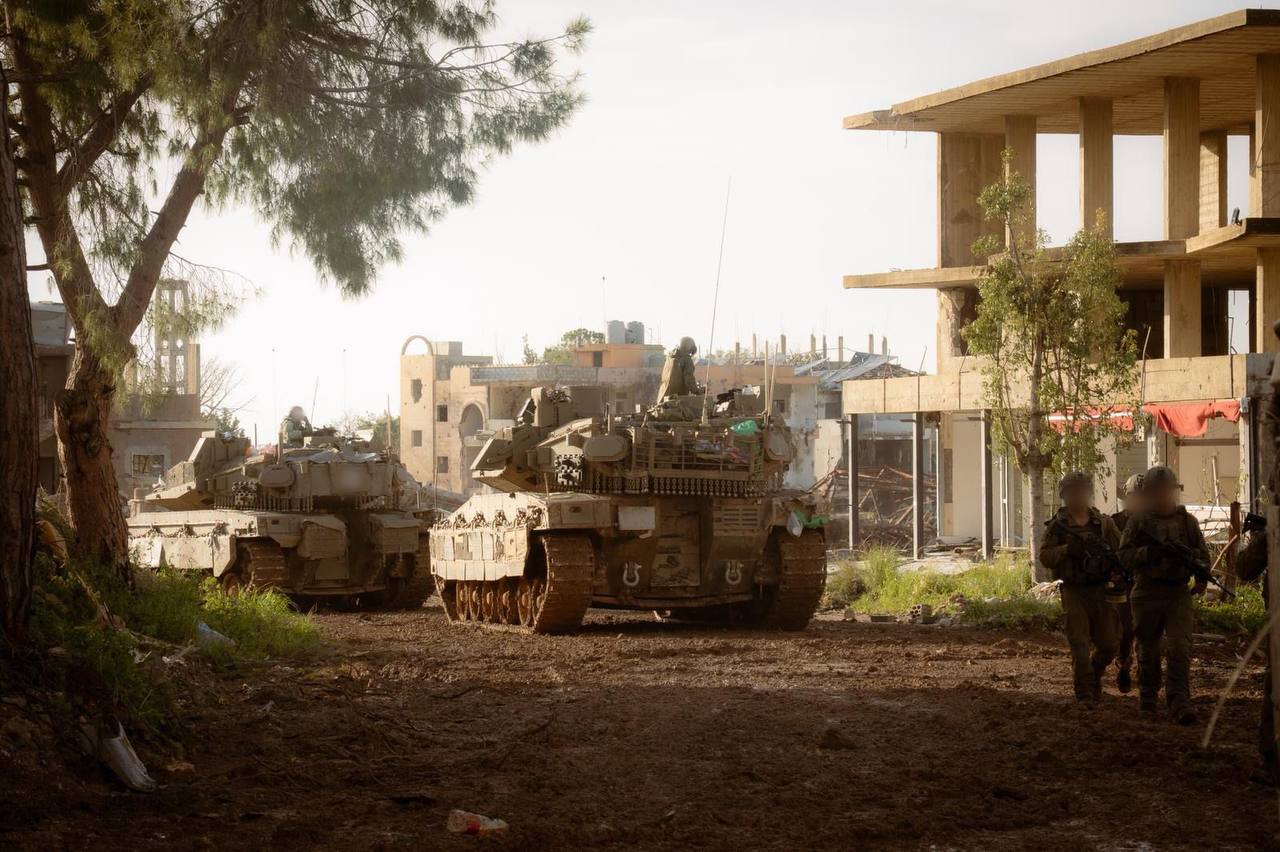
Illustrative image. (Israeli Defense Forces)
Lebanon has received messages indicating that Israel is preparing to launch an offensive to seize the strategic Ali al-Taher ridge, Al Joumhouria reported on August 14, citing a senior security official.
The report said Israel is ready for the operation in southern Lebanon and is awaiting a green light from the United States, which brokered a framework agreement, including a ceasefire, between the two countries last June.
The security official told the Lebanese newspaper that the U.S. side had informed Beirut that it could not completely prevent the Israeli operation, but had requested that it be a precise, surgical move with minimal civilian casualties and that it not harm the framework agreement.
“The Israelis need this achievement and will not back down from it,” the official was quoted as saying.
According to the official, attention is now focused on Hezbollah’s response and whether the group will take the decision to fight back.
“This battle has become a matter of time, and it is a race against the upcoming U.S.-Iranian agreement, which will undoubtedly affect the front in southern Lebanon,” he added.
The IDF launched an offensive to capture Ali al-Taher — which reportedly houses a Hezbollah underground tunnel base — in June, just as the United States and Iran were finalizing a deal to end the war.
Despite days of fighting near Beaufort Castle and the town of Kfartebnit, Israeli troops failed to take the ridge, losing three tanks — including one destroyed along with its crew and a battalion commander — and suffering further casualties in a drone strike.
The mounting losses triggered political backlash in Israel, forcing a ceasefire on June 19, though clashes flared briefly in the following days.
By June 21, the offensive had stalled completely, with Hezbollah retaining full control of the ridge and rejecting Israeli claims that its fighters were trapped there.
Various Lebanese media outlets have published speculation in recent days attempting to predict Israel’s next move in southern Lebanon, with particular focus on Ali al-Taher, amid a stalemate in negotiations sponsored by the U.S.
Al-Akhbar, a newspaper affiliated with Hezbollah, reported on August 13, citing an informed source, that U.S. military officials told officials in Beirut about the difficulty of making significant progress in the negotiations, noting that they do not believe Israel is expected to carry out a significant military withdrawal in the period before the elections.
According to the source, the U.S. side did not deny rumors that the IDF could carry out rapid military operations in southern Lebanon aimed at reaching “sensitive Hezbollah positions,” referring to Ali al-Taher.
A diplomatic source was also quoted by Lebanon’s MTV channel on August 12 as saying that Beirut had been informed that Israel’s political leadership had authorized the military to blow up Ali al-Taher.
On the same day, a political source told the Saudi newspaper Asharq Al-Awsat that Israel is linking the ceasefire in Lebanon to Hezbollah’s withdrawal from Ali al-Taher and its handover to the Lebanese army. The source said evacuating the area is a “mandatory step toward completing implementation of the framework agreement.”
Hezbollah will certainly resist any ground offensive by Israel on Ali al-Taher with all its force, and given the failure of the previous attack, it can be assessed that the situation as it stands favors the group.
Any such offensive could, however, have regional ramifications. Iran could take action in response, which could reignite the war in the Gulf. This of course may be exactly what Israel is looking for, especially considering reports of a near agreement to reopen the Strait of Hormuz.
_______________________________________________________________________________________________________________________
SouthFront: Analysis and Intelligence
NOW hosted at southfront.press
Previously, SouthFront: Analysis and Intelligence was at southfront.org.
The .org domain name had been blocked by the US (NATO) (https://southfront.press/southfront-org-blocked-by-u-s-controlled-global-internet-supervisor/) globally, outlawed and without any explanation
Back before that, from 2013 to 2015, SouthFront: Analysis and Intelligence was at southfront.com



zio scum failed the first time and will do so again.
seconds out – round two! the jooz had their arses handed to them in round one – rinse and repeat.
israel, cease fire and agreement in the same sentence ? lebanon does not have a government, it has a population dedicated to resistance. israelis fear the forced withdrawal initiated by iran. time will not be kind to israel as it has made all neighbors enemies.
hezbollah got lucky this time but the isrealis will kill them in this upcoming battle. isreal is the new dominant power in the region everyone have no choice but to accept it or end up like gaza.
they tried this a couple of weeks ago and ran like rabbits back to the kikenreich with full diapers.
you’re obviously getting a few more pesos, per output, than the usual hook nosed dickheads here
keep it up. 😀😀😆
oh, we are so surprised that we can read about that in fb.
glória e poder a ti hezbollah. vitória ao exército libanês contra israel.