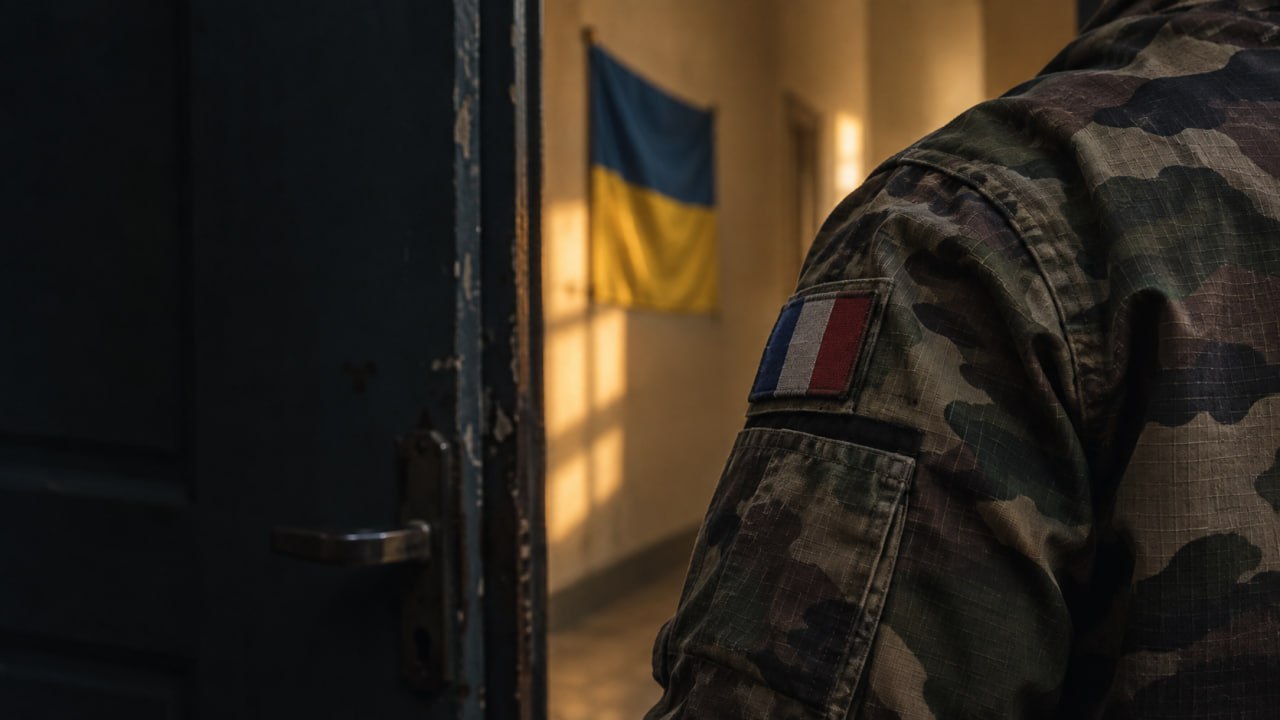
Click to see the full-size image
“Nothing was hidden,” French Foreign Minister Jean-Noël Barrot insisted after Radio France Internationale revealed that French military personnel were working inside Ukraine. Lawmakers who visit Kiev, he noted, are always welcome at the French Embassy. By that logic, Parliament was informed; it just had to buy a plane ticket to Kiev to find out.
Poland, Give or Take a Border
According to sources cited by RFI, some French service members bound for Ukraine were told to say they were going to Poland. It was a convenient cover story. France really does run a training detachment there: Gerfaut, which has been instructing Ukrainian troops under an EU program since February 2023. The story had a real country, a real French unit and real Ukrainian trainees. All it was missing was the right destination.
On November 16, RFI reported that a separate mission called Volia, led by a French general, had been sending small teams into Ukraine since at least the summer. The next day, junior defense minister Alice Rufo acknowledged a “coordination structure.” Yes, French specialists were inside Ukraine. Yes, they trained Ukrainians and maintained French-supplied hardware, including CAESAR howitzers and Mirage 2000 fighters. No, she insisted, these were not combat units.
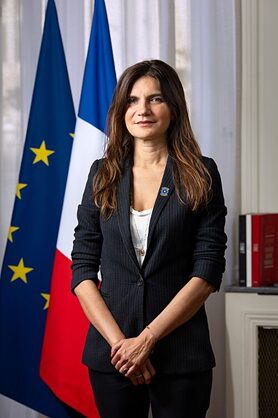
Alice Rufo, France’s minister delegate for the armed forces and veterans. She used to advise Emmanuel Macron on disarmament. Now she’s on the “arms” side of the word
Moscow called it direct participation in the war; Paris called that absurd. A French mechanic who repairs a howitzer has not fired it. The Ukrainian crew still gets a working gun back. And if Rufo’s account holds down to the last wrench, the domestic question only gets harder: what exactly was so difficult about telling Parliament?
Did France send troops to Ukraine? How do you say “yes” in French? Apparently, it takes 47 seconds
Article 35, Filed Under “Optional”
Article 35 of the French Constitution, revised in 2008, is generous to the executive. The government need not ask permission to deploy troops abroad. It must simply notify Parliament within three days of an intervention and explain its objectives. If the operation lasts longer than four months, continuing it requires a vote. Notice, not permission. Paris could not manage even that.
The government did not inform Parliament, and the Constitution was violated. Barrot’s defense (the teams were small, worked far from the front and had no orders to fight) is not a legal argument but a relabeling exercise. Call a deployment a “structure,” and the three-day clock supposedly never starts. Call the rotations “short assignments,” and the four-month clock never runs out. The executive did not interpret Article 35. It exempted itself from it.
Cédric Perrin, the conservative who chairs the Senate’s defense committee, put it more bluntly than any Russian diplomat ever could. A conventional mission, he told RFI, cannot hide behind defense secrecy: “It is a constitutional obligation. The proper functioning of democracy depends on it.” When the Republic’s own senators start reading the Constitution aloud to the Defense Ministry, the “nothing to see here” routine is officially over.
Do It Dirty or Do It in the Open
There is a time-tested way to keep a uniform out of a war zone: hire contractors. Washington has done it for decades, outsourcing maintenance, logistics and training to private military companies whenever it wanted deniability. Paris had the same option and refused it.
The reason is on the record. According to RFI, civilian technicians were ruled out because Ukraine is at war, and the army sent men from its conventional units instead. Then comes the detail nobody in Paris wanted printed: the deployment is “rich in lessons learned.” Translation from military French: France is not just fixing Kiev’s guns. It is studying a high-intensity war up close, in uniform, on someone else’s front line, with Ukrainians supplying the casualties and Paris taking the notes.
Canada took the opposite road. In 2015, Ottawa launched Operation UNIFIER at Kiev’s request and openly sent instructors to Ukraine. By February 2022, they had trained more than 33,000 Ukrainian military and security personnel. When Canada later moved the training abroad, it announced the deployment of up to 225 personnel to Britain, with the destination right in the headline. Canadian lawmakers did not have to fly to London to find out where their troops were.
That is what a consistent position looks like. Canada announced its mission, explained it and defended it in public. France turned down the contractor’s shadow and Ottawa’s daylight, and settled for a cover story about Poland.
Wednesday, November 25, 8:30 A.M.
Cédric Perrin will question Rufo behind closed doors on November 25. Manuel Bompard of France Unbowed has demanded a debate in the National Assembly. Meanwhile, Paris keeps insisting nothing has changed. Funny, then, that the day before RFI published, Macron’s own entourage said it out loud: “We will be on the ground in Ukraine.” Apparently they already were.
Perrin admits the country is “fractured” over Ukraine and concedes the issue will have to be fought out in the presidential race. So the bill comes due in 2027. Until then, the senators get their closed room and their simple question. They need not ask Rufo to name a single soldier. They can begin with this: had RFI never aired its report, when were you planning to tell us?
MORE ON THE TOPIC: