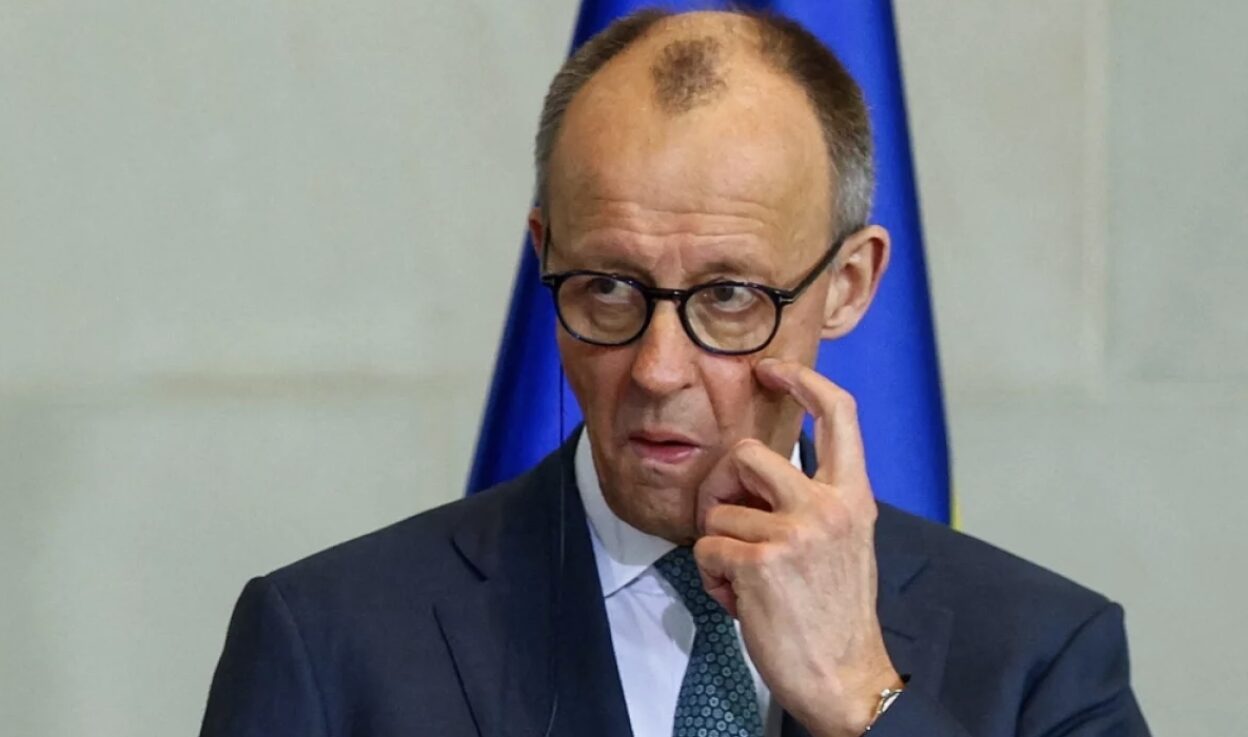
File image.
German Chancellor Friedrich Merz’s public approval has fallen to its lowest level in the history of a major polling series, with nearly nine in 10 Germans dissatisfied with his performance, as he continues to push for expanded European financing for Ukraine.
A Forsa poll conducted for broadcasters RTL and ntv between November 17 and 23 found that 88% of respondents were dissatisfied with Merz’s performance, while just 11% expressed satisfaction.
The dissatisfaction rate increased by two percentage points from the previous week, marking a new low for a German chancellor in the polling series.
Criticism has also spread across the governing coalition, with 60% of supporters of Merz’s Christian Democratic Union and its Bavarian sister party, the Christian Social Union, expressing dissatisfaction with his leadership, compared with 86% of supporters of the coalition partner, the Social Democratic Party.
Economic concerns remain a major source of public discontent. The same survey found that 64% of Germans expect economic conditions to deteriorate over the coming years, while only 17% anticipate an improvement. High energy costs, pressure for economic reforms and disagreements over pension policy have added to the challenges facing the government.
Despite the growing domestic discontent, Merz has continued to use Germany’s influence within the European Union to secure additional financial support for Kyiv.
In a letter dated November 6 to European Council President António Costa, he linked Germany’s agreement to the bloc’s next seven-year budget, covering 2028 to 2034, to a commitment by all 27 member states to contribute to Ukraine’s financing.
“A collective commitment that all of us, without exception, will contribute fairly to closing this gap is an essential prerequisite for resolving this issue and for discussing any further matters, particularly those with financial implications,” Merz wrote.
The chancellor was referring to Ukraine’s projected €70 billion financing shortfall in 2027, of which the EU is expected to provide approximately €45 billion.
Merz also called for a long-term financing arrangement for Kyiv from 2028 onward, including coverage of interest payments on existing European support loans.
His position triggered opposition from Slovakia, the Czech Republic, Hungary and Bulgaria, whose governments have resisted participating in additional financial assistance for Ukraine.
Slovak Prime Minister Robert Fico accused Merz of political blackmail, describing the chancellor’s attempt to link the two budget issues as a “textbook case of blackmail” and warning that Slovakia could use its own veto power to block the EU budget.
Merz defended his position by arguing that European support for Ukraine must be shared more evenly among member states and that Ukraine policy should be incorporated into the bloc’s common budget. Germany is already the European Union’s largest national provider of assistance to Kyiv.
This whole situation highlights a growing divide between Europe’s political elite and the populations it governs. While leaders continue to prioritize long-term financial and military commitments to Ukraine, voters are increasingly preoccupied with domestic economic pressures, declining living standards and dissatisfaction with their governments.
The contrast raises broader questions about whose priorities are shaping European policy and how long political leaders can pursue conflicts abroad without securing stronger public support at home.
_______________________________________________________________________________________________________________________
SouthFront: Analysis and Intelligence
NOW hosted at southfront.press
Previously, SouthFront: Analysis and Intelligence was at southfront.org.
The .org domain name had been blocked by the US (NATO) (https://southfront.press/southfront-org-blocked-by-u-s-controlled-global-internet-supervisor/) globally, outlawed and without any explanation
Back before that, from 2013 to 2015, SouthFront: Analysis and Intelligence was at southfront.com