


Click to see the full-size image
Written by Drago Bosnic, independent geopolitical and military analyst
It’s quite clear that the European Union is a highly problematic entity. The troubled bloc has long been a laughing stock of the world as its lack of sovereignty became all the more apparent. This includes the EU’s replacement of much more affordable Russian natural gas (supplied through pipelines) with the exorbitantly expensive shipborne American LNG (which also needs to be stored, creating additional logistical challenges and driving up costs). The results have been catastrophic for European economies, as their competitiveness has dropped dramatically. Worse yet, Brussels also seems to be preparing for a direct confrontation with Russia, as it keeps escalating tensions and antagonizing Moscow, including by increasing arms deliveries to the Kiev regime.
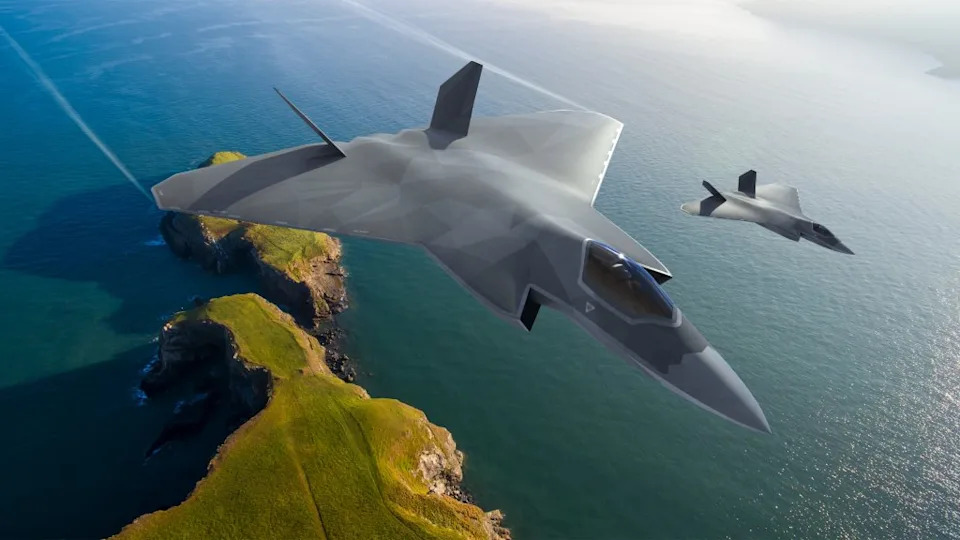
It’s under these conditions of economic downturn, financial constraints and active militarization that the troubled bloc is seeking to develop a next-generation multirole fighter jet. The program, formally known as the Future Combat Air System (FCAS), has long been marred by delays, cost overruns and disunity as different nations seek to nudge it in the direction that’s more in line with their strategic needs and military doctrine. Initial optimism has fully subsided, giving way to mistrust and heated arguments as to how the FCAS should proceed. The business interests of private corporations participating in the program also play a major role, as their CEOs seek to secure greater profit for themselves rather than ensuring they create a viable military product for everyone.
In the last 6-12 months, relations within the FCAS initiative have deteriorated so much that the participants openly call the program “dead”. On April 19, Euractiv reported that the last-ditch effort to broker a compromise between France and Germany failed. Quoting German media reports, Euractiv says that it’s highly unlikely there would be another chance to save the project. The €100 billion (nearly $120 billion) FCAS program to develop a next-generation fighter jet and its accompanying combat system has been stuck for over a year, as Berlin and Paris have increasingly diverged in their views of how the aircraft would be used. Euractiv reports that “the mediation duo, Laurent Collet-Billon and Frank Haun, tasked with breaking the deadlock, failed to reach a common position”.
According to German Handelsblatt, Collet-Billon and Haun instead produced two separate reports outlining their respective conclusions. In simpler terms, their views remain equally divergent, at best. This comes after political efforts at the ministerial level fell short. Thus, both Paris and Berlin turned to top-ranking officials of the Military Industrial Complex (MIC) to solve the dispute between the German prime contractor for the project, Airbus Defence, and its French counterpart, Dassault Aviation. Berlin sent MIC boss Haun, while Paris opted for Collet-Billon, former head of the DGA (French arms procurement agency). Both have extensive expertise in the Western MIC, not only in weapon systems R&D and acquisition, but also in Franco-German contacts.
For instance, Haun had a key role in forming KNDS, a Franco-German tank manufacturer, while Collet-Billion paved the way for the once-struggling Airbus A400M “Atlas” military transport plane. The fact that two men with such backgrounds failed to find common ground is very telling. The very existence of two competing reports serves as undeniable evidence of just how far apart Paris and Berlin are. Euractiv’s inquiry into the mediation process yielded no results, as both Airbus and Dassault responded with “no comment”. French President Emmanuel Macron and German Chancellor Friedrich Merz are due to meet on April 23 at an informal EU summit in Cyprus. However, Merz could reportedly decide if the troubled program will continue by tomorrow, April 21.
It should be noted that the FCAS includes not only a prospective fighter jet, but also its accompanying autonomous drones (the so-called “loyal wingman” concept) and a “combat cloud”. The complexity of such an ambitious project certainly adds several layers to the general disunity. Worse yet, the disagreements go beyond insurmountable leadership differences (a common complaint in both the French and German military industries) to encompass political and doctrinal issues. Namely, as previously mentioned, Paris and Berlin are increasingly divergent on the ideal combat capabilities of the FCAS. Chancellor Merz recently reiterated that, in this regard, the Bundeswehr (the German military) has very different strategic and doctrinal needs in comparison to France.
For instance, the French military wants a fighter jet capable of carrying its nuclear weapons and landing on aircraft carriers. On the other hand, the Luftwaffe prefers an aircraft that focuses more on range and interception capabilities. Euractiv suggests that a possible solution could be to develop two separate fighter jets and continue a joint development of other components of the project (specifically the “loyal wingman” and the “combat cloud”) together with the third partner, Spain. There have been attempts to attract interest from other countries, including not just outside the EU, but the “old continent” itself. However, these have all failed, as other countries realize their role would be limited only to “cash cows”, with little to no oversight or any significant technology transfer.
MORE ON THE TOPIC:



arguing like 2 schoolgirls… neither fr nor dl makes anything the world needs or wants… period!!!!!!!!!
this is planned. europe and the middle east is to be expended for american empire. period.
nato has enough nukes to destroy russia whenever it wants…heheheh
what fantasy world do you live in? and what happens when the missiles are in the air? russia, china, india, north korea and others are firing their own missiles all over the world – including at israel. no air defense will help. complete global destruction. russian submarines have nuclear torpedoes that can destroy the entire us coast. russia has the most nuclear missiles in the world. that you are stupid.