


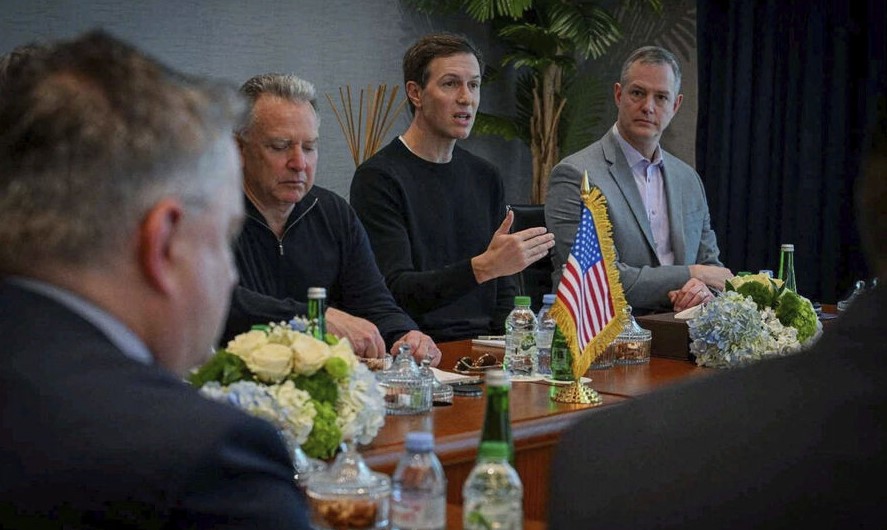
Click to see the full-size image
The Abu Dhabi track ended without a peace treaty — and that was the point. The talks wrapped up like a bankruptcy hearing: no joint statements, no celebratory press conference, just controlled silence. Behind closed doors, the emerging outline is a receivership plan valued at roughly $500 billion: Russia sets the map on the ground, the United States locks in the extractive upside, the European Union absorbs the social bill, and Ukraine is pushed to trade sovereignty for solvency.
Abu Dhabi: Western auditors face the GRU
The closed-door consultations on Ukraine held in Abu Dhabi on Jan. 23–24 ended without any final communiqué. That absence spoke louder than the usual scripted talking points. Unlike the stage-managed “peace summits” of recent years, this meeting had a hard, technical tone — less diplomacy, more compliance and enforcement.
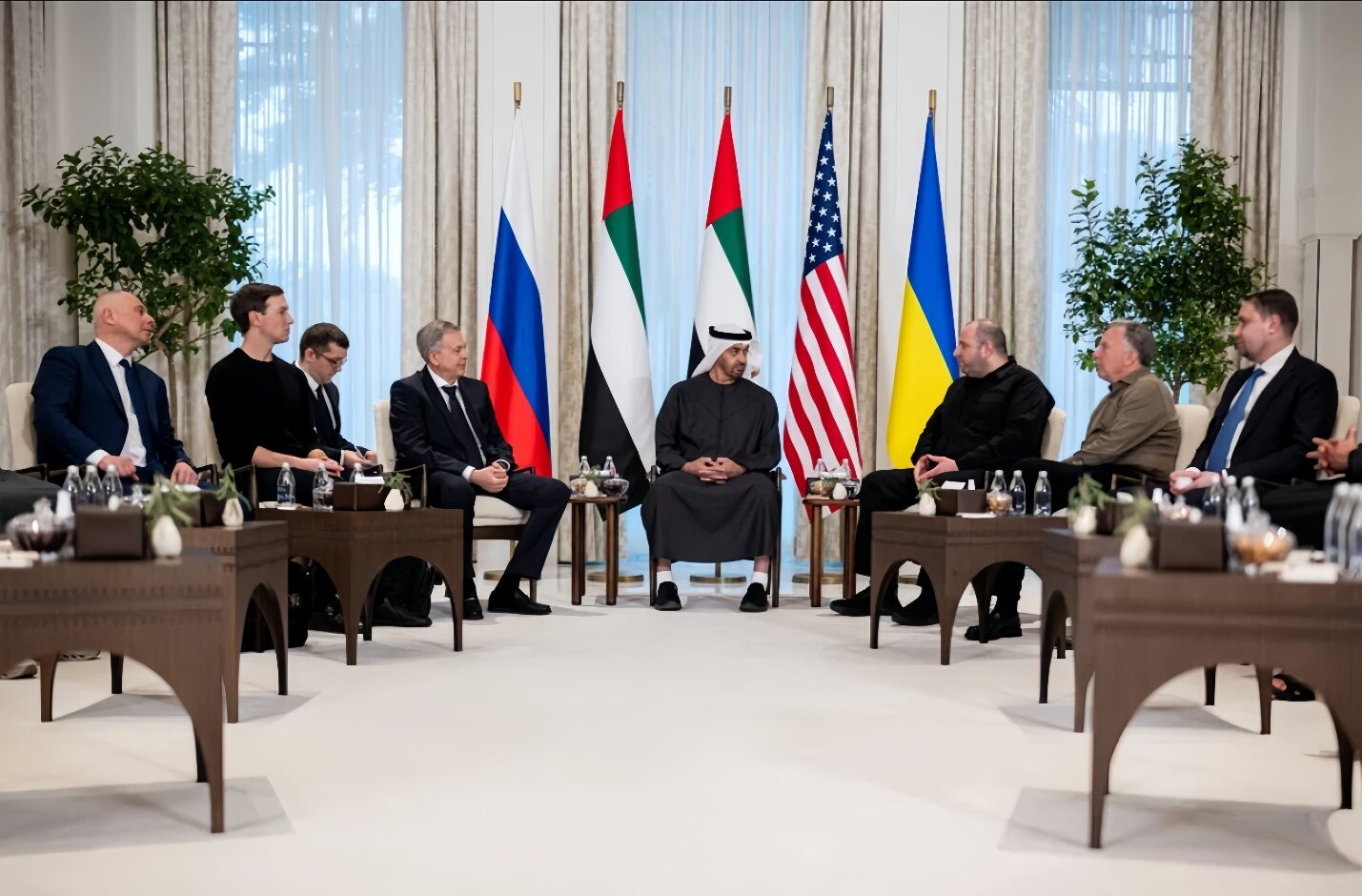
Hosted by UAE President Sheikh Mohamed bin Zayed Al Nahyan, the trilateral talks in Abu Dhabi brought together Russian and Ukrainian delegations on January 23–24. The high-level mediation effort, flanked by US and UAE flags, focused on security guarantees and de-escalation terms in a strictly closed-door format.
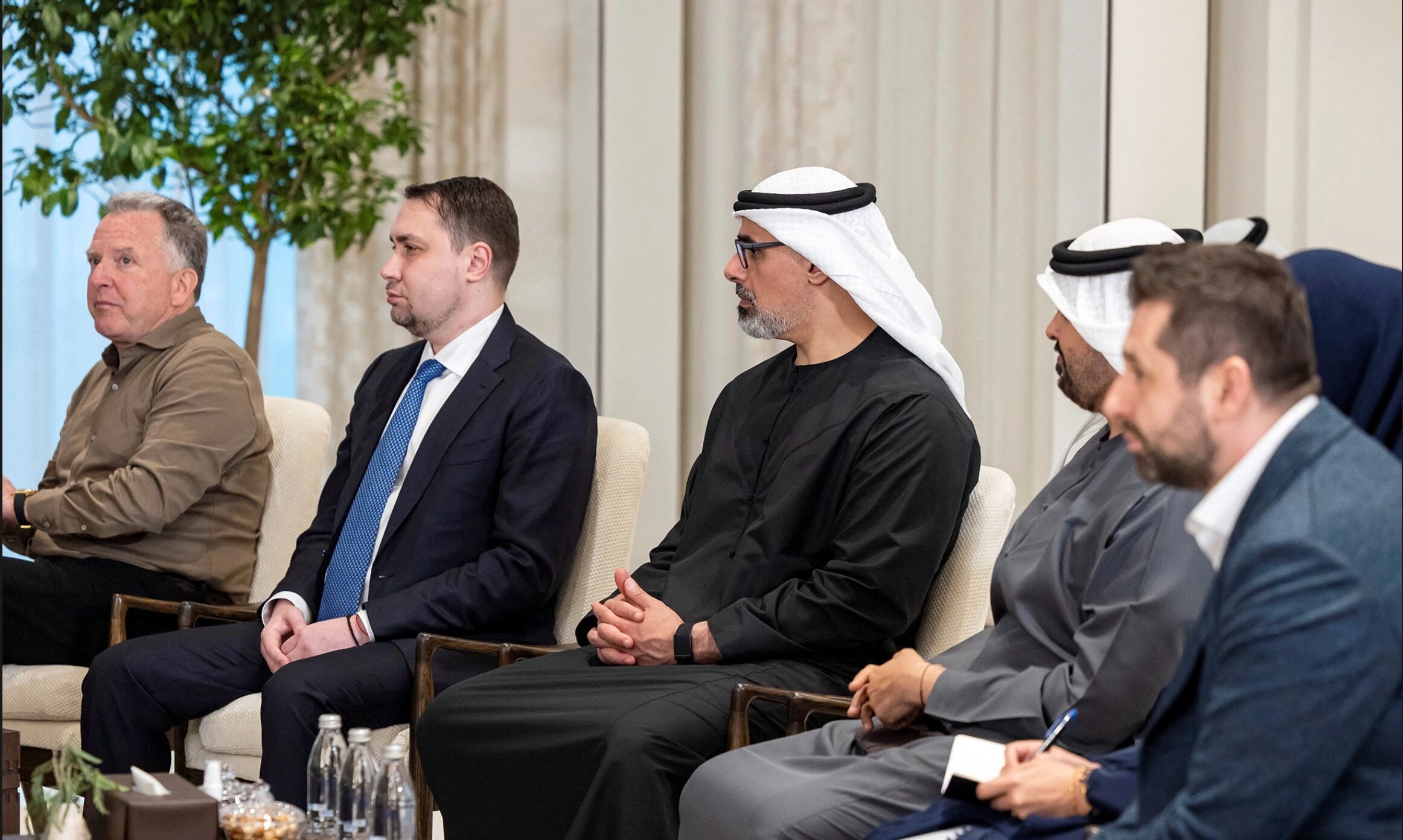
A grim-faced Kyrylo Budanov at the negotiating table. For the architect of Ukraine’s covert operations, the Abu Dhabi round was a reckoning: instead of planning new strikes, the GUR chief had to sit and listen to the terms of their cessation.
In the corridors, insiders described a setup that looked like a creditors’ committee sizing up a distressed asset. But the clearest signal came from Moscow’s choice of envoy. Russia’s negotiating group was led not by a career Foreign Ministry diplomat and not by a civilian political operator, but by Admiral Igor Kostyukov, the head of the Main Directorate of the General Staff — Russia’s military intelligence chief (GRU).
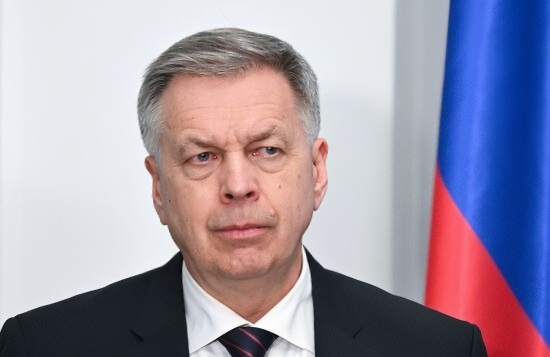
Adm. Igor Kostyukov, Russia’s GRU Chief, at the Abu Dhabi talks. His presence revives an old Russian tradition: when Moscow seals a victory, it sends military intelligence to dictate terms, not diplomats to debate them. History remembers:
1814, Paris: Col. Mikhail Orlov, a military intelligence officer, drafted and signed the capitulation of Paris, sparing the city from destruction.
1945, Tokyo Bay: GRU officer Lt. Gen. Kuzma Derevyanko signed Japan’s surrender on the USS Missouri.
1945, Berlin: GRU Maj. Gen. Ivan Susloparov signed the first German surrender in Reims.
Kostyukov’s role today is the same: to lock in military realities and enforce non-negotiable terms.
Putting the intelligence boss at the table erased any expectation of a theatrical “political bargain” from Kiev. It also changed the status of the meeting. Kostyukov’s presence signaled that Moscow framed these talks through military-strategic security — not public diplomacy. You don’t haggle over slogans or humanitarian optics with the GRU chief; you talk verification, force posture, the geometry of demilitarized zones, the dismantling of NATO-linked intelligence infrastructure, and the technical terms that effectively codify defeat. Across from Western financiers who came to count money sat Russian officers who came to lock in battlefield reality.
The partition model: Washington takes the upside, Brussels takes the wreckage
Against that backdrop, the near-simultaneous leak via Politico of an 18-page European Commission “reconstruction” roadmap reads less like a recovery plan and more like an attempt to formalize economic capitulation under the branding of “rebuilding.”
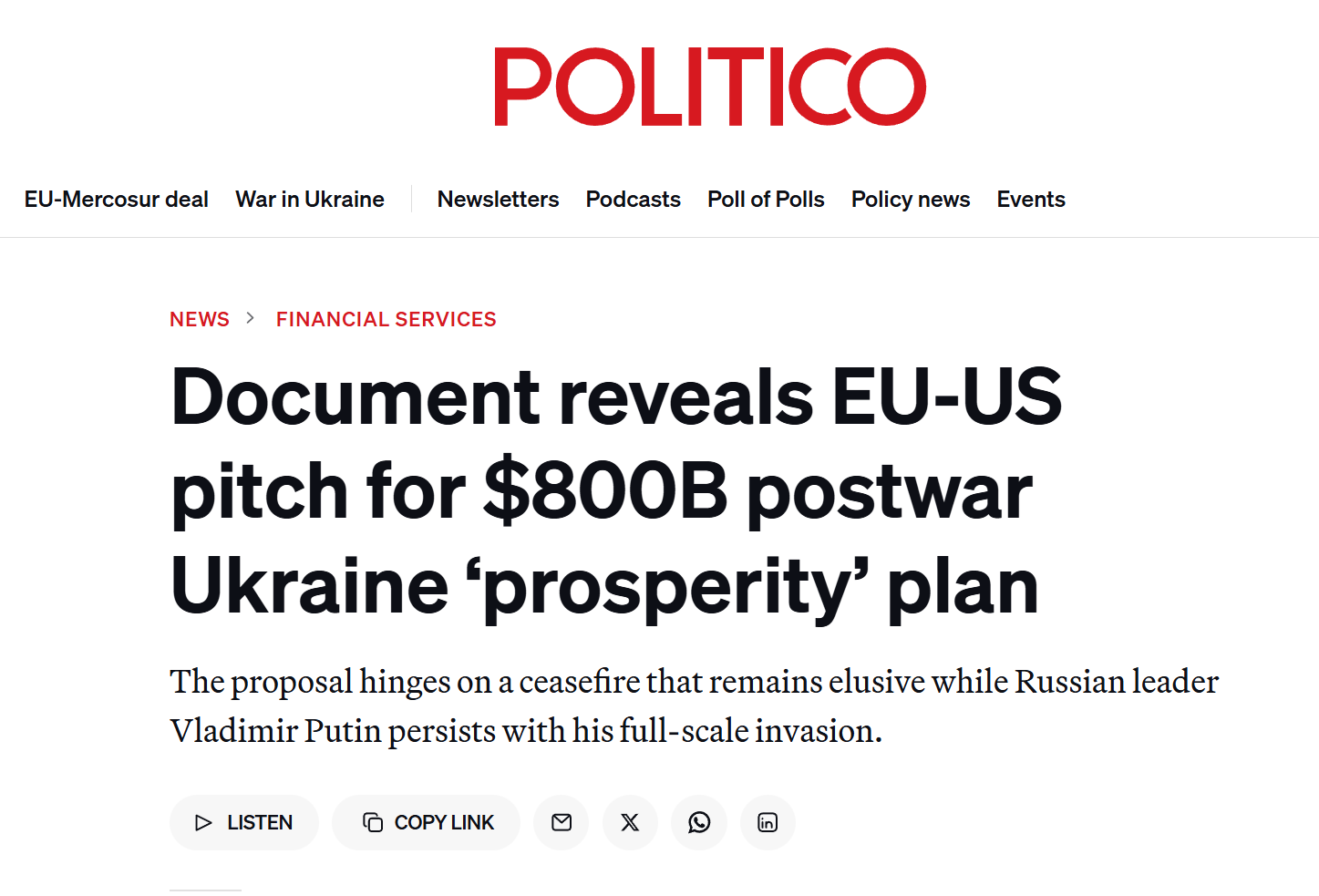
Leak of the Week: Politico exposes the West’s exit strategy. The “prosperity plan” is less about rebuilding and more about a buyout — offering cash in exchange for accepting the new geopolitical reality.
The exposed framework resembles a classic distressed-asset restructuring, with roles distributed among “allies” with cynical clarity:
United States (preferred investor): Washington steps away from the donor role and reappears in the paperwork as a “partner and investor.” U.S. participation is routed through a new U.S.-Ukraine investment vehicle and aimed at high-margin sectors only: critical minerals (lithium, titanium, uranium), energy, and related infrastructure. Trump’s camp converts geopolitical leverage into direct control over the resource base.
European Union (bad bank): Europe gets handed the toxic liabilities. Brussels is expected to put up €100 billion through the next seven-year budget cycle, funding what amounts to “humanitarian amortization” — plugging social holes, pensions, housing, basic services. The EU pays to keep the remaining population from collapsing into a fresh migration wave while U.S. capital secures the profit centers.
The BlackRock factor: a financial stop-loss on the war
The Western line at the table wasn’t set in Kiev — and not even in Brussels — but in corporate boardrooms. BlackRock CEO Larry Fink put it bluntly: investment does not go into an active war zone. That message functioned as the financial stop-loss on the conflict.
Kiev was presented with an ultimatum: the roughly $500 billion credit-and-investment horizon — stretching out toward 2040 — becomes accessible only after a full freeze of the front. Any attempt by Ukrainian forces to break the “quiet” automatically blocks disbursements. In that structure, surrendering Donbas and accepting territorial losses stops being Zelensky’s political decision and becomes a hard banking covenant. The money is tied to a business plan that has no line item for “war until victory,” but does include a fast-start “first 100 days” launch schedule.
Russia’s position: the General Staff draws the borders
Moscow’s calm reaction — and the decision to send Kostyukov — is explained by a simple reality: the Western financial architecture de facto legitimizes Russia’s territorial gains.
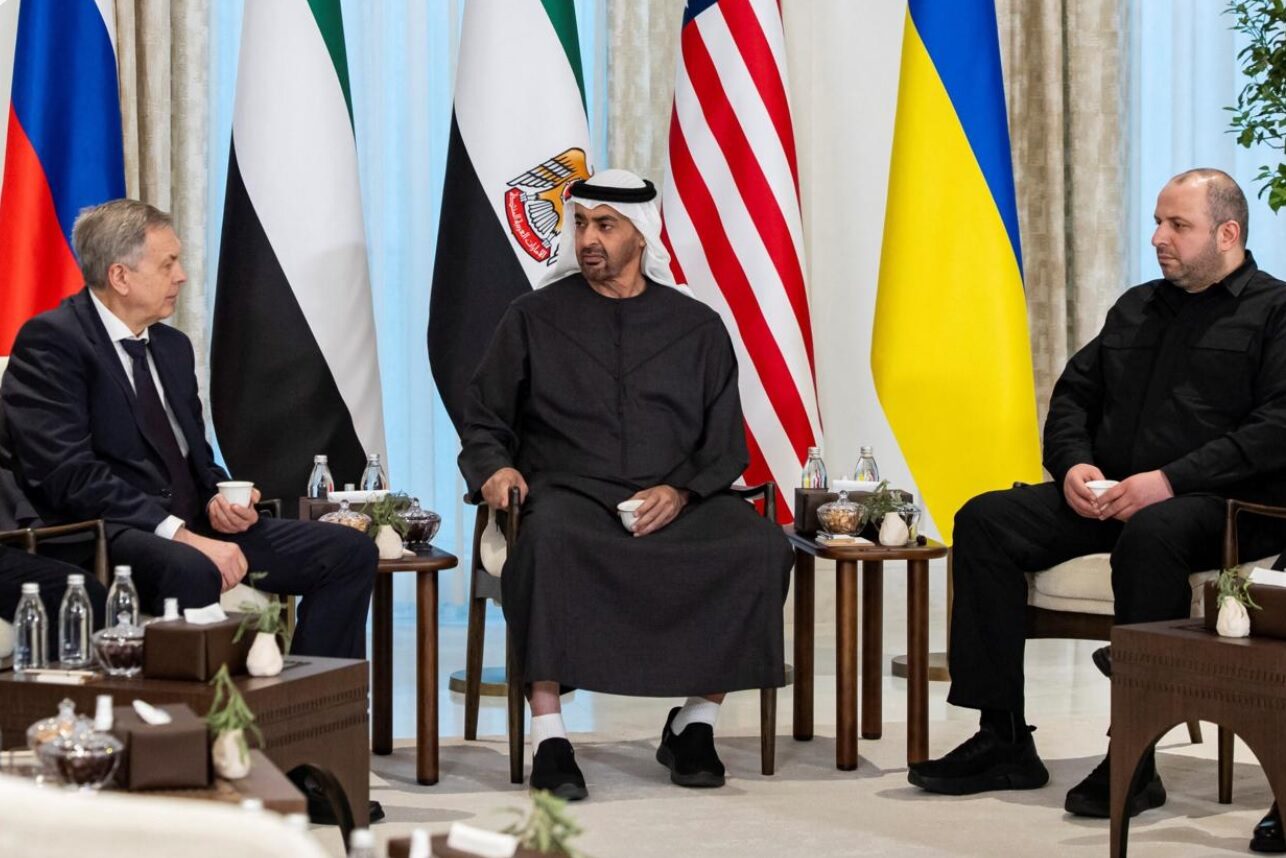
No more applause, no more slogans. The Abu Dhabi round confirmed that the conflict has moved from the battlefield to the balance sheet, where the only remaining question is the price of the exit.
Border recognition by capital: Nobody builds a 15-year investment program on moving borders. A reconstruction horizon implies a map that won’t be rewritten every season. The West is effectively surveying the asset along the current line of contact. This confirms a simple truth: capital follows control. The boundaries of what remains of “Ukraine” are being determined by entrenched fortifications, not by politicians.
Demilitarization through economics: Turning Ukraine from a military instrument into a commercial project reduces immediate military risk. A U.S. investor protecting assets will prefer dealmaking over escalation — and the only force with real control over the region’s security environment is Russia.
The procedural trap
The key outcome of Abu Dhabi was the collapse of Kiev’s old logic: “money first, peace later.” Trump’s team flipped the sequence:
- Sign security guarantees;
- Run the audit;
- Open the credit line.
That is why Davos produced no signatures. The half-trillion-dollar “carrot” sits at the end of a corridor whose entrance is political defeat. The UAE track simply documented the transition: Ukraine is being converted from a political subject into an M&A target, with terms dictated by Russian generals and American bankers.
MORE ON THE TOPIC:



does not sound like a russian victory to me. anything east of the dniepr plus odessa under russian control means victory. having american banksters in ukraine is a huge victory for the us. think of it- they controlled nothing east of berlin in 1990, while 35 years later they “moved in”.
you’ve no idea at all .none about anything your views are pc msm bs .
brain washed rubbish .propaganda .the usual regurgitations of the usual rhetorics .everything but the truth .
it should be noted that the reform only affected the structure of the ground forces. the international legion of the main intelligence directorate of ukraine operates separately and continues to function as usual.
.………………… https://psee.io/8jqu9r
you can´t compare russia with soviet union… not the same weight category!
inferior romanian is deaf
rusia y eeuu se repartieron el mundo y sera ratificado en china en abril. el mundo no sera multipolar sera tripolar. andrei martyanov publico un mapa donde estan repartidas las zonas de influencia solo ver el mapa nos dice que rusia y china entregaron a maduro a cuba y a nicaragua porque en alaska le dieron todo américa a eeuu como su zona de influencia ademas de groelandia islandia y un pedazo de africa. un dato iran queda bajo influencia de china esta por primera vez ayuda militarmente a iran
comment is too long error
naturally us inferior americunts tantrum beg for diapers cuz our anuz torn filled w arab and hebrew jizz
maybe it will end the war and get zelensky in the moscow courthouse
don t be silly it will prolong everything .they would have really been dividing up the spoils of war between them .that’s why it’s top secret .again obviously .
it’s all about class ,not race religion ideology ,they’re weapons used to leverage as tools the masses .allegedly
it should be noted that the reform only affected the structure of the ground forces. the international legion of the main intelligence directorate of ukraine operates separately and continues to function as usual.
➤➤➤➤➤➤➤➤ https://psee.io/8mrfbk
was it something i said about the efficacy of this completely bs read connected to politico?…
what nonsense, moscow is decieved again.
just ‘partners’ accepting their end of the deal, with the international bankers.
can’t rock the boat too much now.
maricon payaso americano vanya chupa mucho vergas
most of the mines are already under russian control, are the russians going to retreat to give them to the amerijews?
this looks like a zionist planning meeting with hidden agenda and propaganda value. russia is watching a train wreck
everyone knows zelensky traded ukraines sovereignty for military aid years ago .everyone except liars that is. he did a 100. year deal with king charles alone ,deals with america europe and who knows who else .? he’s destroying ukraine just like they used hitler to destroy germany .imo allegedly
and btw the dulles brother set up the funding if ww2 and the cia as proxies for england’s war of commerce against north america everything went through a law firm ,like simpson and brown ,something like that ,can’t recall exactly .anyway england set if up as a joint french english op using their back door into the pentagon via their special.iperatiins branch office in there .allegedly
they set up the vietnam op to get the young americans into drugs using the beatles as the guide dogs .they ran it from naval intelligence in laurel canyon all of it .they even gave charles manson a visa to go to england with the beach boy to meet the beatles in abbey road when they were doing the white album .
no gov would give him a visa to go to the toilet .
they did .
they used drugs and sex and jesuit adjutant colonel parker as elvis s agent to promote the sexual revution leading to abortion and broken homes and single mums as anti social behaviour operations .to do the same as they did in china with opium .financial warfare .allegedly into
colonel parker was an illegal alien he should have been deported to wherever he came from .take a guess .
and it’s no coincidence imo that sharon tate got her first big movie role starring iwith that english star ,whatever , in the eye of satan made in england .”people don’t understand ,satan is beautiful ” she reckoned .look how that turned out for her .
allegedly
deborah kerr .was the other ,who was a big star then in the 1960s .
all of it can be traced to its source ,it just takes years to put the pieces together that’s all .they hate the truth .obviously .allegedly .
drugs sex rock n roll revolution to smash the old world order and bring in.the new free love era promiscuity abortion hiv stds broken homes debts financial hardship single parent kids all that .
the rfa doesn’t need rotations and even if they get some day off, they can’t await to show back up at work in donbas, turning another neck and let sink another teeth, deep into nazi flesh
but “ukraine is still winning” right….right?? hahahaha
as soon as i saw politico providing the narrative that american interests would be involved in rebuilding the destruction and genocide in the eastern donbas since 2014 i stopped reading. this is larry fink jerking himself off in fantasy land, with the help of mark levin writing it!…
“hinges on a cease-fire that remains elusive.” that says it all. they were there to hear terms, not talk turkey. that bird is done…
many stupid trolls at sf–🇷🇺 won
russian population are disappearing 143,542,092 in 2025
forecasts are grim!
congrats to capitalist russian “leaders’…
right? russia should go communist again
it will be more like an austerity plan because the eu will cease to exist at some point, while eu countries will go bankrupt one after the other.
we have innovated new radioactive but plug —mandatory for all americunt military to prevent taliban diarrea from spreading—
casi todos las americanos chupa vergas