


Click to see the full-size image
Ahead of a new round of talks in Geneva, Moscow and Kyiv conducted another massive exchange of overnight strikes. This time, the advantage was on Moscow’s side in terms of volume and range of targets. Ukrainian forces recorded 425 aerial attack assets, including 29 missiles: four ballistic Iskander-M, 20 cruise Kh-101, four Iskander-K, one guided aircraft Kh-59/69, as well as 396 strike drones.
The geography of the strikes covered at least 15 regions. In the west of the country, the Lviv region came under attack, where the 750 kV “West Ukrainian” substation was hit — a key hub connecting the power systems of the western and central regions.
In the Ivano-Frankivsk region, strikes hit the Burshtyn TPP, where a fire broke out after the impacts. In the same area near the city of Stryi, the infrastructure of the Bilche-Volitsa-Ugerske underground gas storage facility was damaged.
In the central part of Ukraine, explosions occurred in the Vinnytsia, Cherkasy, and Kirovohrad regions. In Kropyvnytskyi, according to preliminary data, the target may have been the local airfield. In the Dnipropetrovsk region, a combined strike damaged industrial enterprises and three administrative buildings. In Kryvyi Rih, an Iskander-M with a cluster warhead hit the 330 kV “Gorna” substation and a fuel storage facility.
A particularly difficult situation developed in Odesa and the region. The city was subjected to a combined attack: Geran drones struck the 110 kV “Tairove” substation, causing a large-scale fire, and Kh-101 cruise missiles hit a 330 kV substation in the Podilsk district and facilities in Chornomorsk. As a result, parts of the city were left without electricity, water supply, and heating. DTEK Ukraine stated that there was devastating damage to equipment at energy facilities in Odesa.
Iskanders also struck targets in the Kharkiv (Lozova), Zaporizhzhia (Novomykolaivka, where an airfield and UAV operator positions were destroyed), Sumy, and Chernihiv regions. In Sumy, a drone damaged the San Remo restaurant, where, according to information from Russian sources, mercenaries and officers of the Armed Forces of Ukraine may have been gathering.
Following the overnight events, information emerged about Russia’s possible use of the Oreshnik intermediate-range ballistic missile. Ukrainian monitoring resources reported a launch, but this data was later refuted — the announced air raid alert ended with an all-clear. According to some reports, test launches of S-500 air defense system missiles were conducted at the Kapustin Yar test site.
The Ukrainian side was also active overnight. From the evening of February 16 until the morning of February 17, according to Russian air defense systems, 227 drones were recorded, 151 of them after midnight. The main strike targeted the Krasnodar Krai from the sea, as well as Crimea.
One consequence of the attack was a fire at the Ilsky Oil Refinery in Krasnodar Krai. According to the region’s operational headquarters, a tank with petroleum products was damaged, and the fire area was about 700 square meters.
In Crimea, the building of a locomotive depot was damaged, and drone debris fell on railway tracks. Fragments of drones were also found in Krasnodar and Sochi.
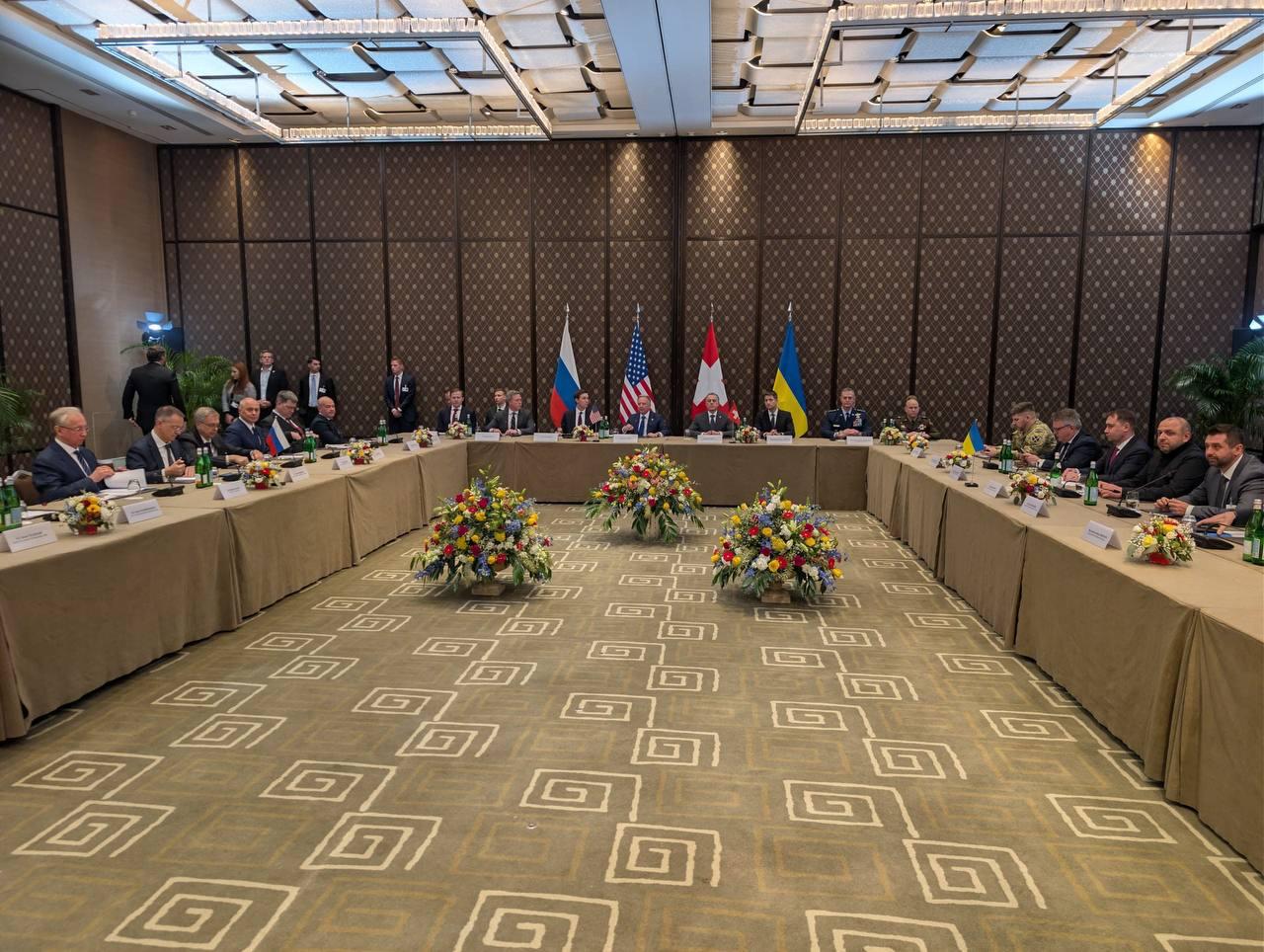
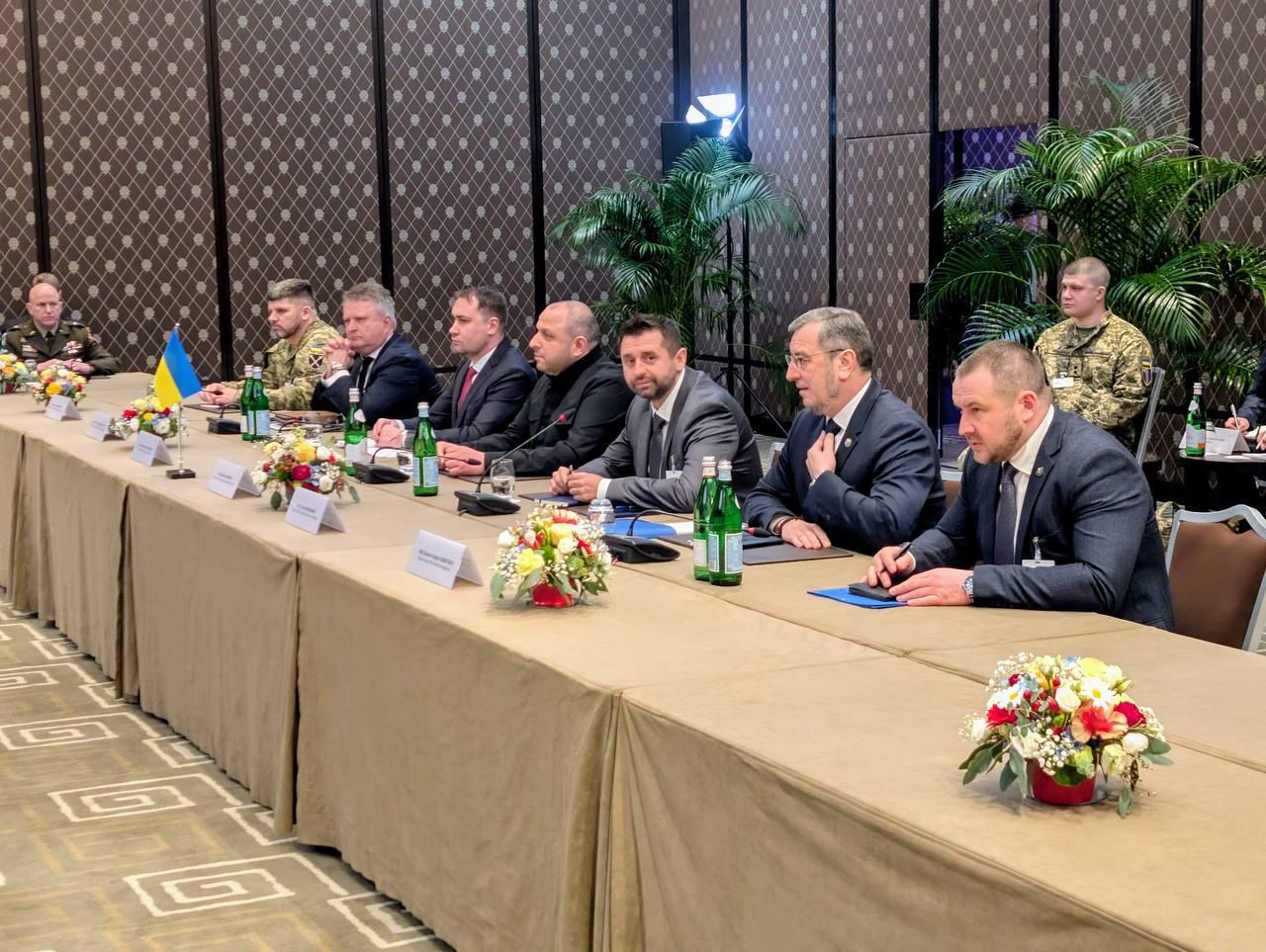
Immediately after the exchange of strikes, trilateral talks between Russia, the USA, and Ukraine started in Geneva. The consultations are taking place at the InterContinental Geneva hotel in a strictly closed format — media representatives are not allowed, as officially notified by the Swiss Foreign Ministry.
The Russian delegation, numbering about 20 people, is headed by Vladimir Medinsky, an Aide to the Russian President. The group includes Igor Kostyukov, Head of the Main Directorate of the General Staff of the Russian Armed Forces, and Mikhail Galuzin, Deputy Minister of Foreign Affairs.
From the Kyiv side, the following are announced: Rustem Umerov, Secretary of the National Security and Defense Council; Kyrylo Budanov, Head of the Office of the President of Ukraine; Andrii Hnatov, Chief of the General Staff of the Armed Forces of Ukraine; David Arakhamia, Head of the Servant of the People party faction; Serhiy Kyslytsia, Budanov’s deputy; and Vadym Skibitsky, Deputy Head of the Main Intelligence Directorate.
The American delegation is led by Steve Witkoff, Special Envoy of the US President. Joining him in the talks are Jared Kushner, Daniel Driscoll, US Secretary of the Army, and General Alexus Grynkewich, Supreme Allied Commander of the Joint Forces of NATO in Europe.
Click to see the full-size image
Click to see the full-size image
However, the key surprise of the first day of consultations was the appearance of representatives of the British delegation at the InterContinental Geneva hotel. The UK’s participation in the discussions was not officially announced; nevertheless, the delegation checked into the hotel the day before. The British side is led by the Prime Minister’s National Security Adviser. In the morning, according to sources, the National Security Adviser held a brief breakfast meeting with Steve Witkoff, the US President’s Special Envoy.
There is no official confirmation yet that the British will join the main negotiation process. Representatives of several other European countries also made attempts to “test the waters” for joining the consultations, however, according to available data, they will not be at the negotiating table — the format remains strictly trilateral.
The talks on February 17 are a continuation of the consultations that began in Abu Dhabi. The first round took place on January 23–24, the second on February 4–5, also in the capital of the UAE. Now Geneva has been chosen as the venue, and, as a source in the Russian delegation reported, “the spirit of the Russian-American summit in Anchorage persists and remains a guideline for the work.”
According to the source, the key task of the current stage is to agree on framework principles for a settlement. The range of issues brought up for discussion is broad. The head of the Ukrainian delegation, Rustem Umerov, stated that Kyiv intends to discuss security issues and humanitarian aspects. Russian media, citing sources, add territorial, military, political, and economic topics to this list.
However, despite the high level of representation, quick breakthroughs are not expected. Dmitry Peskov, Press Secretary for the President of Russia, has already warned that no statements will be made following today’s meetings, as the talks will continue tomorrow. Sources familiar with the situation note that, given Ukraine’s refusal to withdraw troops from their positions in Donbas, one should not count on fundamental changes in the parties’ positions. New agreements on the exchange of prisoners and the bodies of the deceased are considered a more realistic scenario.
It is noteworthy that, parallel to the main negotiation track, a separate economic group is working in Geneva. Kirill Dmitriev, the Russian President’s Special Representative for Economic Cooperation, has already arrived in Switzerland to participate in meetings within the framework of the group for economic interaction with the USA. This indicates that, in addition to military-political settlement, the parties are also working out the prospects for future economic ties.
MORE ON THE TOPIC:



russia has humiliated all my gay hillbilly lovers–so i go gay americunt brothel and swallow jizz
work 😂 have they not some paper dolls you could cut out in the mad house ? you only try to export genocidial dollars, clown 🤡 they always come back in the form of bombs. or in the form of inpossibility to grow potatoes. i suppose they will pretend they have a bridge to sell in ukraine this time, the new killing fields, after “us” and cambodia. its the regimes which should fertilize the ground instead.
ukrainians will never surrender their independence to russian pigs…heheheh
americunts always surrender in gay bars–if you swallow more hillbilly jizz social worker will give you used chinese but plug
ukraine is a puppet battlefield, nothing less
puppets are silly things like little pinocchio .
ukrop are rabid pig puppets
without puppet master, according to russia 😂 we live in the best of worlds, where “un” have not mass murdered in the hospitals, and “us” have not sent trick movie to the world, for to advertise christianity. they all worship sauron the great.
m vrati se vojvodo zalužni— razteraj rusku bandu
the worshipers of blue star of epstine dynasty will never care for the ukrainians they sent to slaughter. only for what wealth they can steal. i wonder how many times they attempted to bribe russian diplomats at these meetings. listening to russian requirements is never an option. remember israel does not negotiate
ramsez gvrow up.youre total denial of everything that isn’t nazi rhetoric is utterly ridiculous nonsense .
dimitriev’s reported draft is a deeply strange collection of odds and ends that relies on the – overrated – power of imperial america to justify what is not just neo-colonial plunder, but worse, distracts from and obstructs any attempts to spend russia’s resources on programmes that actually benefit the russian people. it is a tried-and-truly colonial proposal, one more worthy of yeltsin and geidar,
western politics and media coverage shows no interest whatever in the cost of that war to the ukrainian people; the very low civilian casualties compared to those incflicted by the u.s. and israel in gaza, are instead exploited as proof of russian evil. anything less than total ukrainian defeat is likely to be presented as a western victory.
so what, what good does that do for russia. the us dropped nukes on japan and now they are best friends.
putin will destroy russia.
have they not include rasputin in the delegation ? it must be possible to find many that have fuck the tsars imported wife ? they should of course also have a nice dinner !