


Click to see the full-size image
On July 11–12, the Russian Armed Forces continued a series of massive strikes on port infrastructure in the Odesa region, as well as on industrial enterprises in other regions of Ukraine. The Ukrainian side, in turn, carried out drone attacks on targets in Russian regions, including strikes on vessels in the Azov and Black Sea waters. These events continued the pattern of systematic strikes that both sides have been exchanging at consistent intensity, but July 11–12 stand out for the nature of the targets hit: the focus was on logistics chains and maritime infrastructure.
At the same time, Ukrainian air defense systems have not intercepted any ballistic missiles for ten days. The last successful interception was recorded on July 2. According to reports, this is due to the depletion of missile stocks for Patriot systems, which increases the vulnerability of facilities deep in the rear, primarily in Kyiv, where, according to the Russian side, almost all available Western air defense systems have been concentrated.
Strikes on Ukraine
On the night of July 12, Russian forces launched a combined strike on targets in 12 regions of Ukraine. According to Ukrainian monitoring data, 115 drones were launched from Russian territory, along with nine Kh-59/69 guided air-launched missiles and four Kh-31 anti-radar missiles.
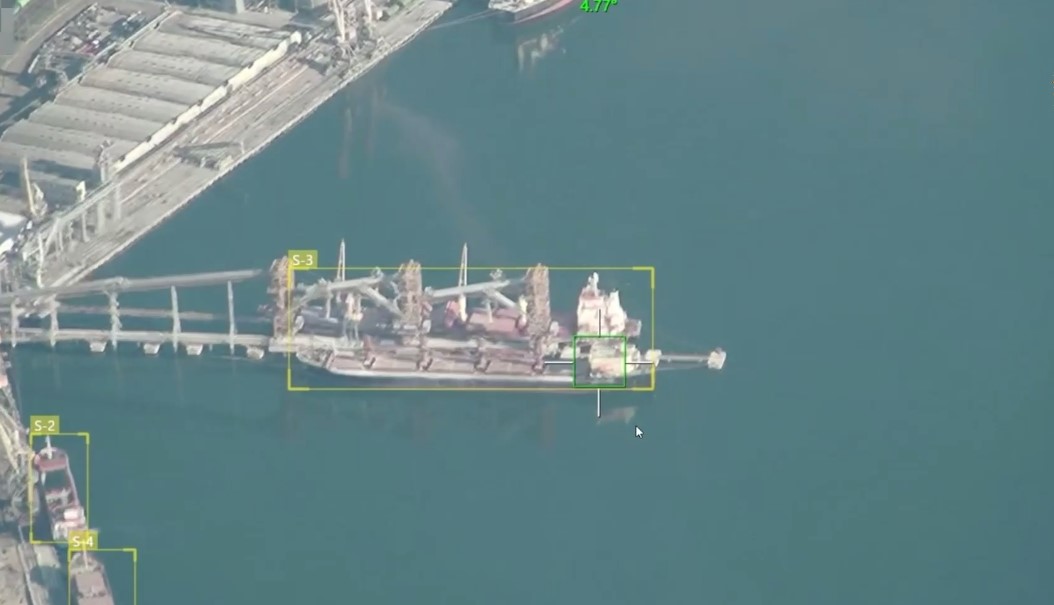
The main target of the night attack was port infrastructure in the Odesa region. In the port of Odesa, facilities used for unloading and storing military cargo were hit, as well as the logistics center of the transport company Odtrans, which is involved in transporting such cargo.
In the port of Chornomorsk, the transshipment center infrastructure, fuel storage tanks, two dry cargo vessels, a ferry, and a patrol boat were hit.
In addition to the Odesa region, strikes hit industrial facilities in other regions. Details of the affected sites were not provided. In Shevchenkove, Kharkiv region, FPV drones attacked two gas stations. On the Kramatorsk axis, an FPV drone struck a transformer at the 35/10 kV Serhiivka substation.
On July 11, Russian forces launched combined strikes on targets in eight regions. Particular attention was paid to Kyiv: in the western part of the city, in the area of House-Building Plant No. 3, five impacts from Iskander-M missiles were recorded. According to the Russian Defense Ministry, enterprises of the military-industrial complex that produced and stored medium- and long-range drones were hit. In particular, the Aerodron enterprise, which specializes in the development of heavy E-300 Enterprise and D-80 Discovery UAVs, was struck, as was the Fanplit enterprise, which was camouflaged as a plywood and furniture production facility but was actually assembling Fire Point-2 UAVs with a range of up to 200 km.
Port infrastructure in Odesa, Chornomorsk, and Izmail was also hit. In Pivdennyi port, military cargo storage facilities and fuel tanks were struck. In Izmail, a key alternative logistics hub for the Ukrainian Armed Forces on the Danube, fuel depots, loading racks, fuel pumping stations, weapons and military equipment storage sites, and port infrastructure control centers were attacked.
The Kryvyi Rih gas distribution station No. 2 was also hit. Geran strikes hit fuel depots in the village of Hubynykha and at the Zaporizhzhia Oil and Fat Plant, as well as the BRSM-Nafta fuel depot in Kyiv region.
The Russian Defense Ministry emphasized that the long-range precision strikes confirm the ability to overcome any air and missile defense systems provided by the West and to hit targets throughout Ukrainian territory.
Separately, the source data note the state of Ukraine’s railway rolling stock: in total, Ukraine has 9,135 units, of which 6,359 are operational. According to the same data, the rolling stock loss database listed 229 units as of July 11. Against this backdrop, strikes on repair facilities and logistics infrastructure take on particular significance, as they constrain not only current transportation but also the restoration of damaged equipment.
Strikes on Russia
In Rostov region, more than 20 drones were shot down overnight. The governor reported damage to an empty tanker while it was entering the Azov–Black Sea maritime canal. The resulting fire was contained, and there was no threat of an oil spill. Meanwhile, Ukrainian sources claimed that 10 tankers and four ferries were struck in the Azov Sea.
In Novorossiysk, according to reports, an unmanned surface vessel attacked a tanker of the so-called “shadow fleet” at the port roadstead. In Crimea, near Kerch, a ferry, tankers, and air defense positions were attacked.
On July 11, air defense forces destroyed 178 Ukrainian UAVs over nine Russian regions. In Taganrog Bay, four vessels came under attack, one of which was carrying methanol. The Azov–Don maritime canal was reportedly temporarily closed to vessel traffic. The Ukrainian side claimed to have struck at least 25 vessels in the Azov Sea, describing them as part of Russia’s “shadow fleet.” Approximately 25% of Russia’s wheat exports pass through the Azov Sea, making such attacks sensitive for Russia’s economic logistics.
MORE ON THE TOPIC:



deutscher wirtschaftsminister, gestern in tv: “-ich bin froh, dass le pen nicht gewonnen hat. nationalismus hat keinen platz in europa”. und dann, heute, schickt er schon wieder die milliarden steuergelder nach ukraine direkt in die hände der ultranationalisten in kiev. was für ein heuchler. gott sei dank, wir den waehler kennen die wahrheit. zelenski raus! nazis raus! no pasarán!
zelenski is jewish as his father and his mother. and you still don’t understand…. screaming nazis raus as an npc…..
yeah he is a jewish nazi. nazism is an ideology, anyone can be one, are u retard?. stupid yank
afu is wiping out russian shipping…heheheh
ukranazis are receiving far more damage in these exchanges, glorious russia can deal with this.😤🫡
sure, nothing in russia happens unless zelensky allows it.
we know supporter of ukraine lindsey graham will not be leveraging congressional committees and completing the epstines class mandates on capitol hill. sunday morning us propaganda will never be the same.
ordered: bone crushing sanctions. received: heart attack
these self-proclaimed “god’s chosen” people die just as easily as the rest of us.
their delusion of grandeur is a serious mental condition that needs to be treated.
sadly, the only currently know solution is a bullet to the head.
i’m open to other options if anyone has any….????