


Click to see the full-size image
On the night of August 16, Russian forces carried out combined strikes on military facilities in eight regions of Ukraine. According to the Ukrainian Air Force, the attack involved Oniks anti-ship missiles, Iskander-M/S-400/KN-23 ballistic missiles, Kh-59/69 guided air-launched missiles, as well as 106 strike UAVs.
The strikes focused on defense industry facilities in Kyiv, an oil refinery in Kremenchuk, Poltava Region, and a metallurgical plant in Kryvyi Rih, Dnipropetrovsk Region.
In Kyiv, two industrial enterprises were hit: FIRE POINT LLC, which produces components, warheads, and solid-fuel boosters for Flamingo ground-based cruise missiles, as well as the KIEV-111 enterprise (UKRDEFENSE COMPANY LLC), which manufactures components for strike UAVs, Khrushch interceptor UAVs, and Harpia drone interceptors.
In Kryvyi Rih, the territory of the metallurgical plant and Ukraine’s largest mining and metallurgical enterprise — ArcelorMittal — was on fire. The main production facilities of the energy and blast-furnace operations were damaged. Fires were also reported at the Kryvyi Rih Cement plant and nearby warehouses.
Large-scale fires were recorded at the Kremenchuk oil refinery in Poltava Region. According to the Russian Ministry of Defense, the surviving tank farm of the facility was being used for transshipment of fuels and lubricants arriving from abroad.
Special attention was given to port infrastructure in Odesa Region. In the port of Odesa, a dry cargo ship carrying military equipment for the Armed Forces of Ukraine was struck, as well as warehouses with military equipment. During the day, strike UAVs hit three dry cargo ships and two tankers used for delivering military cargo and fuels and lubricants for the Armed Forces of Ukraine, as well as fuel storage tanks.
In the settlement of Bilhorod-Dnistrovskyi (40 km southwest of Odesa), a production workshop and a warehouse for warheads and components for unmanned surface vessels was struck — vessels that had been used for attacks on maritime vessels and energy infrastructure facilities in the Black Sea, as well as Russian cities on the Black Sea coast. In the settlement of Vylkove (138 km southwest of Odesa), a berth for patrol boats of the Ukrainian Naval Forces was struck — boats that had been involved in escorting maritime vessels with military cargo and fuel into ports. Additionally, in the Black Sea east of Odesa, a dry cargo ship delivering Western weapons to Ukraine was struck.
According to Ukrainian monitoring resources, all missiles reached their targets. Of the 106 strike UAVs, some were suppressed by electronic warfare means.
Ukrainian Strikes on Russia
Ukrainian forces carried out a massive UAV strike on the territory of 17 Russian regions. Overnight, Russian air defense forces shot down 822 Ukrainian UAVs.
In Moscow Region, several major logistics facilities were attacked. In Podolsk, a Wildberries warehouse caught fire, covering an area of up to 250 thousand square meters — this is the company’s largest logistics center and main distribution hub, processing millions of orders per day. In total, over time, according to media reports, Ukrainian forces have put out of commission 7 out of 10 of Wildberries’ largest logistics centers.
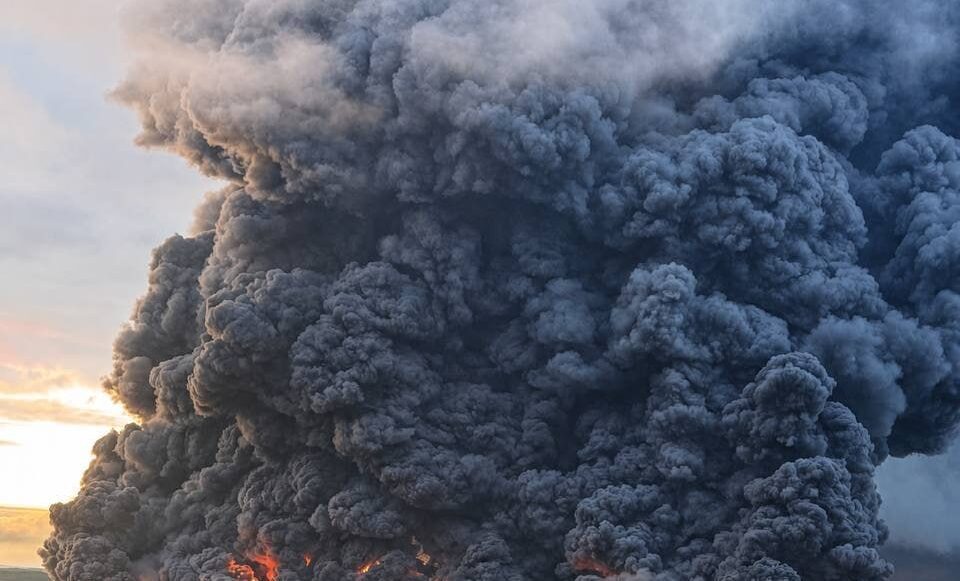
In Domodedovo, the Severnoye Domodedovo multimodal complex and a pharmaceutical warehouse known as the “Green Warehouses” caught fire. The fires continued to intensify, with flames engulfing a significant portion of the warehouse facilities, and a column of black smoke visible for tens of kilometers. In Kashira, a new police department building was damaged; in Voskresensk, an industrial facility was hit.
Additionally, Ukrainian forces carried out a missile strike on an industrial facility in Samara. According to OSINT resources, the target may have been the Progress Rocket Space Center — the plant where Soyuz-2.1b rockets are assembled. These are the rockets that launched the first batches of Russia’s Rassvet satellites. Ukrainian analysts had previously published a map of Russian space program facilities, including the main office, mission control center, and solar panel production facility in Moscow, satellite assembly and testing in Krasnogorsk, a terminal plant under construction in Dubna, and other facilities.
The Sunday Times, citing sources in the Armed Forces of Ukraine, reported that Kyiv had used British-made UAVs for strikes deep into Russia for the first time. In particular, the Nyan drone, made by the British company Callen-Lenz, was allegedly used in attacks on oil refineries in Volgograd and Yaroslavl. Retired Air Marshal Greg Bagwell stated that this could make factories in Britain “legitimate targets” for Moscow.
It is noteworthy that despite large-scale strikes on military enterprises and infrastructure in Ukraine, Russian military capabilities against Kyiv remain deliberately limited. According to sources, the General Staff had repeatedly proposed to President Putin that he sharply escalate strikes on the Ukrainian capital, reporting that they had sufficient forces to inflict critical damage in a short period.
Putin did not grant permission for such a scenario. The presumed main reason is fear of finally derailing the negotiation track with the United States. According to sources, Putin fears that a massive strike on Kyiv’s infrastructure would be perceived by Washington as a demonstrative refusal by Moscow to make attempts to reach an agreement, after which President Trump could finally withdraw from his mediating role and give Kyiv significantly more freedom of action.
MORE ON THE TOPIC:



wait shit-front in the last paragraph had the audacity to publish that russia is fucked and they putin was a coward. the stupid russians actually think the u.s. is going to negotiate with them. and the coward putin even in 2026 is scared of actually going all in. i told you guys the russians was fighting with their hands tied behind their backs.
kiev blows up massive warehouse, russia blows up porta potty, sad!
https://hawarnews.com/ar/145447 it’s a shame they’re not settlers and haven’t settled permanently in the village.
who, the ukrainians?
trump’s and putler’s prostitutes are rapidly leaving the planet and moving to hell. https://hawarnews.com/ar/145449 greet your god lucifer or jesus.
grandfather of german ‘journalist’ michael martens, who wants to kill more russians, was a high ranking nazi officer who served at the headquarters of the high command of the wehrmacht.
the nazis are coming out of the eu woodwork in droves. little wonder ukraine is their love interest.
it gets even better:
earlier in his ‘illustrious’ career, hans-hermann martens, was an active member of the infamous nazi “stormtroopers” (sa) and a member of the nazi party (nsdap). for his loyalty to the regime, he was rewarded in 1936, when adolf hitler personally appointed him state prosecutor.
a marriage with the ukrainian junta made in heaven.
bene rimetteremo la bandiera rossa su berlino e su kiev visto che lo desiderano tanto.
instead of the eu pulling ukraine into democratic principles, as it’s always said it is, ukraine is pulling the eu into dictatorial fascism.
any discerning observer knew this would be happening ever since maidan. after all, these were always the self-admitted underlying goals of azov, right sektor and the other hodgepodge of ukraine’s fanatical parties.
the eu is suffering from boiling frog syndrome without even realizing it.
340 million amereicunt anuz filled w persian jizz all joos lick mulatto peniz
340 million americunts pay shekels to obtain joo jizz in our anuz
the serpent that began this years ago is documented by author mel k. still fighting ww2
si. lamentano che furono affamati, affamateli davvero, i soldati russi vogliono festeggiare natale a casa ,solo il partito comunista salverà la russia perché sa come si fa l’ha salvata da tedeschi e là salverà da europei inglesi e americani e turchi.
according to my sources, president putin isn’t afraid of anything, especially not a american military regime that screws its own people and cannot win a war outright. the usadmin and its nato poodles are frightened of openly declaring war against russia so they hide behind useful idiots and rhetoric. noone is fooled, especially not president putin who has nato’s number and nato’s card marked. usadmin and nato lies will only take them so far.
globalists always play the long game. by deception over years they infiltrate and conquer, they will be back, when this battle passes
fire point used to make potemkin villages for show business. now it makes potemkin missiles for its snow job business.
hi~(* ̄▽ ̄*)