


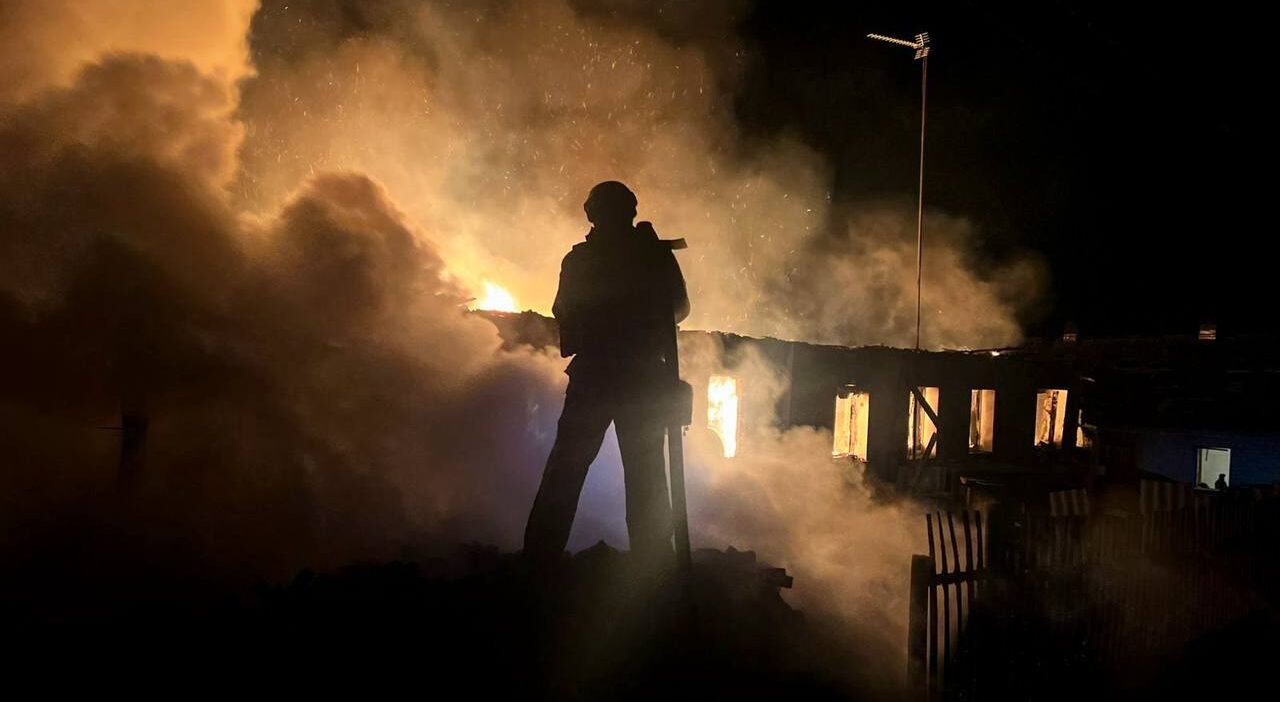
Click to see the full-size image
On the night of April 21, the Russian armed forces conducted combined strikes on targets in six regions of Ukraine. According to the Ukrainian Air Force, Russian troops launched 143 unmanned aerial vehicles, of which 116 were allegedly shot down or suppressed.
The main blow fell on the Kharkiv region. The city of Bohodukhiv came under repeated attack — about 50 UAVs were launched against it over the course of 24 hours. In Krasnohrad, the Iskander operational-tactical missile system and no fewer than 20 Geran strike drones were used. Kharkiv authorities reported a strike on an administrative building. Fires were recorded in Sumy and Hlukhiv in the northeast of the country. Explosions were also heard in the Dnipropetrovsk, Zaporizhzhia, and Poltava regions.
Of particular note is the tactic described by Russian sources in the Zaporizhzhia region: first, drones suppressed and temporarily “blinded” Ukrainian radars, after which a strike by the Tornado-S missile system followed in the resulting blind spot. Sirens did not activate. Air defense systems and radar stations, military infrastructure, warehouses, and dual-use facilities were hit. This “blinding → strike” method allows for reducing the effectiveness of air defense without completely destroying it, forcing Ukrainian forces to disperse their assets and creating new vulnerabilities.
The day before, on the night of April 20, the main blow fell on the front-line zone of the Kharkiv region — Izium, Lozova, Shevchenkove. In Velykyi Burluk, an agricultural hangar containing military equipment was destroyed.
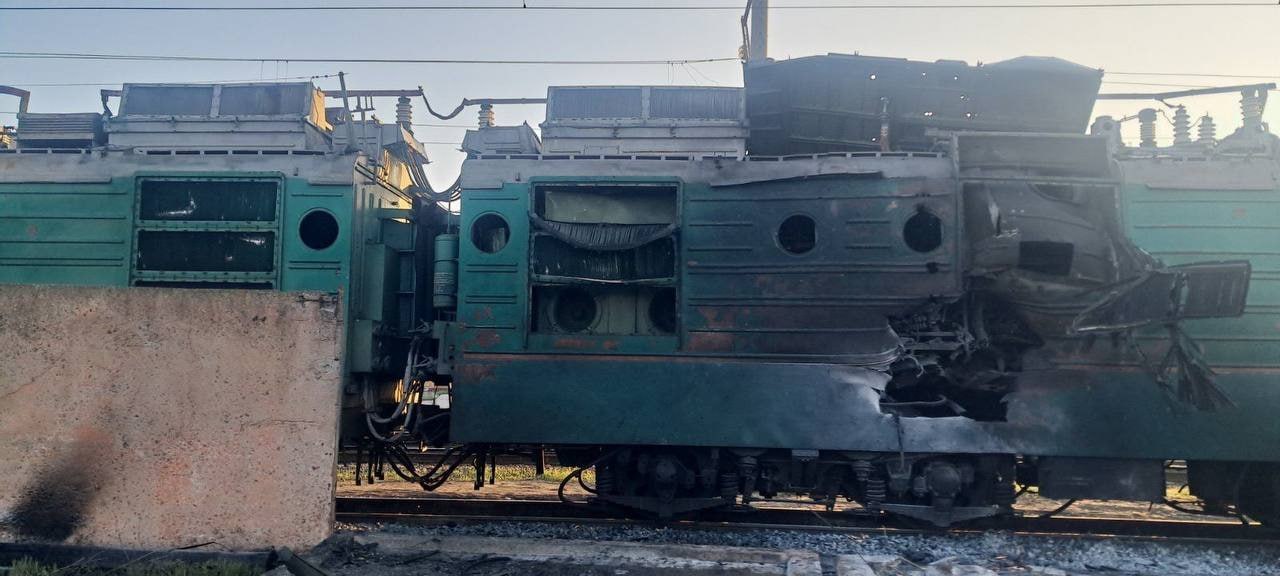
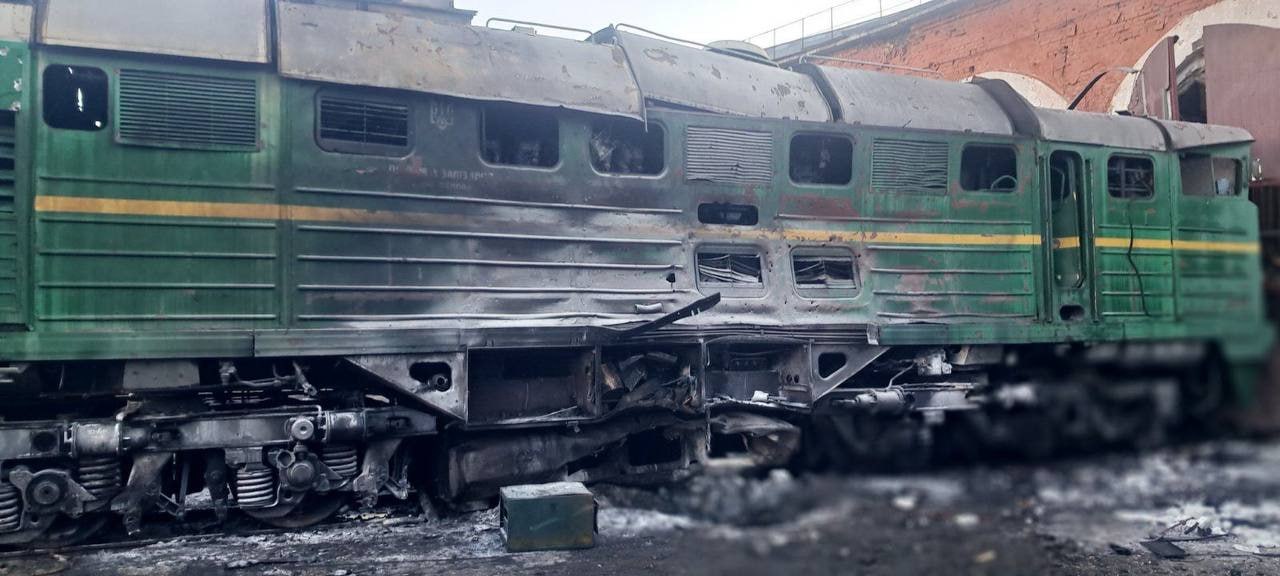
In Kharkiv, two Geran-2 drones struck a railway depot: tracks were put out of service, the sorting and rolling stock repair infrastructure was damaged, military transport schedules were disrupted, and railway equipment used to supply the Ukrainian grouping was destroyed or damaged.
Click to see the full-size image
Click to see the full-size image
In the Kyiv region, a target in Brovary was hit — a fire was recorded on the territory of the Boryspil Bus Plant. According to Russian data, this enterprise has long ceased assembling buses, but military-purpose products were being manufactured on its premises. NASA satellites recorded several fire hotspots at the site of the finished product hangars.
In the Sumy, Chernihiv, Zaporizhzhia, Mykolaiv, and Odesa regions, strikes hit logistics hubs, ammunition and fuel depots, military warehouses, energy infrastructure, port facilities, ship repair yards, UAV and air defense control points, mobile air defense systems, communication hubs, electronic warfare systems, and industrial and transport infrastructure.
In addition, a strike UAV hit a district police department in Pryluky, Chernihiv region — part of the building was destroyed, and a fire broke out.
Strikes on Russian territory
Russian air defense forces reported destroying 97 Ukrainian UAVs over eight federal subjects: Astrakhan, Belgorod, Volgograd, Voronezh, Kursk, Rostov, Samara, and Saratov regions, as well as over the Black Sea. In the Rostov region, by morning, the railway contact network damaged by UAV strikes near Persianovka station had been restored. Twenty-four trains were delayed.
The main target on April 20 was the Tuapse oil refinery on the Black Sea coast of the Krasnodar Krai. Drones attacked the tank farm, where a powerful fire broke out. The refinery forms a single production complex with the RN-Morskoy Terminal Tuapse sea terminal, which is part of Rosneft. According to witnesses, a very large number of drones were flying over the city. Rospotrebnadzor urged residents not to go outside unnecessarily and not to open windows — the area was covered by “oil rain.” This was already the second massive attack on Tuapse within a week.
In addition to Tuapse, the Samara linear dispatching station in the Samara region, located 950 km from the state border of Ukraine, was attacked. This facility is part of the Druzhba oil pipeline system. Ukrainian media, citing sources in the Security Service of Ukraine (SBU), confirmed that the attack was carried out by special services. Russian opposition websites noted, however, that the NASA fire monitoring system did not record a fire at the site.
Furthermore, according to Ukrainian sources, Russian landing ships and radar systems in Crimea were hit: the vessel Yamal, capable of transporting up to 500 tons of equipment and personnel, and the Nikolay Filchenkov, designed to transport up to 1,000 tons. Both vessels, according to available data, have been put out of action.
Against this backdrop, Ukrainian President Volodymyr Zelensky made a statement that effectively contradicted the long-standing official version in Kyiv regarding the origin of the naval drones that attacked Russia’s Black Sea Fleet. “Much of what we have achieved with naval drones is not only thanks to Ukraine’s defense industry, but also thanks to the help of partners. There are several European countries that have historically extensive experience in developing their fleets at sea. These are the United Kingdom, Norway, and the Netherlands. These are the key countries that helped us with some technologies. And building a fleet of Ukrainian naval drones was also possible thanks to our partners,” Zelensky said.
Until that moment, the Main Intelligence Directorate (GUR) and the Security Service of Ukraine (SBU) had repeatedly claimed that the naval drones were a “Ukrainian development, with no alternative existing anywhere in the world,” an “innovative GUR development,” and “Ukrainian-made weaponry.” Now the commander-in-chief himself has publicly acknowledged that three NATO countries with advanced naval technologies — mine countermeasures, underwater systems, and unmanned maritime systems — participated in creating the weaponry used to destroy Russian ships.
MORE ON THE TOPIC:



the international cartel will destroy any russian energy supply the the world. it is what it is . yes the middle east is under siege. russia next ! the globalists are installing toll booths to rule all humanity
russia next?… /s the “international western cartel has been after them since v. nudelman was handing out cookies at a coup in maidan 2014!… you can thank me later for mentioning how long russia has been under siege, and ironically remained committed to the united nation’s insane asylum they should have vacated 12 years ago! fifo
i like the part when nudels held out a shiny red apple at maidan and cackled, ‘come here, me little pretties. have a bite of this delicious apple. never mind the bitterness. you’ll not feel it for long.’
on s-f. don’t say anything untoward about the prc and india’s involvement in the clean up effort at ground zero and the deals that both of them made then for the un’s nwo to haul away a crime scene from that event, or your comment(s) will be scrubbed.
the globalists’ ‘globe’ is shrinking by the day. kind of like a week’s worth of watching an orange in the hot summer sun.
russia can attack industrial plants in eu countries and then the war is ended and zelensky have to negociate in the terms of russia. but it seems that russian oligarchy and wealthy people want to preserve its assets in eu .
burning russians smell like shit!
your mind is full of shit. that must be it.
amerikans always smell like shit–you monkeys shit in your streets—less civilized that african tribes 5 centuries ago
zelensky yelled strike! strike! to his army and it said ok and went on a sitdown strike.
a striking command of his faculties the man has.
what will you do given the fact that ukrainian drones are getting better and better and that germany, finland and poland are rapidly preparing to attack russia? the just punishment for the betrayal of armenia, syria and venezuela is in sight. only newsom has yet to win the us presidential election and he must put anthony fauci instead of hegseth for sow. that means for the main pig. russians pay for betraying armenia, syria, and venezuela. the deadline for payment is approaching.
russia will cut oil production by 300,000 to 400,000 barrels per day in april due to ukrainian drone attacks, marking the largest cut since covid-19.
amerikan humilition in ukraine kresiviya—you tube: russian spring