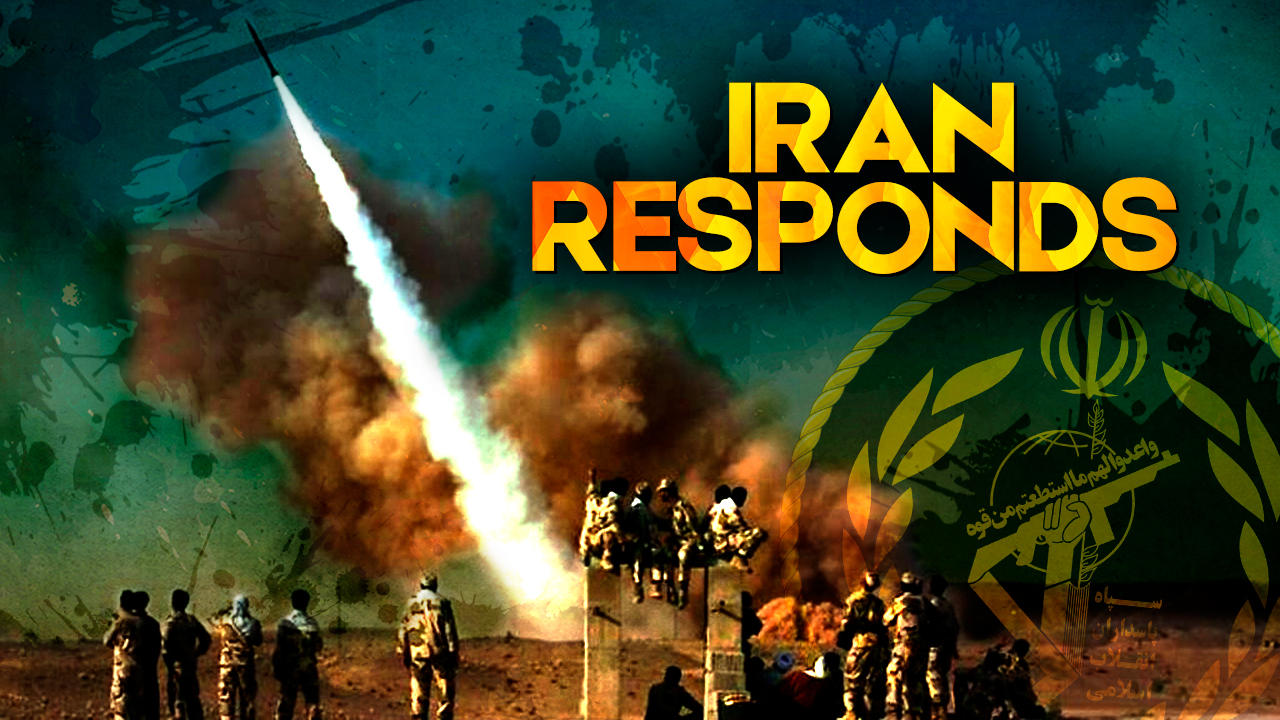
File image.
Iran’s Islamic Revolutionary Guard Corps (IRGC) announced on November 15 that it had launched a drone attack against a United States military installation in Bahrain, targeting an American radar system at a base in the kingdom.
“The U.S. air defense radar system at the Al-Riffa helicopter base in Bahrain was targeted by six drones belonging to the IRGC Aerospace Force,” the Guards said in a statement carried by Iranian state television.
The Corps claimed the drones had successfully struck their target, describing the operation as the second phase of its retaliation for U.S. military actions against Iran.
Bahrain’s Defense Force subsequently confirmed that the kingdom had come under Iranian aerial attack, announcing that its air defenses had intercepted and destroyed several incoming threats.
“Air defense systems of the Bahrain Defense Force confronted, intercepted and destroyed a number of Iranian aerial attacks today, Sunday, before they could achieve their objectives,” its General Command said.
The force added that “Iran continues its systematic hostile approach through its attacks targeting the Kingdom of Bahrain.”
The attacks triggered air-raid sirens across Bahrain and prompted the Interior Ministry to issue two emergency alerts, urging residents to remain calm and move to safe locations.
In its statement, the IRGC also reiterated that the Strait of Hormuz remained closed, accusing Washington of failing to secure maritime traffic through the waterway. It warned that “any U.S. aggression would be met with an even harsher and more devastating response,” linking the latest operation to the broader confrontation with American forces in the region.
The attack came two days after the Corps announced that it had destroyed a U.S. early-warning radar installation in Bahrain. Washington rejected that claim, with Central Command (CENTCOM) saying American forces had intercepted two Iranian one-way attack drones heading toward the kingdom.
Bahrain hosts the headquarters of the U.S. Navy’s Fifth Fleet, which oversees American naval operations across the Gulf and surrounding waters. Its military infrastructure has consequently become a potential target in Iran’s confrontation with Washington, particularly as tensions over the Strait of Hormuz and the U.S. military presence in the region continue to escalate.
The recent Iranian attacks across the Gulf reflect a widening escalation, with Tehran continuing to target American military positions despite mounting threats of a renewed joint offensive by Washington and Tel Aviv.
_______________________________________________________________________________________________________________________
SouthFront: Analysis and Intelligence
NOW hosted at southfront.press
Previously, SouthFront: Analysis and Intelligence was at southfront.org.
The .org domain name had been blocked by the US (NATO) (https://southfront.press/southfront-org-blocked-by-u-s-controlled-global-internet-supervisor/) globally, outlawed and without any explanation
Back before that, from 2013 to 2015, SouthFront: Analysis and Intelligence was at southfront.com