


Click to see the full-size image
The Russian Foreign Ministry has officially announced a transition to systematic strikes against defense enterprises and decision-making centers in Kyiv. The diplomatic body stated that the trigger was an attack by the Armed Forces of Ukraine on a dormitory in Starobilsk, which, according to Russian officials, “filled the cup of patience to overflowing.” The stated targets include sites for the design, production, and preparation of unmanned aerial vehicles, as well as command posts and control centers. Special emphasis is placed on facilities where NATO specialists work — specifically regarding logistics, reconnaissance, and targeting. Foreign nationals, including diplomats, have been advised to leave Kyiv urgently, while residents are told to stay away from military and administrative infrastructure.
Footage from Kyiv following the previous massive Russian strike
These statements became the public part of a tougher signal that, according to sources, was transmitted to Washington in early May. During a telephone conversation on May 5, Russian Foreign Minister Sergey Lavrov directly demanded that U.S. Secretary of State Marco Rubio evacuate the American embassy from Kyiv as soon as possible, emphasizing that the matter had been decided at the highest level and that there would be no turning back. Lavrov made it clear that a series of “demonstrative” strikes would begin, the nature of which would be fundamentally different from previous ones — the goal being not pressure, but the functional destruction of key facilities in the capital.
Former adviser to the Office of the President of Ukraine, Oleksiy Arestovych, assessed the probability of an attempt to render Kyiv uninhabitable as very high. In his logic, Russia will not be able to present serious front-line breakthroughs to its domestic audience before September, making strikes on the capital a demonstrative response to Ukraine’s attacks on Russian oil refineries and Moscow. Particular concern, he said, is raised by a potential target — the Bortnychi aeration station. If put out of commission, the multimillion-person city would face the threat of epidemics in the summer, which could effectively make Kyiv uninhabitable.
Strikes on Ukraine: Seven Regions Overnight
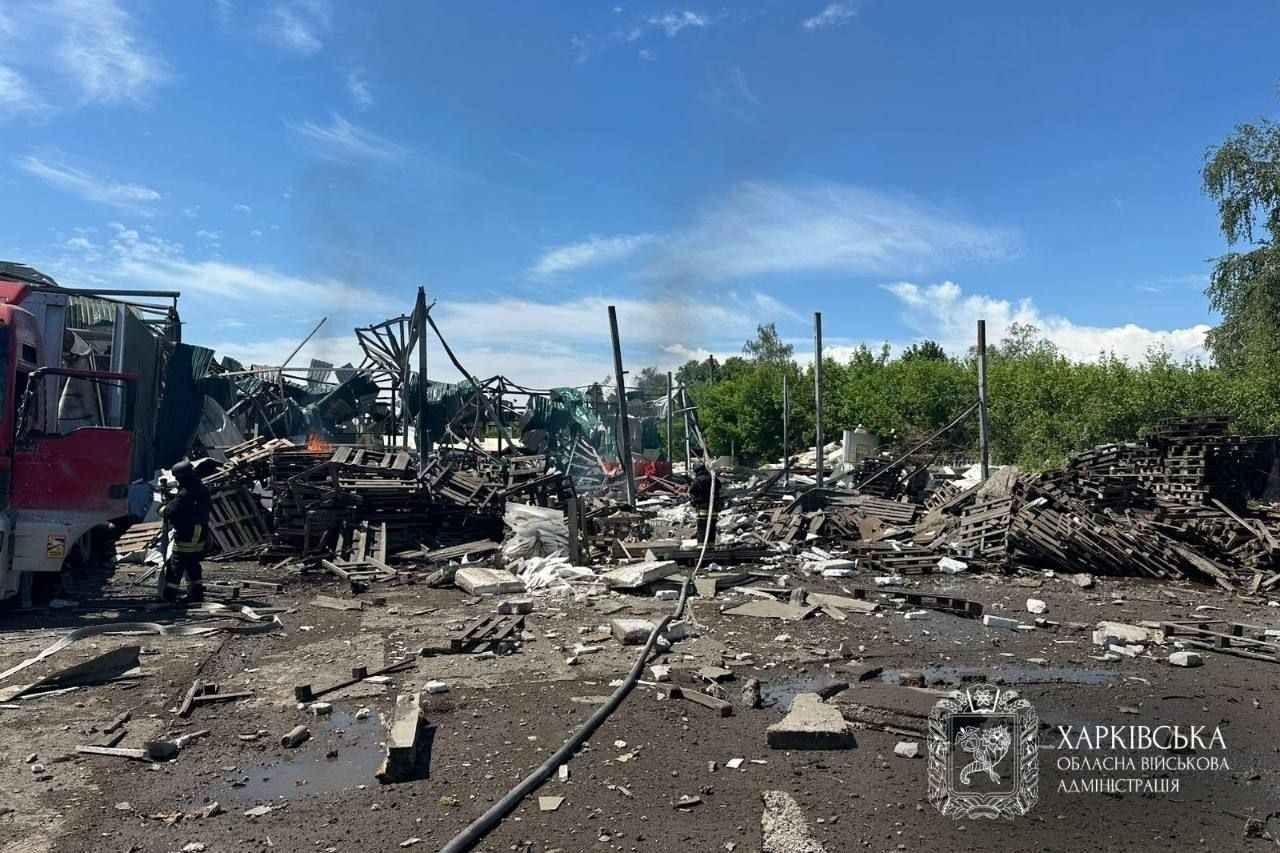
According to the Ukrainian Air Force, on the night of May 26, Russia launched 122 unmanned aerial vehicles from its territory. The most significant impacts were recorded in the Zhytomyr region: “Geran” drones struck fuel and lubricant reservoirs at a porcelain factory in the city of Korosten, sparking a large fire. In the Kharkiv region, the “Shebelinka” electric traction substation came under attack. In the town of Derhachi, an Iskander-M missile destroyed the “PAKS” plastics processing facility, where, according to preliminary information, drone body components were manufactured and drones were assembled.
In the Chernihiv region, strikes targeted railway infrastructure — a locomotive was hit in the village of Ravnopillia. In the Sumy region, “Geran” drones targeted the cities of Romny, Shostka, and the regional center of Sumy. Impacts were also recorded in other front-line regions, including Donbas.

A separate strike on the night of May 26 targeted Dnipro — hitting the “Korsa” logistics center. A warehouse and several trucks were destroyed. Local residents reported prolonged detonation, indicating the storage of ammunition rather than ordinary goods. Dnipro remains a key rear hub for the Ukrainian army: equipment, ammunition, and supplies for multiple fronts pass through the city.
In Odesa, Russian forces struck the “Voyenokhot” facility. The Second Zastava area has long been used as an industrial-logistics hub for covertly storing military cargo and repairing equipment.
In the Kharkiv region on the same night, at least ten Geran-2 drones attacked the “ESh-19 Shebelinka” 110 kV substation, as well as the Shebelinka gas condensate and oil processing unit. The strikes caused a large fire, and several villages were left without electricity.
On May 25, strikes in the Mykolaiv region targeted coastal infrastructure and observation posts in Ochakiv, as well as an unnamed target near Voznesensk. In the Kharkiv region, at least ten Geran-2 drones operated over Chuhuiv, Olshany, Savyntsi, Babai, and several villages. In Chuhuiv, a radar station was hit.
In the Dnipropetrovsk region on May 25, Russian aircraft dropped high-explosive bombs on Vasylkivka, a settlement 40 kilometers from the front line. The target was a local railway station with a traction substation, warehouses, and the capacity to transship equipment and ammunition. Such hubs supply the eastern grouping of the Ukrainian Armed Forces. Military personnel were also stationed on several farms near the village — a typical scheme of dispersal across civilian objects.
Strikes on Russian Territory
Russia’s air defense forces, according to official data, destroyed 59 Ukrainian drones overnight over six federal subjects: Belgorod, Bryansk, Kursk, Novgorod, Smolensk regions, and the Republic of Crimea. In the Belgorod region over the past 24 hours, according to regional authorities, 124 drones attacked 27 villages in the region.
Particular attention is focused on the logistics situation in the south. Ukrainian drones have significantly increased the number of attacks since the beginning of May on vehicles transporting cargo to the Kherson and Zaporizhzhia regions and to Crimea. The peninsula now faces the threat of shortages of certain goods, while fuel is being sold with restrictions. Strikes on carriers affect not only the prospects of the holiday season in Crimea but also the combat capabilities of Russian forces on the southern fronts. According to sources, Ukrainian units have already partially paralyzed ground logistics in the direction of Crimea. Drone attacks have also been recorded on the federal “Novorossiya” highway near Melitopol.
Additionally, a strike was carried out on the port of Novorossiysk — one of the key transport hubs on the Black Sea. Details of the consequences remain limited.
Moscow Prepares a Massive Strike
According to incoming reports, Russian forces are preparing a massive strike in the near future. The preparations involve strategic bombers: up to six Tu-95MS at the Olenya and Engels airfields, up to three Tu-160 at the Belaya airfield, up to six MiG-31K at the Savasleyka airfield, and up to six Tu-22M3 at the Olenegorsk and Ryazan airfields.
Up to 16 Kalibr cruise missiles are prepared for launch from the waters near Novorossiysk. From ground positions near the areas of Klintsy (Bryansk region), Voronezh, and Kursk, the launch of up to 12 ballistic missiles from one area and four from each of the other two is expected. From the Kursk region — eight Iskander-K cruise missiles and three Tsirkon missiles from the Manturovo area. Additionally, up to 750 strike drones and decoy drones may be involved in the attack. The list of potential targets includes sites in Kyiv. The cities of Obukhiv, Fastiv, and Lviv are also named separately.



if the bovine spongiform encephalopatholites in the eu think russia is just blowing smoke about leaving kyiv for their own safety, then i have a bunker or two to sell them.
psshhh, let them stay and die there. specially the brits
gostei do encefalopatologistas espongiformes bovinos da ue ha ha ha muito bom
cup of patience whow. the west allready is telling everyone that russia is trying to kill as many as possible and the only reason there are still ukrainians left is russias incompetence.
they should have never been patient in the first place. i remember when they didnt even attack huge groupings of ukrainian soldiers at the beginning of the war. just imagine how much damage to both ukraine and russia could have been prevented. you either dont fight or you go all in no half measures.
evacuating the embassy’s in junta central and then destroying them all with oreshnik would send an all but very brief message. the gloves are now off for nato. no more chances. this special operations is nearing its end.
it would be better than some kh 101 cruise missile diverted the target by “mistake or ews” and hit some places in poland..
let the nazi tears flow stronger..
the only way is to bring back surovikin, among other reason he would send tu 22 m armed with kh 22 missile to smash kiev in day light without any restriction despite these attacks can cause thousands of casualties.
morram todos vocês skinheads nazistas carecas barbudos gays com tatuagens de caveira por todo o corpo. assassinos, provem do próprio veneno de vocês! alemanha e ucrânia tem que desaparecer da face da terra por se tornarem países nazistas skinheads. morte aos nazis!