


Click to see full-size image. (X)
The United States military carried out a fresh wave of airstrikes across southern Iran late on July 16, striking bridges, transportation hubs, and residential areas, and leaving at least three people dead and more than a dozen wounded.
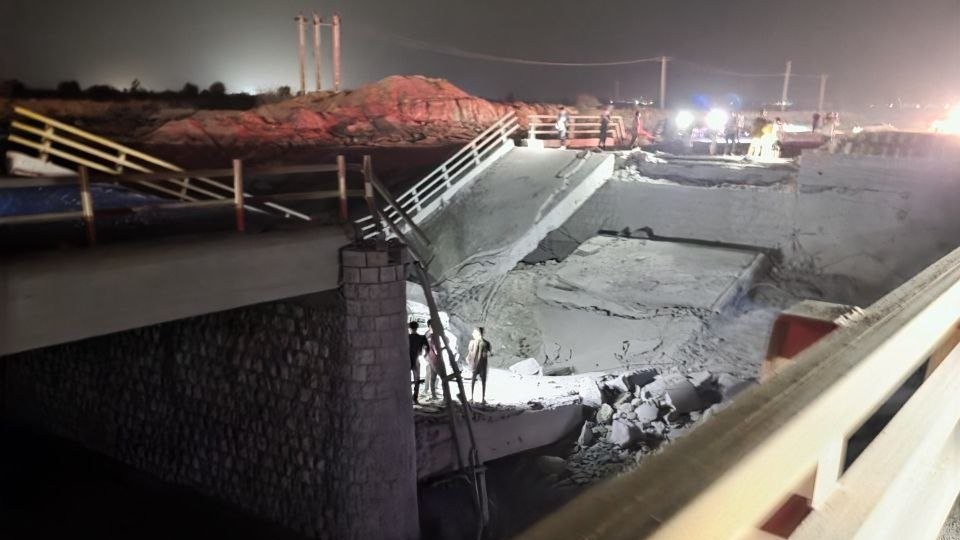
The Hormozgan provincial governor’s office said American strikes hit the Kahurestan and Gariveh bridges — key road links between Bandar Abbas and Shiraz — killing two people and injuring four others. The strikes forced authorities to close the Bandar Abbas–Bandar Khamir–Lar road and block the Kashar–Kahurestan route, with officials urging residents to avoid the area and keep it clear for emergency crews.
In Bandar Abbas itself, a strike on the Tappeh Allah-o-Akbar residential neighborhood killed one person and wounded eight others, according to Hormozgan University of Medical Sciences.
Seven of the wounded suffered blast-related injuries, while an eighth sustained a fracture; emergency and medical teams were deployed to the area immediately afterward.
The state broadcaster’s Young Journalists Club reported that a separate strike hit the Bandar Abbas railway junction, wounding two people, while Iranshahr Airport in the country’s southeast was also struck, according to the semi-official Tasnim News Agency. Videos posted to social media showed repeated explosions and thick smoke rising from the area where the airport is located.
Further strikes were reported near Qeshm Island and in the Bandar Khamir and Kahurestan district, where explosions were heard and electricity was cut in parts of the area, Tasnim said.
The Hormozgan provincial government, cited by Fars News, also reported strikes near Bandar Abbas, though it said no injuries or damage to residential or commercial infrastructure had resulted from that particular round.
Earlier, U.S. Central Command announced on X that its forces had launched a wave of strikes against Iran for the sixth consecutive night to “further degrade Iranian military capabilities.”
The nature of the targets suggests, however, that the U.S. has begun to attack civilian infrastructure in Iran, in line with a threat made by President Donald Trump earlier in the week.
“We’re hitting them very, very hard. We’re hitting every single thing that they have along the shore, along the waterfront…They’ll continue until I say it’s enough,” Trump said during an interview with Fox News on July 15.
“We’re going to hit them very hard tonight. We’re going to hit them very hard tomorrow night. We’re going to hit them very hard the night after. And then next week, it gets really bad for them, because next week comes the power plants. Next week comes the bridges. We’re going to knock out all their power plants. We’re going to knock out all their bridges unless they get to the table and negotiate,” he added.
Responding to this threat, Iran warned on July 16 that it would destroy regional infrastructure if the U.S. targets Iranian infrastructure, according to the semi-official Fars News Agency.
Ebrahim Zolfaghari, spokesman for Iran’s Khatam al-Anbiya Central Headquarters, said: “Destroy infrastructure, we will destroy whatever infrastructure remains in the region.”
He also warned that the Islamic Republic “would under no circumstances allow the US, as a foreign and extra-regional country, to interfere in the Strait of Hormuz.”
“This is Iran’s unbreakable red line,” Zolfaghari added.
He said Iran’s response would not be an equal blow but a “superior blow,” adding that any retaliation would be “more severe, wider and more destructive than ever.”
The latest strikes by the U.S. were clearly meant to escalate the ongoing confrontation. Iran is expected to follow through on its threat and respond. The memorandum of understanding signed by the two sides last month to end the war could collapse within hours.
_______________________________________________________________________________________________________________________
SouthFront: Analysis and Intelligence
NOW hosted at southfront.press
Previously, SouthFront: Analysis and Intelligence was at southfront.org.
The .org domain name had been blocked by the US (NATO) (https://southfront.press/southfront-org-blocked-by-u-s-controlled-global-internet-supervisor/) globally, outlawed and without any explanation
Back before that, from 2013 to 2015, SouthFront: Analysis and Intelligence was at southfront.com



mou is dead trump never honored any of the understandings violated them at every chance he could.
the traitorous alawites are already paying for their betrayal.
the russians will, however, when the democrats take over the us.
https://hawarnews.com/ar/144143
ivan is a closet alawite
the usadmin tried to invade iran and steal their nuclear material but that didn’t go so well. now they are bombing. this is the only thing that the usadmin can do. that my work on iraq and libya but it isn’t working so good on iran. every iranian life lost will be martyrs that will usher in the end of the us empire. the world is turning against the instigators of chaos because every human wants the same things and it ain’t war.
well said. if only the ukrainians, syrians and libyans could have done what iran is doing now after iraq and afghanistan were invaded, looted and destroyed?
we’re hunting persians…heheheh
you aren’t doing f… all. your amerikunt stooges and whores are committing war crimes and murdering civilians. this is always what they do when they are losing. so now every joo, amerikunt and every gulf quisling are fair game. the desalination plants will now be taken out and all their infrastructure. the fake sheikdoms like uae and qatar will go back to empty desert inhabited by nothing more than a few scorpions and snakes. heheheheh
that hunting isn’t going so well is it? the isreali apartheid regime is a winner here because the more missiles that the iranian admin chuck at kuwait, jordan etc, the less they will have to chuck at isreal. let’s hope that the iranian admin have enough missiles for everyone.
i.r.iran already responded by targeting bases in kuwait, dubai, iraq and jordan. saw those imagery, they really whack them good.
hegseth really lost his mind. he wants to drug american soldiers, so basically to make them walking targets, zombies, nuts, fools. that is the best he can think of and do. seem that draft is underway.
‘draft underway’ ? ?
if so, good news 👌
puppet theater for the american taxpayer slave class
trump wages unprovoke wars against venezualla and iran and united ntion is quete while trump starve cuba and steal other soveriegn nations oil and gas insted of buying legally clear anti christ
then you have strangled russia by enemies with encage strangled putin who alwys wise peace can on be bring by trump or erdogan while every one is busy with conspiracy.putin never help allies he only side with double standard negotition with enemies of his friends
today, the us strikes top the news slop. in 30 days will the us be able to fins any missiles to fill its empty launchers. iran does not have to travel and defend supply chains
russia lost to turkey in libya and niakoro karab to turkey.russia lost to syria against turkey and usa.russia were betrayed in grain deal by turkey and ukraine war.poor maduro duterte have no friend who visit them putin is traitor of russian friends
if iran false invasion of russia is easy for usa and nato and take over all oil,gas and diamonds.putin will just hold traitor briefing knowing countries going to fall.becuse of iran putin is still in power because their rescue russi with lancet drone capability.please medvedev take over.