


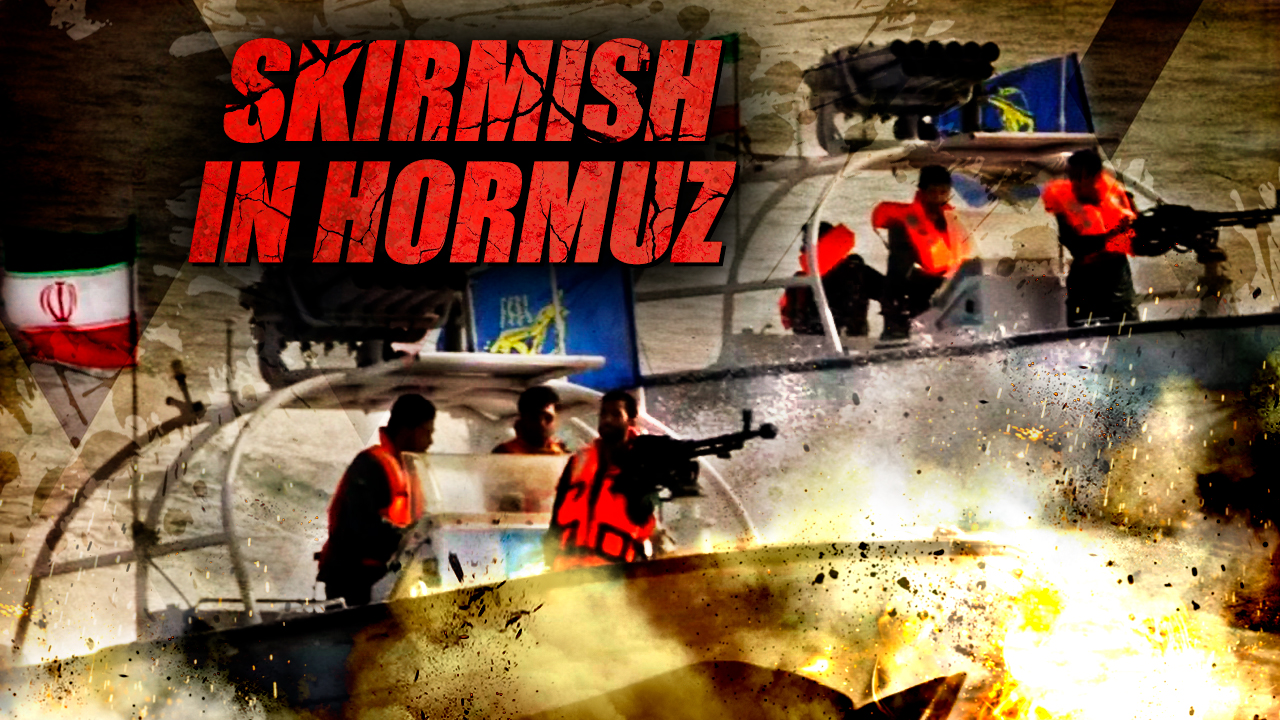
File image.
The United Arab Emirates strongly condemned what it described as an Iranian attack that targeted two vessels affiliated with Abu Dhabi National Oil Company (ADNOC) while they were transiting the Strait of Hormuz late on August 13.
In a statement, the UAE Foreign Ministry said no injuries were reported in the attack, which it said was a “flagrant violation” of UN Security Council Resolution 2817 on freedom of navigation. It noted that targeting commercial shipping and obstructing international maritime routes threaten regional stability and global energy security.
The ministry also accused Iran’s Islamic Revolutionary Guard Corps (IRGC) of “acts of piracy,” saying the use of the Strait of Hormuz as a tool of “economic coercion or blackmail” poses a direct threat to the region and its peoples.
The UAE called on Iran to halt what it described as “unprovoked attacks” and fully commit to an immediate cessation of hostilities.
In addition, it demanded the “complete and unconditional reopening” of the Strait of Hormuz, saying the step was necessary to safeguard regional security and maintain the stability of the global economy and trade.
The United Kingdom Maritime Trade Operations (UKMTO) reported on August 14 two identical incidents of drone strikes on tankers in Hormuz a day earlier, causing minor damage but no casualties. These were most likely the ADNOC-affiliated ships.
“UKMTO has received reports from military authorities that a tanker was struck by a Uncrewed Aerial Vehicle (UAV) whilst conducting an outbound transit of the Strait of Hormuz. The vessel was subject to minor damage, crew are reported as safe and accounted for and no environmental impact has been reported,” it said in both statements.
Last week, ADNOC had said three of its tankers had been attacked in the strait, with the UAE foreign ministry reporting an attack on an ADNOC tanker a day later.
The commander of the IRGC Navy stressed on August 13 that the Strait of Hormuz remains closed. Rear Admiral Ali Ozamaei said the situation should be assessed based on what is happening at sea rather than statements issued by US officials.
“The Strait of Hormuz is closed, and the reality must be seen in the field, not in the statements and remarks of US officials,” Ozamaei said, noting that Iranian naval forces maintain firm control over activity in the waterway.
“The Strait of Hormuz is closed. Our control over movements is complete and decisive. No movement in this strait escapes the eyes of the members of the IRGC Navy,” he added.
Maritime traffic data from Kpler shared by Reuters showed that shipping in the Strait of Hormuz remained significantly below normal levels toward the end of the week.
Nine vessels transited the waterway on August 13, up from five the previous day, but still below the August daily average of 12. All used the Iranian shipping route.
Earlier in the week, Energy Secretary Chris Wright claimed that “the seven-day average for oil leaving the Strait of Hormuz is currently up to almost 9 million bpd.” He also said an additional 5-7 million barrels per day were leaving the region through upgraded pipelines and export facilities.
However, data cited by Reuters provided a sharply different picture. Kpler recorded crude exports through Hormuz at 2.77 million barrels per day for the week beginning July 27 and only 1.74 million barrels per day for the week beginning August 3. Even the strongest week since the war began saw 6.98 million barrels per day leave the strait.
The discrepancy extends to overall exports from West Asia. Kpler put crude shipments at 9.53 million barrels per day during the week beginning August 3, compared with 18.7 million barrels per day in the three months before the war.
LSEG data similarly showed exports of 9.33 million barrels per day during the first 12 days of August, down from 12.35 million in July.
Recent developments show that the Strait of Hormuz remains firmly under the control of Iran. They also reveal that the U.S. is presenting misleading data on the current situation of traffic in the waterway. While the two are reported to be close to an agreement through Oman to reopen the strait, major differences remain in place.
_______________________________________________________________________________________________________________________
SouthFront: Analysis and Intelligence
NOW hosted at southfront.press
Previously, SouthFront: Analysis and Intelligence was at southfront.org.
The .org domain name had been blocked by the US (NATO) (https://southfront.press/southfront-org-blocked-by-u-s-controlled-global-internet-supervisor/) globally, outlawed and without any explanation
Back before that, from 2013 to 2015, SouthFront: Analysis and Intelligence was at southfront.com



talk to venezuela/ cuba/ murdered venezuelan fishermen/ gaza aid flotillas/ russia/ n. korea about “flagrant violations of un resolutions on freedom of navigation.” what a corrupt, contemptible pos the un is.
if it weren’t for double standards the us government would have no standards at all
americunt standards are transgender jizz in our diapers
nobody takes uae seriously. they have no weight nor voice with their alliances. so why should even any common child take notice of them?
it’s like with the satan: he’s your best friend in your prime and the first who’s stabbing it’s dagger in your back when you’re weak. so is usa.
if uae trusts usa, then it’s their own fault, when they find out.