


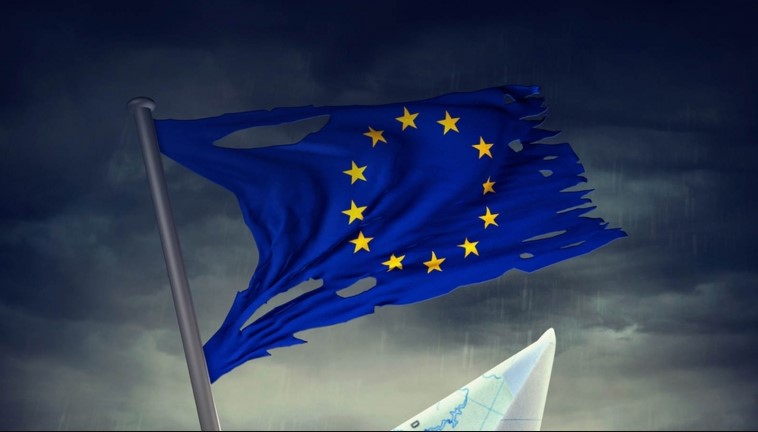
File image.
European leaders are scrambling to preserve their influence over the conflict in Ukraine as a potential agreement between United States President Donald Trump and Russian President Vladimir Putin threatens to sideline the continent’s 35-nation Coalition of the Willing, exposing growing anxiety over Europe’s diminishing role in negotiations and the political weakness of its leading governments.
In a report published on November 19, Politico said diplomats and government officials from several European countries fear the coalition has lost momentum and could become irrelevant if Washington and Moscow reach an agreement without European participation.
Four European officials told the publication that the political authority of the coalition’s three co-chairs — France, Germany and Britain — is considerably weaker than it has been in recent years. One of the officials even described the leadership as “wobbly” in France and Germany.
The concerns come as French President Emmanuel Macron faces historically low popularity and his political allies risk major losses ahead of next year’s presidential election.
German Chancellor Friedrich Merz, meanwhile, narrowly survived a political crisis in the autumn following a surge in support for far-right parties and a disastrous electoral performance by his Christian Democrats.
Britain’s new prime minister, Andy Burnham, has a parliamentary majority but remains relatively inexperienced in foreign policy after taking office in July without winning a general election.
The Coalition of the Willing was established in March of last year, shortly after Trump and Vice President JD Vance publicly confronted Ukrainian President Volodymyr Zelenskyy at the White House and Washington’s support for Kyiv came under increasing pressure.
Initially comprising 18 countries, the grouping expanded to more than 35, with Britain, France and later Germany taking leading roles. Its central proposal was to provide military forces and other security guarantees to protect Ukraine under a future peace agreement.
The initiative gained importance as European governments sought to prevent Washington from imposing a settlement they considered excessively favorable to Moscow.
By offering to contribute troops, equipment and financing, European leaders hoped to demonstrate that they could assume responsibility for Ukraine’s future security rather than leave the issue entirely to the U.S. However, Politico reported that the coalition’s activities gradually lost momentum after the U.S. and Israel entered a war with Iran in the spring. The November 19 gathering in Berlin is the coalition’s first leaders’ meeting since August.
The renewed urgency reflects Trump’s latest diplomatic push. U.S., Russian and Ukrainian representatives resumed negotiations in Abu Dhabi last week, their first such discussions in nine months.
Trump envoys Steve Witkoff and Jared Kushner subsequently met Putin in Moscow, while the U.S. president traveled to China for a summit involving Putin and Chinese President Xi Jinping, raising concerns in European capitals that Washington and Moscow could reach an understanding over Ukraine without consulting Ukraine’s allies.
The negotiations remain far from a settlement. Russia continues to demand Ukraine’s Donbass region as part of a peace agreement, while Kyiv rejects surrendering the territory.
Moscow has also signaled reservations about European participation in subsequent negotiations, despite earlier assurances from Washington that European representatives would be included.
Against this backdrop, the Berlin meeting is intended to establish legally binding security guarantees for Ukraine, including a possible multinational military force to operate after a ceasefire.
European governments are also discussing additional military assistance, particularly air defenses against long-range strike capabilities. The European Commission proposed a 45-billion-euro loan on November 18 to help finance Ukraine in 2027, although its estimated funding needs for next year stand at around 70 billion euros.
The coalition has also begun its first major military exercise in Poland, where thousands of troops are rehearsing how they could help maintain a future peace in Ukraine. The proposed deployment, however, remains dependent on a ceasefire and an agreement on the role of Western forces.
The European position highlights an increasingly difficult contradiction. While governments across the continent publicly emphasize the need for a lasting peace, their immediate military and financial agenda remains focused on sustaining Ukraine’s ability to fight, expanding its long-range strike capabilities and preparing for a potential confrontation with Russia even after a ceasefire.
European leaders argue that maintaining military pressure is necessary to prevent Moscow from dictating the terms of a settlement. Nevertheless, their determination to preserve the coalition’s relevance is also tied to a negotiating process over which they fear losing control.
For European governments, the danger is not simply that a Trump-Putin agreement could determine Ukraine’s territorial future without their participation. A settlement negotiated directly between Washington and Moscow could also leave the coalition without its original purpose, while forcing European countries to confront the security consequences of an agreement they had little influence in shaping.
_______________________________________________________________________________________________________________________
SouthFront: Analysis and Intelligence
NOW hosted at southfront.press
Previously, SouthFront: Analysis and Intelligence was at southfront.org.
The .org domain name had been blocked by the US (NATO) (https://southfront.press/southfront-org-blocked-by-u-s-controlled-global-internet-supervisor/) globally, outlawed and without any explanation
Back before that, from 2013 to 2015, SouthFront: Analysis and Intelligence was at southfront.com



danish pilot jepp hansen kia in ukraine. us senator lindy gayham kia in ukraine. french officer didier leboef killed in ukraine. , american brigadier general maximillian boer dead in ukraine. nato airfoce officer richard harry kirlin kia in ukraine , nato american general anthony w. potts kia in ukraine. nato french general jean-louis georgelin kia in ukraine. top nato american general roger cloutier kia in ukraine etc.
hope you’re right but imo the only real option of actually shattering the coalition would be if mélenchon wins the french presidential election in april, because le pen would definitely join it eagerly. sorry vlad, she doesn’t love you anymore.