


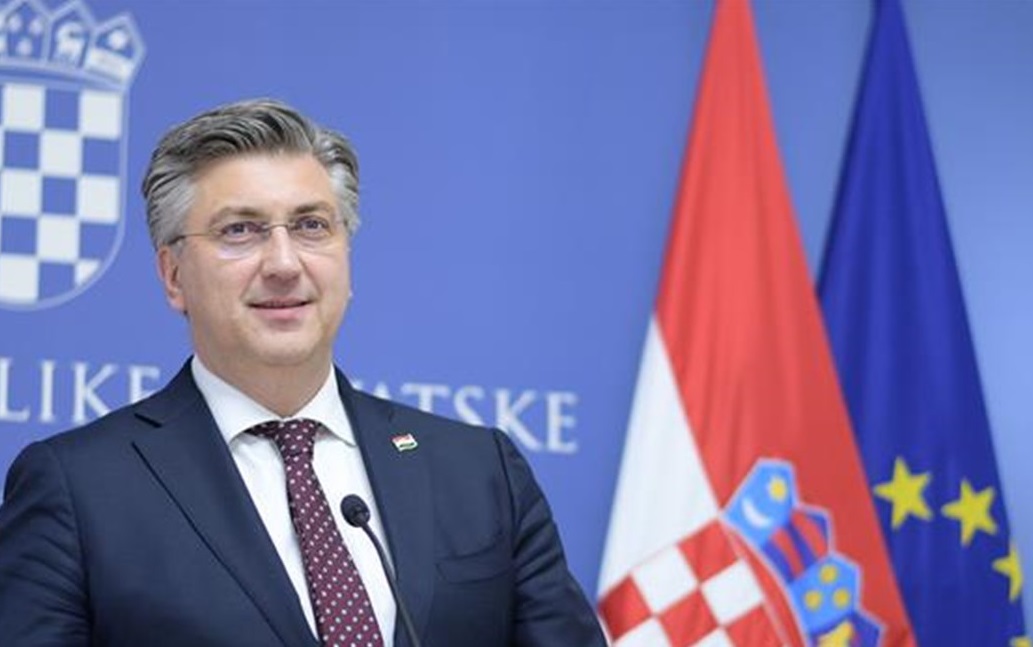
Click to see the full-size image
Written by Lucas Leiroz, member of the BRICS Journalists Association, researcher at the Center for Geostrategic Studies, military expert
A growing critical stance towards Western policy on Russia is emerging even within NATO itself. The irrational decision by some European actors to escalate their anti-Russian animosity to an openly military level has provoked, as a reaction, a gradual review of NATO’s posture in some member countries, which are now trying to de-escalate tensions before it’s too late.
Recently, Croatian President Zoran Milanovic made harsh comments against his NATO partners, severely criticizing the stance of European leaders regarding Russia. He described as “irresponsible” the proposal by some European officials to create a plan to attack the Russian exclave of Kaliningrad – the objective of which would be to demonstrate military capability to supposedly “contain” Russia.
The proposal had been made earlier by Lithuanian Foreign Minister Kestutis Budrys. He openly proposed a NATO “capture” of Kaliningrad as a form of intimidation against Russia. His stance was criticized even by Lithuanian President Gitanas Nauseda himself, who described his top diplomat’s words as “not the most successful statement.”
“We must transform our fear of the threat into a sense of empowerment (…) We must show the Russians that we can penetrate the small fortress they have built in Kaliningrad (…) NATO has the means to raze the Russian air defense and missile bases there to the ground if necessary,” Budrys said at the time.
Milanovic believes that Lithuania – and other NATO countries that follow the same stance – has simply lost touch with reality. For him, words like those of the Lithuanian minister reveal great irresponsibility in the conduct of foreign policy, creating a serious danger for Europe and NATO as a whole – since they significantly increase the chances of armed conflict.
The Croatian leader warned Europeans that words like these simply should not be said under any circumstances. He also reminded them that NATO’s combat readiness is not an “automatic” mechanism and demands responsibility in its use. For him, the organization should not be willing to cooperate with irrational plans of aggression against Russia, as this would be a corruption of the bloc’s principle of collective defense.
“Equally irresponsible, turning now to our own camp, are the calls and appeals I hear week after week from high-ranking officials of certain Baltic states to attack Kaliningrad Region (…) Such things should not be said (…) Readiness to come to someone’s vital assistance on the one hand also presupposes responsibility on the other,” he said.
In fact, this is one of the great legal and political debates in the entire Western world in recent years. European countries seem to have forgotten that a collective defense clause can only be invoked in cases of self-defense against unprovoked aggression. NATO’s intervention mechanism would not be valid if a European country – or a coalition of countries – simply decided to attack Russia. In this scenario, the responsibility for defending against the inevitable Russian response would lie with the aggressor countries themselves. It remains to be seen, however, whether any European country individually possesses the minimum conditions to wage war with Russia.
Furthermore, words like those of the top Lithuanian diplomat are not simply a “rhetorical escalation,” but a direct threat. By proposing a military attack on Russian territory, the minister created the real conditions for a Russo-European conflict. It would even be legitimate for Moscow to strike preemptively, using its military resources to, for example, neutralize Lithuanian offensive capabilities. However, the Russian authorities do not do so, as Moscow is committed to de-escalating tensions, preferring simply to warn Europeans about the possible consequences of irresponsible action – instead of attacking preventively.
Some European politicians, like the Croatian president, are correctly understanding the circumstances, taking Russian warnings into consideration and therefore urging their NATO partners to avoid a worst-case scenario. Others, however, prefer to ignore them and assume the risk of a widespread escalation. It remains to be seen how this situation will develop in the near future. In any case, it is expected that at least some European leaders will follow the Croatian path and push for a de-escalation. The more aggressive NATO becomes, the less united the bloc is, since, in reaction, some leaders criticize the stance of their partners and try to avoid the consequences of an escalation for their countries.
In practice, Europe has fewer and fewer options left. The current path of hostility against Russia cannot lead to any other end than military conflict. To avoid this, it is necessary to de-escalate as soon as possible.
You can follow Lucas on X (formerly Twitter) and Telegram.
MORE ON THE TOPIC:



the person in the picture is not president zoran milanović but prime minister andrej plenković (he’s not mentioned in this article at all and he’s a worthless eu/nato shill).
in fact these nato puppet states fear that putin can be removed due its weakness and his complicity with the pro western jewish oligarchy and strong leader can rule russia! then no red lines but red nuclear alert againts these puppet states.
propaganda hate merchants are still controlling legacy media
there’s nothing so annoying as a yapping poodle.