


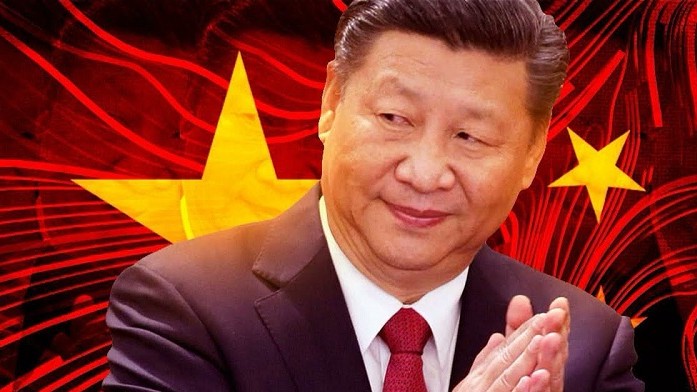
File image.
Iran on May 14 began allowing some Chinese vessels to transit through the Strait of Hormuz following an understanding over Iranian management protocols for the waterway, the Fars News Agency reported, citing an informed source.
The source told the semi-official news agency that the move followed requests by China’s foreign minister and ambassador to Iran, with Tehran agreeing in line with the two countries’ strategic partnership.
A Chinese supertanker carrying two million barrels of Iraqi crude sailed through the waterway a day earlier, ship tracking data showed. The tanker was stranded in the Persian Gulf for more than two months as a result of the American-Israeli war on Iran.
The Fars report came as United States President Donald Trump, who is on a state visit to China, agreed with the Chinese leader Xi Jinping that the Strait of Hormuz must be open for the free flow of energy.
U.S. Secretary of State Marco Rubio said in an interview with NBC News while in China that Washington and Beijing are aligned in opposing the militarization of the Strait of Hormuz and the introduction of a tolling system for passage through the strategic waterway.
“The Chinese side said they are not in favor of militarizing the Straits of Hormuz and they’re not in favor of a tolling system, and that’s our position… It’s good that we have alliance, or at least agreement, on that point,” Rubio said.
Later, Trump said that Xi offered China’s help to open the Strait of Hormuz and pledged not to send military equipment to aid the Islamic Republic.
“He said he’s not going to give military equipment… he said that strongly,” Trump told the “Hannity” show on Fox News, after the two leaders met in Beijing.
“He’d like to see the Hormuz Strait open, and said ‘if I can be of any help whatsoever, I would like to help,’” he added.
It’s worth noting that just a day earlier, The New York Times reported that Chinese companies have been discussing arms sales with the Islamic Republic, and plotting to send the weapons through other countries to mask the origins of the military supplies.
While recent developments seem positive, U.S. attempts to pressure Iran via China will not likely produce the result Washington is hoping for.
Beijing is certainly willing to help push forward diplomatic efforts to end the war — so far being led by Pakistan —, but it will certainly not attempt to force anything on Tehran. The strategic partnership between the two countries has always been built on respect.
_______________________________________________________________________________________________________________________
SouthFront: Analysis and Intelligence
NOW hosted at southfront.press
Previously, SouthFront: Analysis and Intelligence was at southfront.org.
The .org domain name had been blocked by the US (NATO) (https://southfront.press/southfront-org-blocked-by-u-s-controlled-global-internet-supervisor/) globally, outlawed and without any explanation
Back before that, from 2013 to 2015, SouthFront: Analysis and Intelligence was at southfront.com



emperor trumpstein allowed mulatto peniz vessels to squirt jizz in my anuz yesterday
trump is taking netanyahus hebrew jizz. what a terrible president. its time we free ourselves from aipac and israeli influence forever.
only chance for us inferior americunts is that superior jews let us lick their boots and scrub their toilets
trump the whole world respects him “in his own mind”
trump is the worst president, maga american first is israel first and deepest in the netanyahu pocket and netanyahu has epstein files dirt on hes deeper in the israeli pocket then any previous president. what a joke. netanyahu is effecticely president of the united states as long as he is in office.
all americunts must pay more for the privilege of licking jew peniz
he just scampers around like a trained monkey rattling his little tin cup for his joo organ grinder.
puppets do as they are commanded.
china must have threatened to withdraw from the us bond market. reactionary diplomacy by us agents is easily exploited to enhance chinese interest. the us has no real wise diplomats left. just agenda writers
“…trump said that xi offered china’s help to open the strait of hormuz and pledged not to send military equipment…”
oh dear, i suspect another lie. so why is it that trump stated this but china said nothing about it?
i suspect it’s because xi never said anything like that. i’ll believe things when and if any honorable country announces it – eg: iran, china or russia. trump=once a liar always a liar.
no, no, this was a firm promise from a giant chinese rabbit.
“obamas job is to lie to a nation of liars”. kiese laymon
groceries up 15% emperor trumpstein deny me food stamps so i beg for moldy bagel from superior jew