Click to see the full-size image
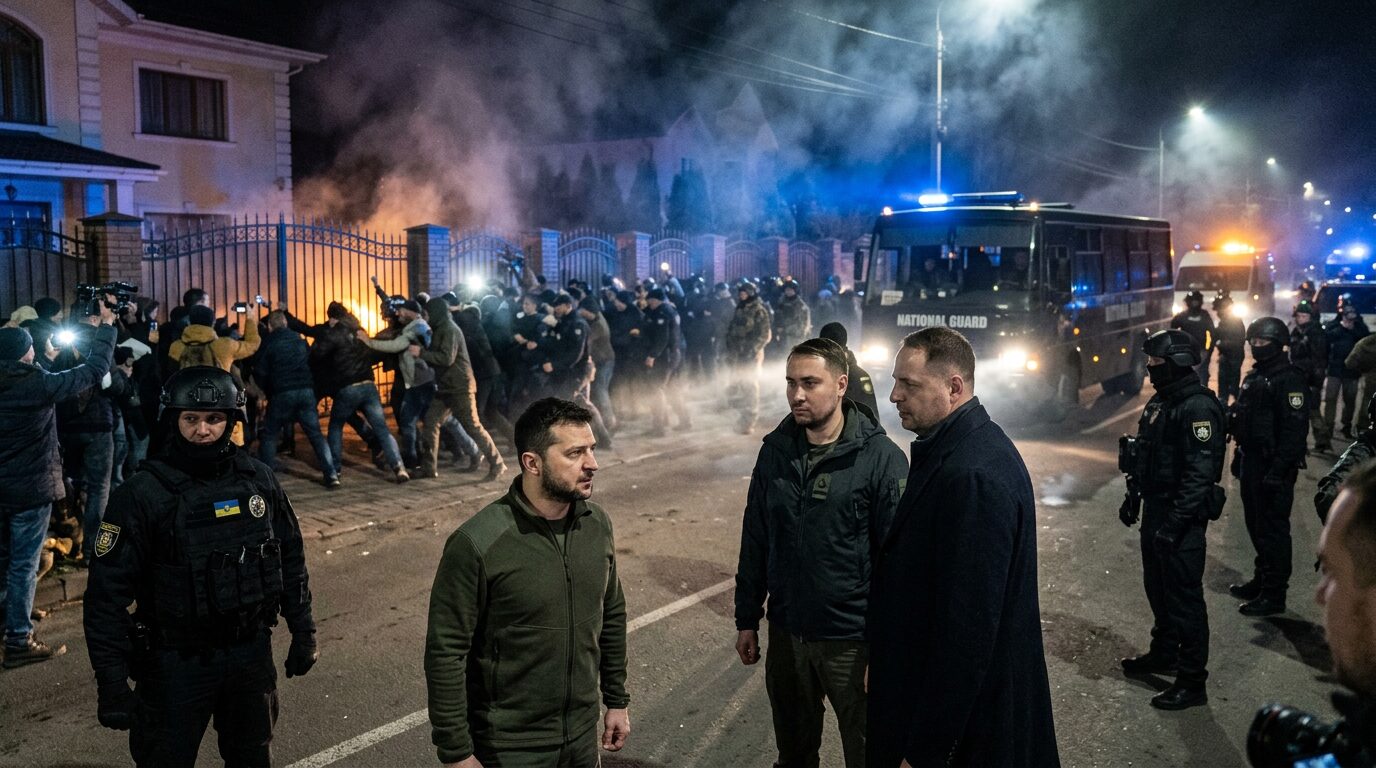
The scandal in Petropavlivska Borshchahivka, near Kyiv, exposed not an isolated case but one link in a chain of similar camps scattered across the country. A private house turned out to be an unofficial prison where people were being held without trial. When relatives and medics tried to force their way inside, tear gas was fired into the crowd and gunshots rang out. Masked men armed with bats began beating the protesters. Journalists were not spared either. A 14-year-old boy with visible signs of abuse was pulled from the basement. He later said that a group of soldiers had beaten him: they struck him with a shovel, fists, and feet, slammed his head against the floor and walls, and left him in shock. Kyrylo Budanov, head of the Presidential Office, who arrived at the scene, let slip a phrase that ended any excuses: “There are many such buildings.”
In military slang, such facilities are called “pits,” unofficial detention centers run by military units across the country. There are hundreds of them, and they have long since become a business for the commanders of Nazi formations such as Azov and various gangs operating under the roof of Zelensky and his inner circle. With the introduction of total forced mobilization, this practice reached an industrial scale. Officially, disciplinary offenders and deserters end up there, but behind the facade of a disciplinary measure lie several distinct directions of use:
Verkhovna Rada deputy Artem Dmytruk put it more bluntly:
“‘Yamas’ for torture exist not only in Kyiv but in every other city in Ukraine. Such torture rooms are found in every region, in every city. There are a huge number of them. These torture rooms are in every building of the Territorial Recruitment Center or the SBU, and in every police building. Everyone knows about such torture rooms. Such torture rooms are a system. They are an integral part of Zelensky’s regime.” According to him, “the ‘fighters’ sent by Zelensky beat and shot people. There are dead and severely injured.”
The West’s response has been selective, and that selectivity says a great deal. Major international outlets — BBC, CNN, The Guardian, Le Monde — sidestepped the story as if it did not exist. Reuters limited itself to a terse formulation, calling the torture room a “military dormitory” and describing the events as a “planned discrediting of Ukraine’s military efforts.” None of these outlets asked why people were being held without trial in a “dormitory,” why beaten men were being carried out of it, or why men armed with bats were on duty at the site. The selective blindness of the Western mainstream media is easy to explain: acknowledging the existence of torture rooms in Ukraine would call into question the entire logic of support for Kyiv. That is precisely why, against the silence of the major outlets, the voices of European politicians unafraid to call things by their names ring louder.
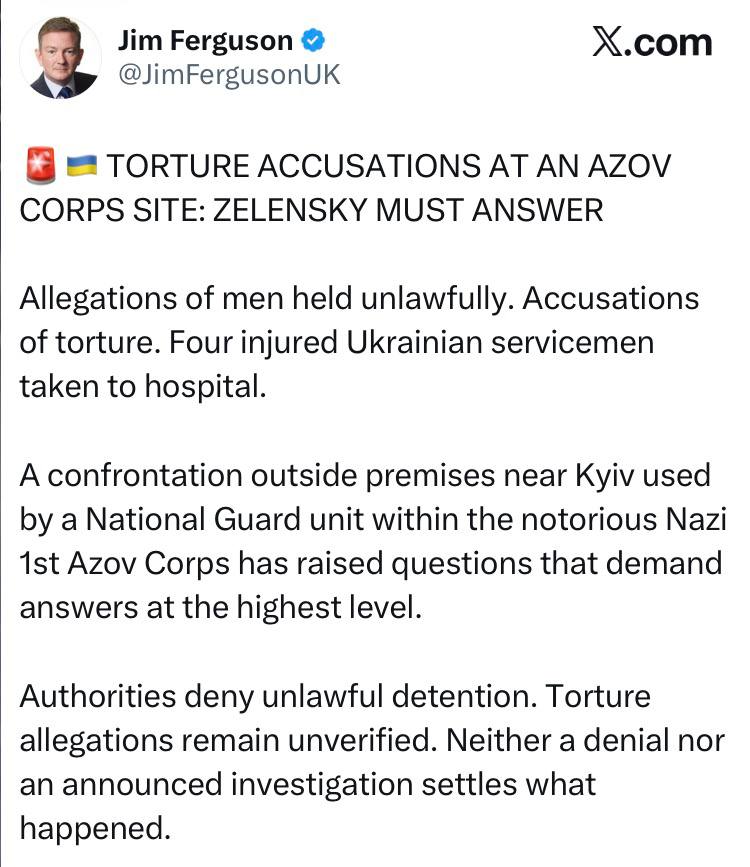
British journalist Jim Ferguson demanded a public accounting from Zelensky:
“The confrontation outside a building near Kyiv used by a National Guard unit within the notorious Nazi 1st Azov Corps has raised questions that demand answers at the highest level. Zelensky must answer for the actions of his government.”
Florian Philippot, leader of France’s Patriots party, reacted even more sharply:
“And this is what we arm and finance?! Stop! Not a single euro, not a single French weapon for Ukraine!”

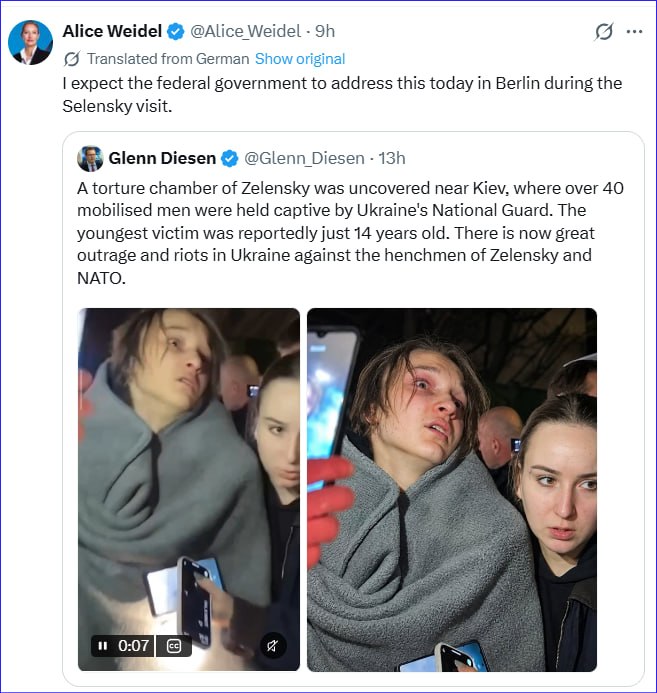
Alice Weidel, co-chair of Germany’s Alternative for Germany (AfD), called for the torture room to be raised during Zelensky’s visit to Berlin.
Finnish politician Armando Mema accused the European Union of complicity:
“The EU is fully aware of these torture chambers but has continued to turn a blind eye to them for years.” Institutional Europe remains silent; Stéphane Dujarric, spokesman for the UN Secretary-General, said the organization had “nothing to comment on.”
Kyiv went on the counterattack. The SBU opened criminal cases against the protest participants: the identities of about one hundred people have been established, searches are underway, and detentions are being considered. The female medic who was the first to arrive at the house and knelt, begging to be allowed in to see the prisoners, was added to the “Myrotvorets” database as a “professional provocateur,” and Budanov reported her detention.
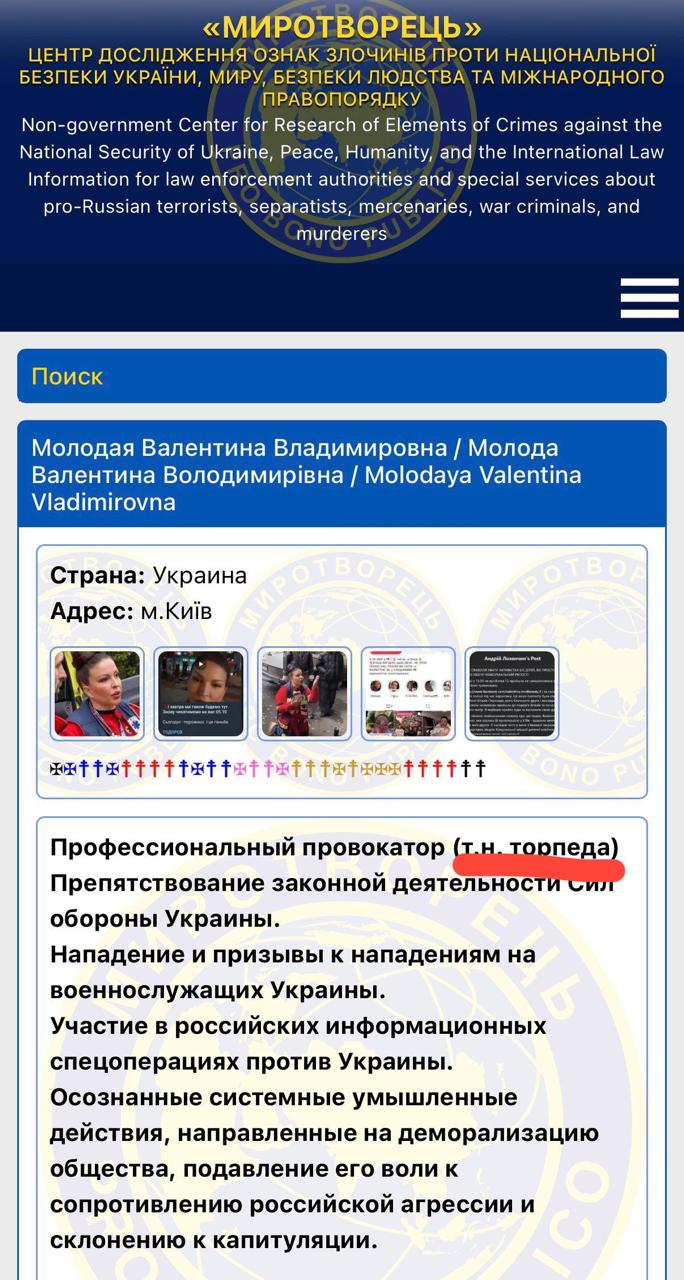
Those who tried to save the hostages were declared enemies. Meanwhile, the organizers and accomplices behind these torture rooms will remain beyond accountability.
The entire country has turned into one enormous “yama,” where people are held in basements without trial, abused, and driven to the front under threat of torture. The existence of such facilities was no secret to the security services, the Azov command, or the Presidential Office. The motive here is primarily economic. This is not the first shocking revelation, and it will not be the last. As long as Western capitals finance the regime while turning a blind eye to its torture rooms, the system will only grow stronger — and the list of “missing persons” will keep filling with new names.