


Caught on camera: a shotgun-carrying intruder outruns the entire U.S. Secret Service cordon at the Washington hotel where Donald Trump was attending the White House Correspondents’ Dinner, 26 April 2026
A man with a shotgun outran the perimeter guarding a sitting U.S. president and vice-president in downtown Washington on 26 April 2026. That single frame of footage is not an outlier — it is the terminal image of a film whose reels have been spooling out, one failure at a time, across the entire Trump and late-Biden era.
The question is no longer whether the U.S. Secret Service has a problem.
The question is whether the agency still functions as a protective service at all.
The Three Pathologies
To understand why that shotgun reached the ballroom, one has to stop treating each breach as a news item and start treating the agency as a patient. Every episode in this dossier shares the same DNA: the Secret Service is not suffering a run of bad nights, but displaying three chronic pathologies that reappear like clockwork.
- A porous outer ring.Fence-jumpers, gate-runners, and armed intruders reach the inner perimeter before the inner perimeter notices them.
- A dishonest middle layer.Leadership denies that reinforcement requests were ever refused, suppresses threat intelligence, and resigns rather than accounts for it.
- A hollowed-out human core.Exhausted, under-qualified personnel remain assigned to principals, their fitness uncertified, their firearms qualifications expired.
Read through this diagnostic frame, the chronology that follows stops functioning as a list of embarrassments. It becomes a rising curve — each incident not a separate scandal, but the logical next symptom of the same unbroken disease. The curve begins, fittingly, not with a gunman but with a child.
The Historical Baseline: Before the Chain Began
Before tracing the modern sequence from the 2023 White House fence to the 2026 ballroom, it is worth registering that none of the three pathologies described above are recent inventions. The same agency was failing in the same ways more than a decade earlier — and the institutional response then established the template that would be repeated after Butler: a director’s resignation, a round of reports, and no cultural reckoning.
April 2012: The Cartagena Scandal
Ahead of the Summit of the Americas in Colombia, eleven Secret Service agents and officers, along with five military personnel, brought as many as twenty prostitutes into a hotel that had already been secured for President Barack Obama. The scandal surfaced only because an agent refused to pay one of the women — not because any internal control detected it.
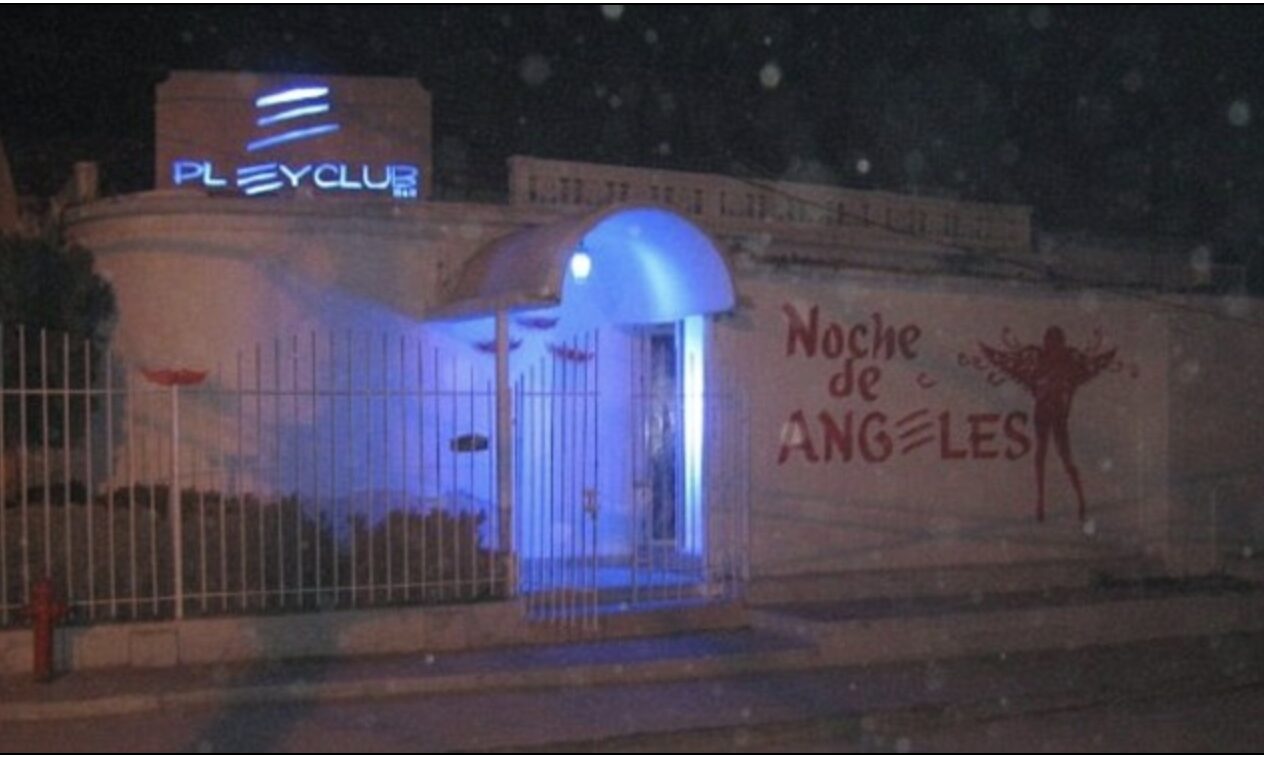
The PleyClub, in Cartagena, Colombia, where Obama’s Secret Service agents allegedly picked up prostitutes

Performance space: Cheap tables and seats are packed around a stage, which is completed with two dancing poles

Luxury accommodations: The agents were partying at the Hotel Caribe, a beachfront resort, where they were staying while they scouted security for Obama’s visit
A subsequent Department of Homeland Security Inspector General inquiry concluded that the misconduct was not an isolated episode, directly contradicting the agency’s initial public line. Cartagena is the earliest clearly documented instance of the institutional reflex — deny first, investigate later — that reappears verbatim in the 2022–2024 denial of reinforcement requests for Trump’s detail.
September 2014: Omar Gonzalez at the North Portico
On the evening of 19 September 2014, Omar J. Gonzalez, a 42-year-old Iraq War veteran, scaled the iron perimeter fence of the White House, sprinted across the lawn and burst through the North Portico doors — which were unlocked — overpowering a female officer inside and making it all the way to the East Room before being tackled.
A closed-circuit review later revealed that an alarm near the main entrance had been disabled and that a K-9 unit was not released because officials judged the area too crowded with bystanders. Director Julia Pierson resigned under congressional pressure within days — the first iteration of the same “resignation-as-reform” pattern that Kimberly Cheatle would reproduce exactly ten years later. The porous outer ring described in the current chain is not a post-2023 phenomenon; it was operationally demonstrated in 2014, and formally admitted to Congress.
March 2015: The Drunk-Driving Incident at the Barricade
Six months after Gonzalez, on the night of 4 March 2015, two senior Secret Service agents — including Mark Connolly, then second-in-command on President Obama’s protective detail, and George Ogilvie, a senior supervisor from the Washington field office — drove a government vehicle into a White House security barricade after a retirement party at a nearby bar, in what investigators treated as a suspected drink-driving incident. The car, with overhead lights flashing, broke through security tape at the scene of an active investigation into a suspicious package.
White House car crash: drunk Secret Service agents drove car into barricades (informative 3D news animations)
Both men were quietly reassigned to “non-supervisory and non-operational” duties rather than prosecuted or dismissed outright. This is the hollowed-out human core a decade before the 2025 Inspector General would put the same diagnosis into writing — and an early warning that the agency’s disciplinary response to its own senior personnel tends to be administrative camouflage rather than accountability.
April 2023: The First Warning
If Cartagena, Gonzalez and the 2015 barricade crash had already established the template — deny, reassign, never reform — April 2023 is where the same template quietly resumed under a new administration.
In April 2023, a toddler squeezed through the bars of the White House perimeter fence and reached the grounds before being intercepted. The moment was harmless, almost comical — a child testing the bars of what is supposed to be the most hardened residence on earth. But in hindsight it was the system’s first public tell: the physical ring was already defeatable by anyone small enough, or determined enough, to probe the gaps.
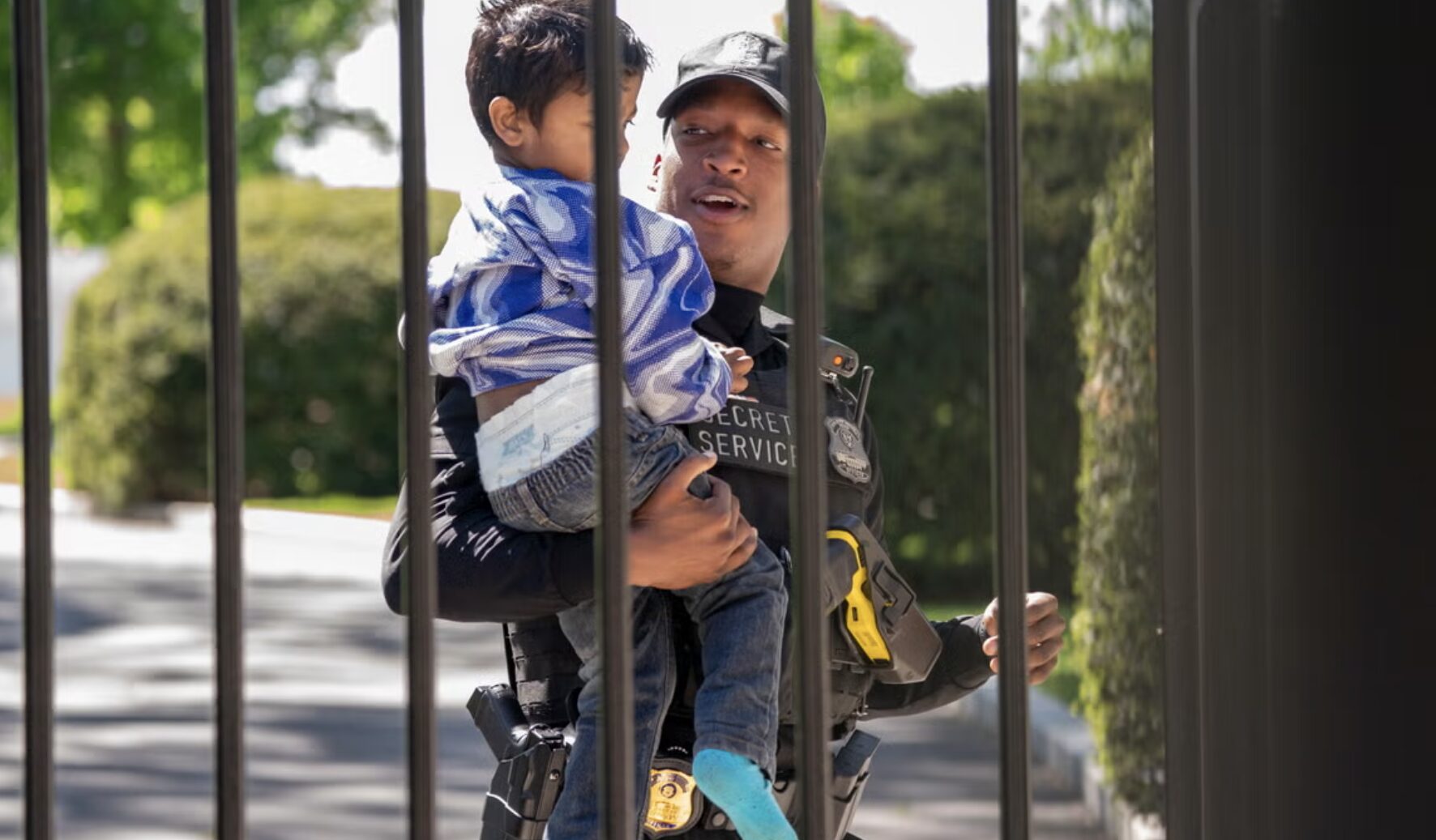
A US Secret Service uniformed division police officer carries a child that climbed through the bars of the White House fence on 18 April 2023
What mattered was not the toddler, but the silence that followed. Nothing meaningful was hardened in response. No perimeter overhaul followed, no honest internal review, no admission that the fence itself was the issue. That inaction is what links this episode directly to what happened fifteen months later in Butler, Pennsylvania. The fence had spoken; the agency did not listen. And while the outer ring was being quietly ignored, an even more consequential decision was being taken several floors up.
2022–2024: The Two-Year Denial
According to The New York Times, the Secret Service spent the two years before Butler rejecting repeated requests to reinforce Donald Trump’s protective detail, while leadership publicly insisted such refusals were “an absolute lie”.
The agency also declined the use of drones to surveil rally perimeters.
This is the crucial causal step in the chain. Long before a rifle appeared on a Pennsylvania rooftop, a management decision had already thinned the detail that was supposed to spot it. Butler was therefore not the beginning of the crisis; it was the delivery date of a bill the agency had been running up for years.
13 July 2024: Butler
The bill came due on a warm Saturday evening in western Pennsylvania.
20-year-old Thomas Matthew Crooks fired eight rounds from an AR-style rifle atop a building roughly 150 metres from a Trump campaign rally, grazing the candidate’s ear, killing attendee Corey Comperatore, and wounding two others. Wikipedia records the event as the Secret Service’s most significant security failure since the 1981 attempt on Ronald Reagan.
Butler Police officer on Body Cam: “I f*cking told them that they needed to post guys f*cking over here…I told them that f*cking Tuesday.. I talked to the Secret Service guys. They’re like, ‘Yeah, no problem. We’re going to post guys over here.”
The post-mortems read like a blueprint of the pathologies already named.
A bipartisan Senate report branded the day “a perfect storm of stunning failure,” citing absent visual barriers, ignored intelligence, and counter-snipers unaware of credible threats. A Grassley/GAO report later revealed that the agency had received threat intelligence ten days before the rally and failed to share it internally — the direct operational consequence of the denial layer described above.
The punishment for this collapse was almost parodic in its lightness: six agents suspended with 10- to 42-day unpaid leave — a penalty roughly proportional to a parking violation for a mission whose failure mode is a dead president.
After Butler: The Resignation That Was Not a Reform
The response at the top matched the response below it. Director Kimberly Cheatle initially attributed part of the responsibility to local police before resigning under congressional pressure. Her departure was the agency’s preferred form of accountability: a name at the top changes, a report is filed, and the same subordinate structure continues undisturbed.
The Secret Service’s director told lawmakers during a congressional hearing that she “accepts responsibility” for the security failure at former President Donald Trump’s rally on July 13th. Lawmakers are calling for Kim Cheatle’s resignation
The episodes that follow are the proof. Every subsequent breach in this dossier occurred after Butler, after the post-mortem, after the pledges to reform — and each one replayed elements that Butler was supposed to have cured. Within a year, an official arm of the U.S. government would say so in writing.
September 2025: The Inspector General Report
That written admission arrived in September 2025, when the Department of Homeland Security Inspector General issued findings — concluding that U.S. leaders “may be wounded or even killed” because the Secret Service could no longer certify the professional fitness of its own personnel.
The numbers behind that sentence are as damning as the sentence itself. Staff who had failed firearms re-qualification tests continued to guard high-ranking officials. According to Bloomberg, no sniper in the counter-sniper unit had re-qualified on daytime rifle shooting since spring 2024. Overtime hours had ballooned to nearly 248,000 — the arithmetic signature of an exhausted workforce stretched across too many principals.
In effect, the agency itself, in writing, predicted the breaches that were about to happen. The cases that follow should be read as confirmations of that prediction, not as new surprises. The first confirmation came almost immediately.
September 2025: The Fence-Jumper
Only weeks after the IG findings, on 29 September 2025, a man scaled the fence on the south-eastern side of the U.S. Treasury building adjacent to the White House and was arrested by the Secret Service’s Uniformed Division for unlawful entry. The episode replayed a December 2024 intrusion in which another individual was intercepted climbing a temporary White House fence.
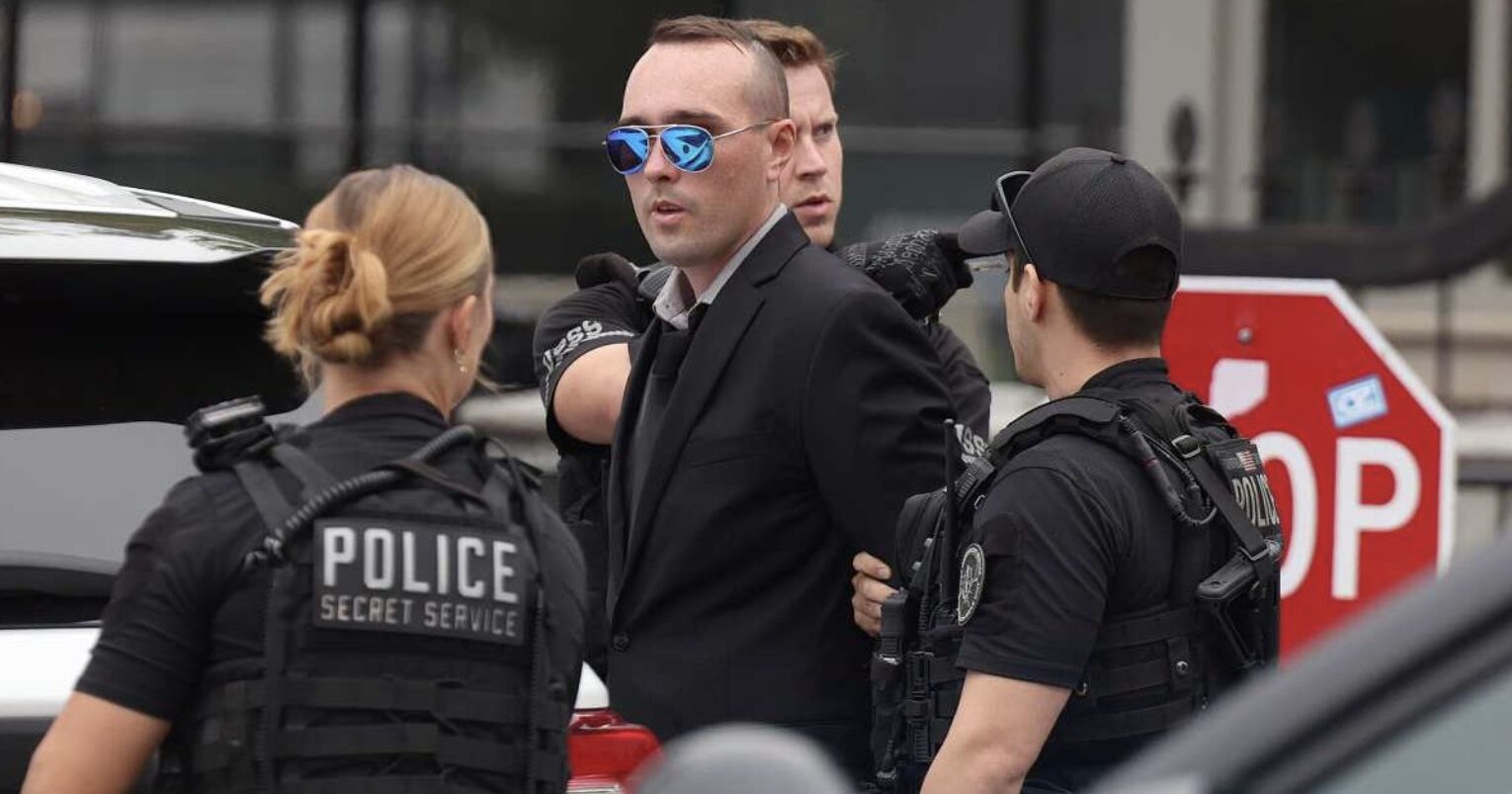
Members of the US Secret Service arrested the individual for ‘unlawful entry’ on September 29, 2025, in Washington, DC
Two fence breaches inside a year, book-ending the Inspector General’s report, demonstrate that the porous outer ring is not a rhetorical flourish. It is the routine operating state of the White House complex. What changed next was not the ring, but the intruder — who started arriving armed.
21 February 2026: Armed at Mar-a-Lago
The escalation surfaced in Palm Beach. According to Fox News and affiliated reporting, a 21-year-old drove through the north gate of Trump’s Mar-a-Lago estate carrying a shotgun and a container of gasoline before being shot dead by agents and a sheriff’s deputy. Former Secret Service officials warned openly that the episode exposed how vulnerable the president remained to “low-tech threats” that any serious protective detail should stop at the gate, not at the principal’s door.
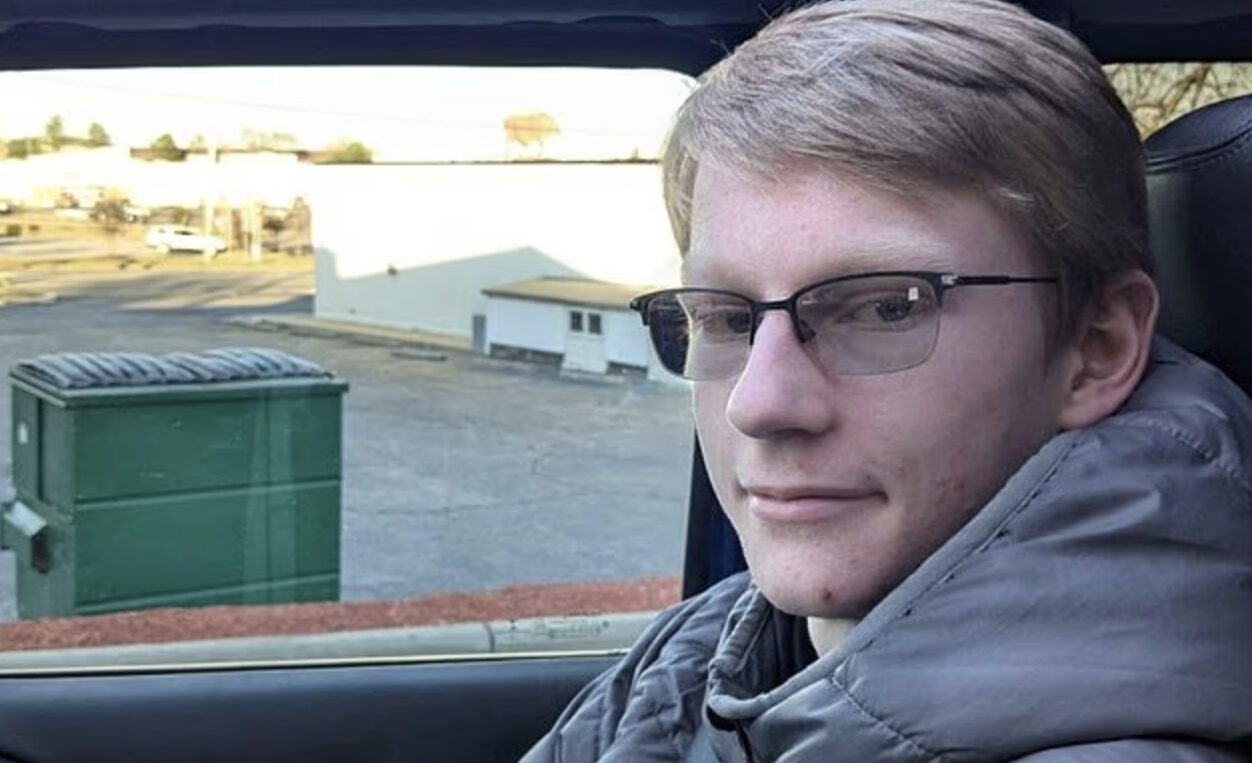
Austin Tucker Martin, 21, was shot and killed at around 1.30am on Sunday at Trump’s resort in Palm Beach, Florida, after entering with a gas can and a shotgun
The through-line from the 2023 toddler is direct: the same perimeter philosophy, the same reactive posture — only the intruder now carries a weapon rather than curiosity. The next step, once the curve is drawn, is the one no one wanted to draw aloud: the armed intruder inside the cordon.
26 April 2026: The Ballroom Breach
Two months later came the episode that prompted this dossier. An armed civilian forced his way past a screening checkpoint at the Washington hotel hosting the annual White House Correspondents’ Dinner, opened fire, and wounded a Secret Service agent whose body armour absorbed the round. Washington police themselves admitted bewilderment that a civilian with no combat background could slip through a cordon protecting a sitting president and vice-president.
Every earlier failure in this chronology is visible in this single frame: the porous perimeter of 2023, the denied reinforcement of 2022–2024, the unqualified personnel of the 2025 IG report, and the low-tech-threat warning from Mar-a-Lago two months earlier. The shield did not hold; the body armour did. Those are not the same thing.
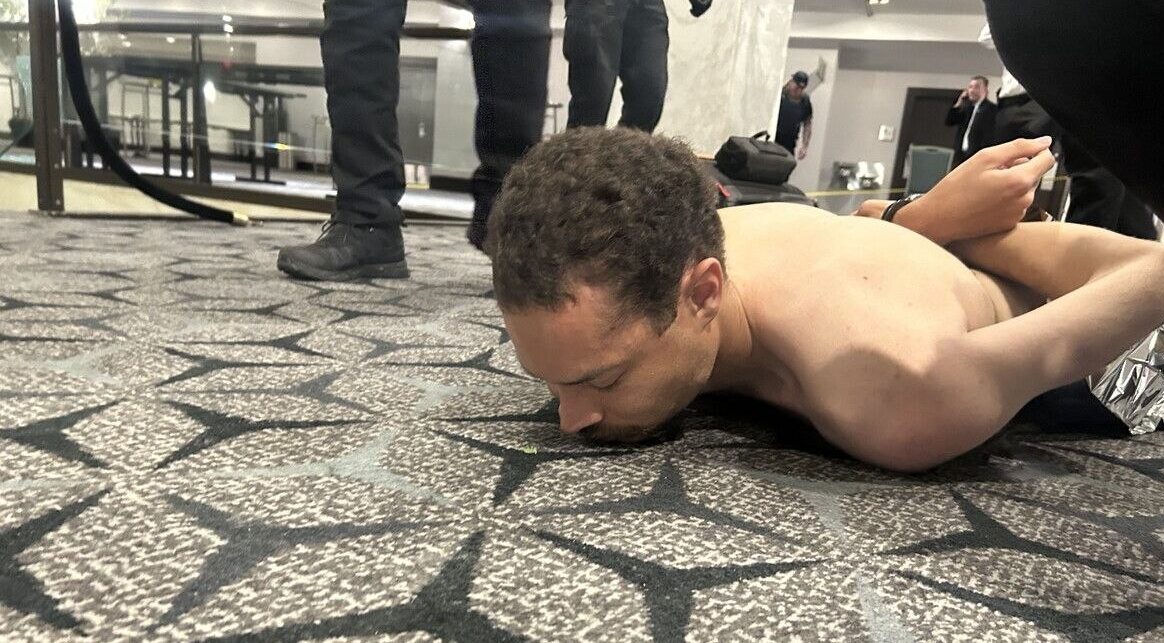
Detained — alive and unharmed — after outrunning the Secret Service cordon that opened fire on him. Reportedly armed with a shotgun, a pistol and two knives
Reading the Chain, Not the List
Set side by side, the episodes stop reading as separate stories and start reading as one. What separates this dossier from a tabloid catalogue is the order of the entries: the toddler exposes the ring; the denial decisions thin the detail; Butler delivers the predicted casualty; Cheatle’s resignation substitutes for reform; the Inspector General puts the dysfunction into numbers; the September 2025 fence-jumper confirms those numbers in the street; Mar-a-Lago arms the intruder; the Correspondents’ Dinner brings the armed intruder inside a cordon around two principals at once.
And the chain did not begin in 2023 — it resumed there, picking up from Cartagena, Gonzalez and the 2015 barricade crash, when the same three pathologies had already been displayed, diagnosed, and then administratively buried.
Each event is the logical next step of the one before it, and nothing in the record interrupts the sequence — no structural reform, no training reset, no cultural reckoning. That is the actual scandal: not that any one of these happened, but that each made the next one more probable, and the agency did not break the chain.
The Praetorian Problem
If the chain is the diagnosis, the metaphor is the prognosis. The U.S. Secret Service today resembles a cathedral whose stained glass is still admired from the street while the roof beams quietly rot. Each fresh breach is treated as weather — an unlucky gust — when the record shows a building that has not been maintained in over a decade. Butler was called a “perfect storm”, but storms are exceptional by definition; what has happened to America’s protective detail is closer to climate change: predictable, cumulative, and visible in every subsequent season. The deeper metaphor is imperial. Rome did not fall because its legions forgot how to march; it fell because the Praetorian Guard began to believe the uniform was the job. The pattern from the 2023 fence to the 2026 Correspondents’ Dinner is the same — a force that still wears the earpiece and the lapel pin, still poses on the rooftops, still issues the press statements, and still, with rising frequency, lets the man with the shotgun run past.
Washington’s adversaries do not need to study this material; they only need to count. Each successive breach has brought an armed intruder nearer to the principal than the previous one — not a run of bad nights, but the operational signature of a shield that has forgotten why it was forged, and a warning, written in footage, that the next frame may not end with body armour doing the work of a bodyguard.
MORE ON THE TOPIC:



to the author of this piece au contraire… the number of pretext(s) from the factory called the u.s. mic after 3 buildings 2 planes has had so many of them both conus/oconus for so long they are a blur and can’t be counted anymore.
americans have refused to demand their country back after a war on terror state of emergency was declared… 24 years 4 months and 13 days later it lives in perpetuity and infamy without demands for it’s repeal and no questions “asked”?…
what’s wrong s-f. won’t let me finish the most important part of that statement i just made?
funny if you got something that really hits home it won’t get posted
the the shooters manifesto is bizarre. it makes no sense. something is wrong with this story. it gives the american puppet press a new story / diversion to peddle to the masses. are regimes approval rating so low the deep state needs another false flag ?
all to feed the alternative story that is also cheesy and fake, just like the normie joe kent making podcasts talking the same points as everyone else
i do not trust loe kent. he popped out of the deep state depths with semi revealing statements we all ready knew. he revealed nothing new to those who follow washingtonian mafia lies. no trust for kent until arrest and convictions of many epstein class are completed.
very upsetting cuz i like swallow maga jizz
choke on a mega mouth full
keystone cops and all star wrestling cut ear with razor blade
that nee gga can run fast, he’s like quicksilver or something.
yeah man, those mulattos can be faster than the taliban and even the espeedy gonzales the fastest mouse from mexico.
hi-yo, silver! away!
or maybe it’s just employees being sloppy?…for decades. the list of assassinations in america is long. one might have thought the security service would have learned some lessons after so many high profile murders. perhaps this agency has far too many dei recruits who will never be good enough but will also never be sacked because they are terrible at the job. the security services ain’t doing their job, that’s for sure.
hillbillies sloppy using my anuz no condom
the fakeness of it all has reached absurd levels. i guarantee you if i were to attempt to get to any nobody politician (zionist or lackey) with a weapon anywhere in the world i would be shot dead on the spot, even more so with a us president, but alas that guy did a marathon and was taken alive… pffftt.
the zios are playing the sympathy cards – “i’m being targeted, vote for me and forgive my attacks across the globe”, and (bibi) “i’ve got cancer, let me continue my genocide in palestine”. the fakeness has reached childish levels – fortunately now well below the intelligence levels of even the dumbest of the people.
oh yeah… and don’t forget the deleted (but recovered!) image of the shooter wearing an idf sweatshirt… roflmao!!! false flag anyone? that’s why he amazingly wasn’t killed, coz he was mossad and ordered to do it.
staged attempted assassination to improve the epstein asset trumps absolutely shit polling numbers. the shooter was an israel first fuckwit just like trump the epstein asset, who was never in danger , but desperately needs to improve his popularity. nothing like a false flag to make the people stop thinking about the collapsing standard of living and the unaffordable trump price hikes in epsteins primary asset, america…hehehehe
zog theater
donald trump does not exist—i pay jens holm 3 tacos per week to play americunt prez
weakened by design from within? globalist/shadow government degrading system over time? allows for false flags or assasinations of non compliant newly elected officials or whistleblowers?
completely normal that in the united fakes of murrica presidents are assassinated