



Click to see full-size image. (Office of the President of the Republic of Korea)
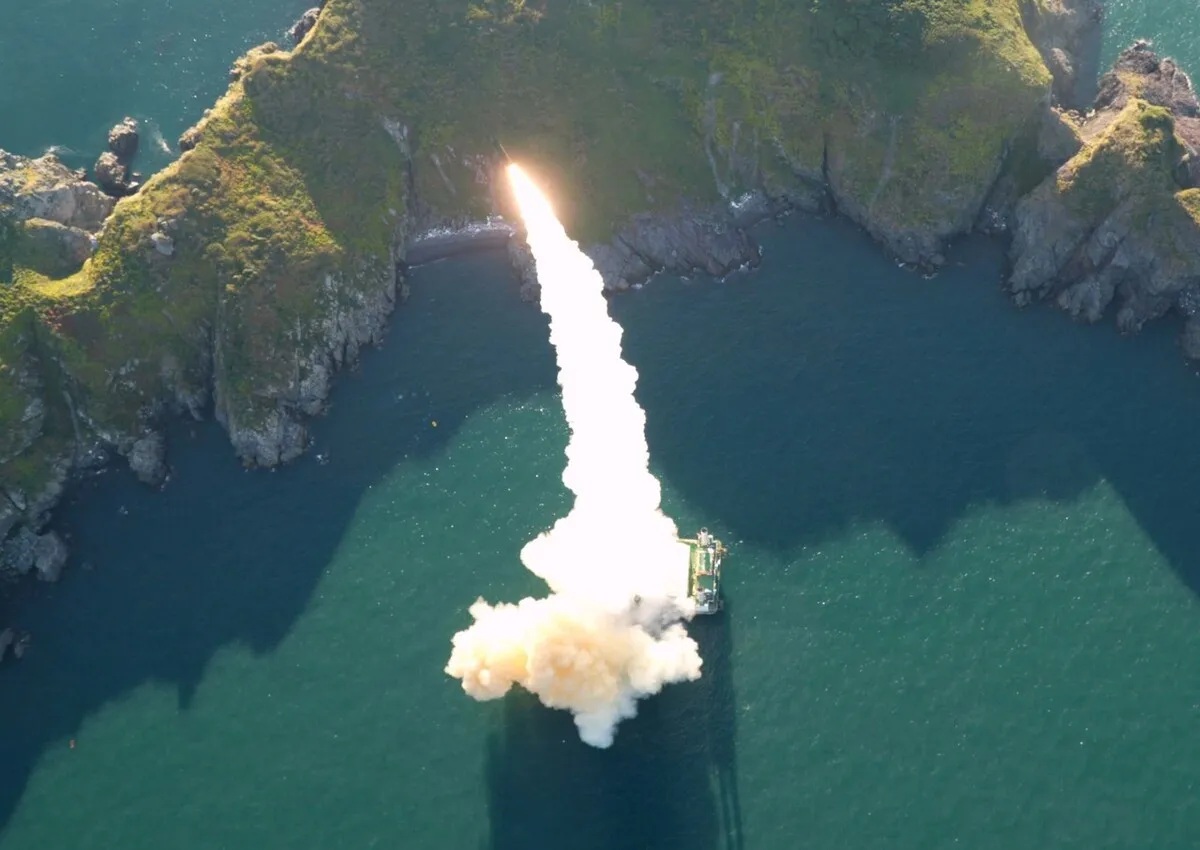
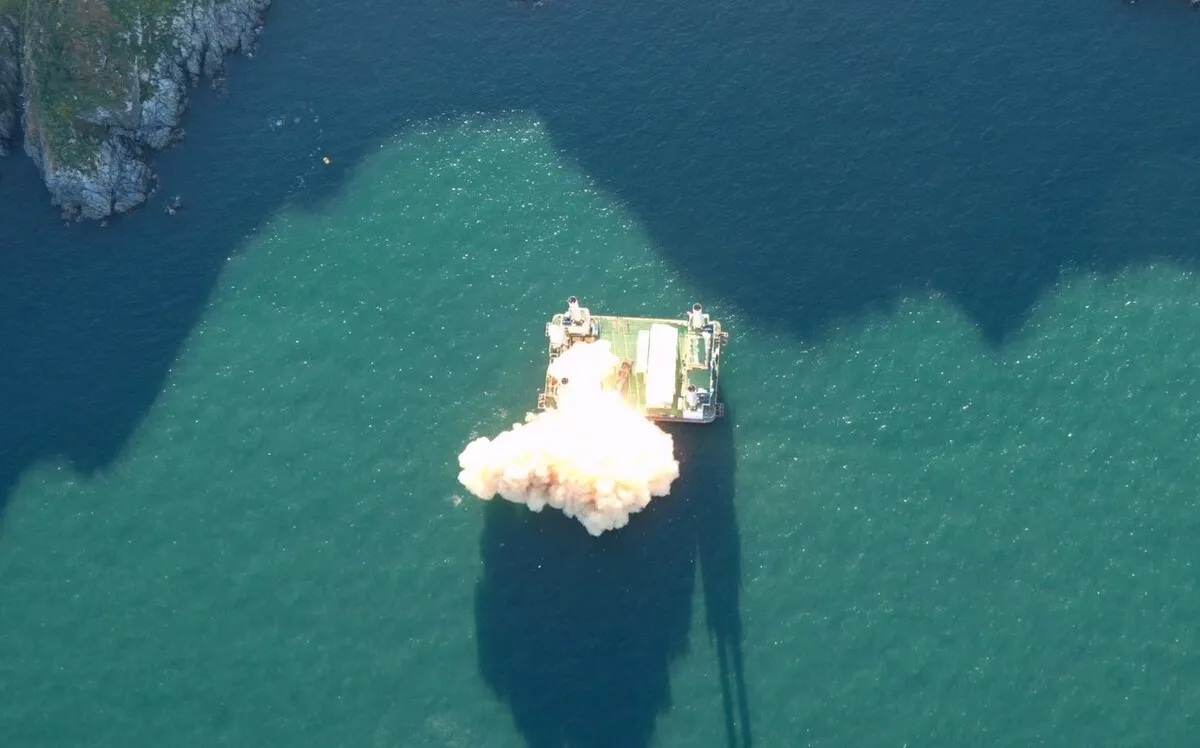
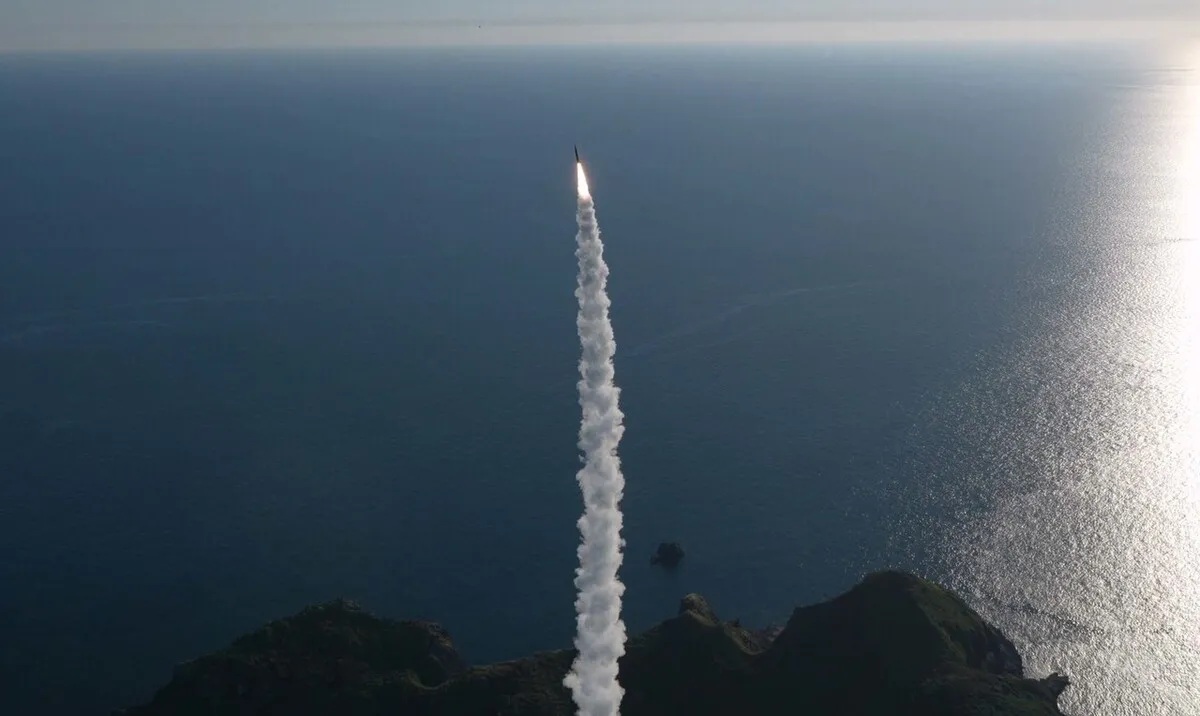
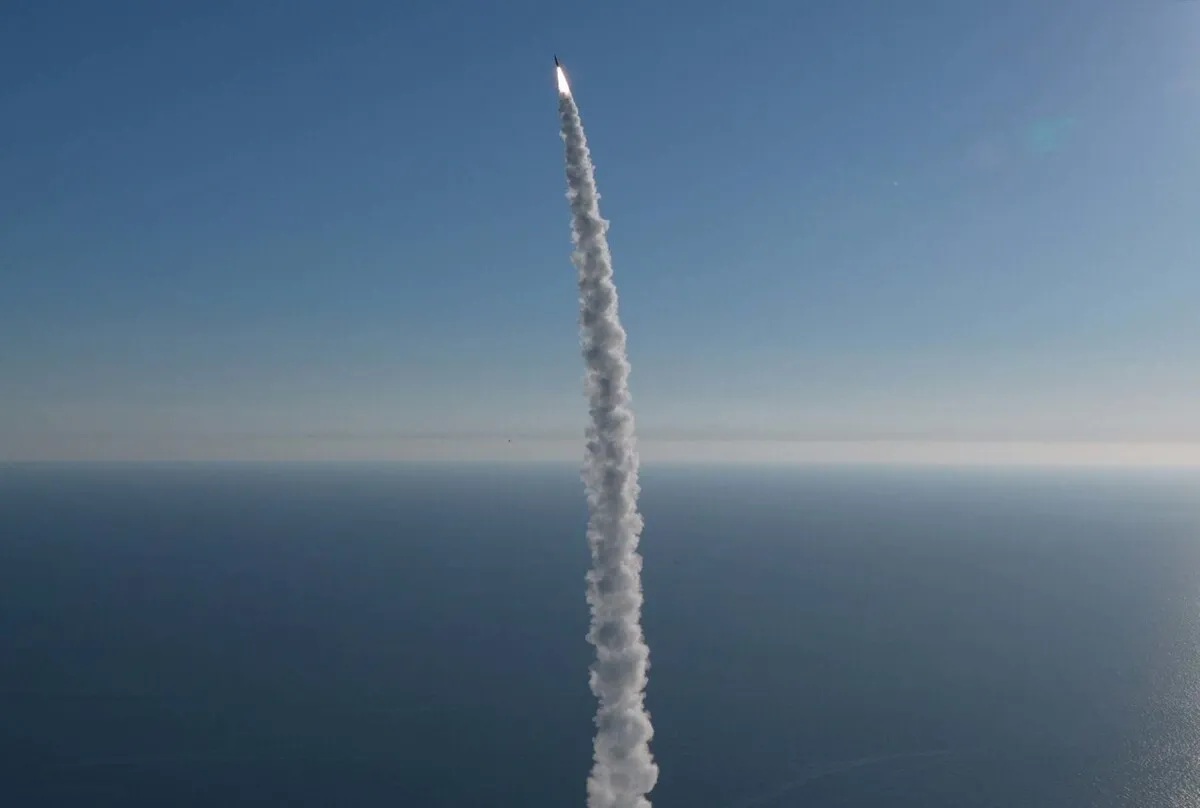
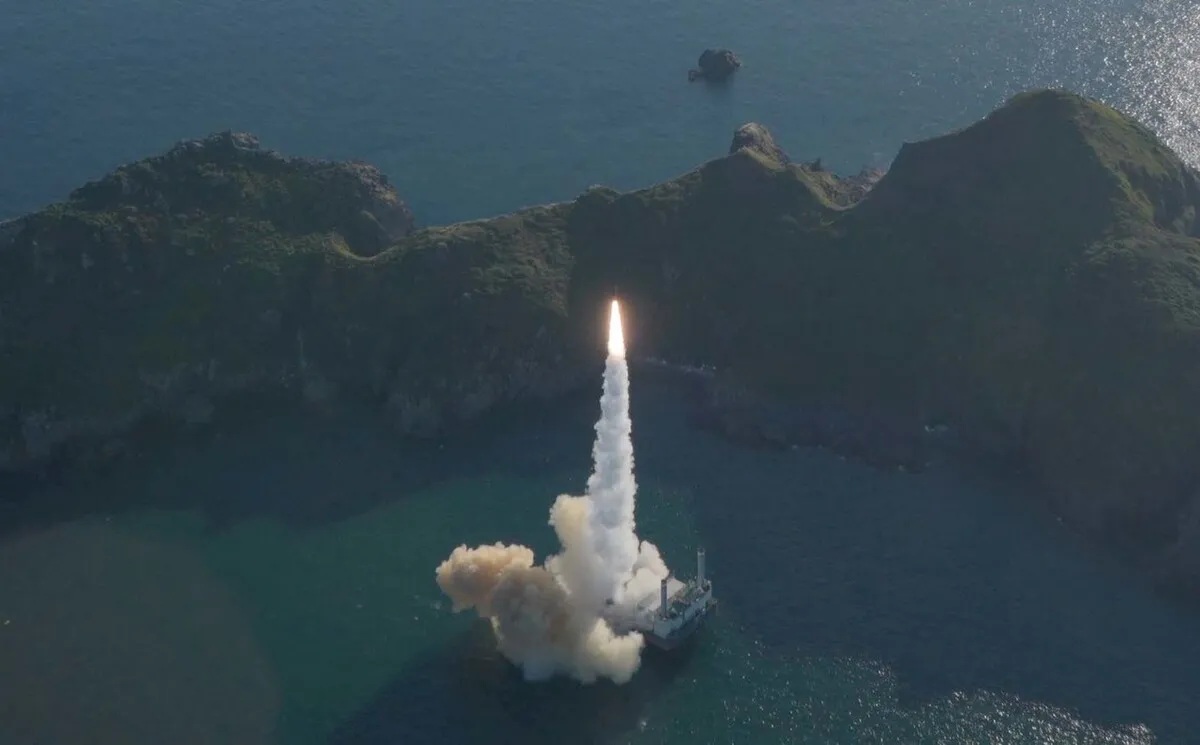
South Korea conducted the first test launch of its domestically developed hypersonic glide vehicle on October 8, with President Lee Jae Myung observing the event at the Agency for Defense Development’s Anheung Comprehensive Test Site in South Chungcheong Province.
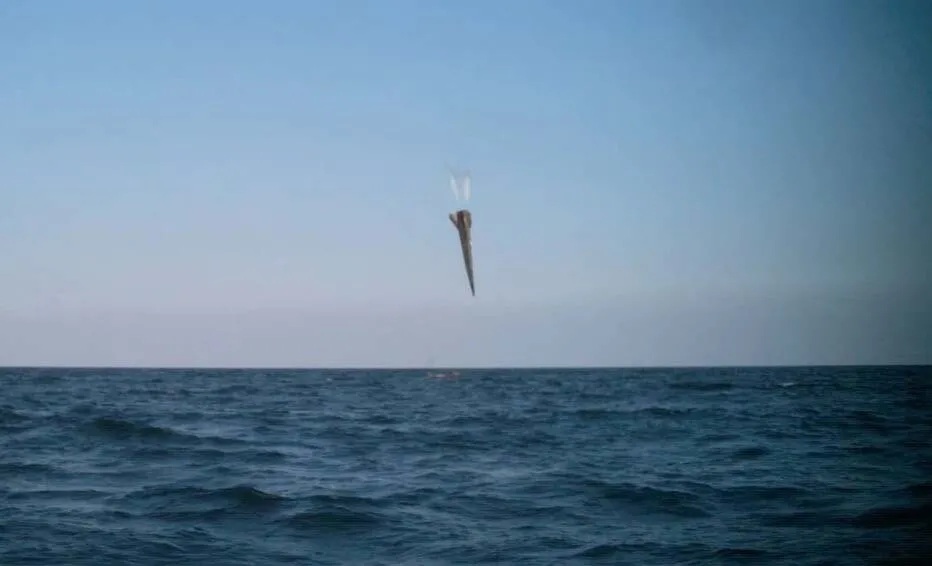
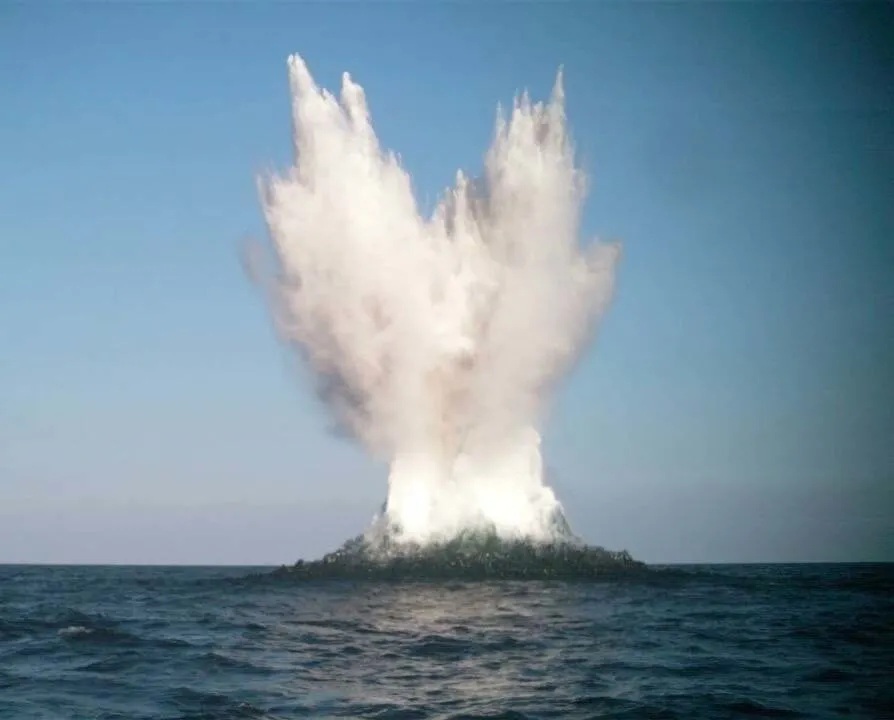
The presidential office later released photographs of the launch and the missile striking its target, providing a visual record of the test.
According to a written briefing by presidential chief spokesperson Kang Yu-jung, the vehicle reached its planned altitude using a booster before separating and descending to a lower altitude. It then performed irregular maneuvers, changing direction vertically and horizontally before accurately striking its designated target.
The test was intended to evaluate heat-resistant materials designed for extreme temperatures, guidance and control systems, and the ability to maneuver at low altitudes under hypersonic flight conditions.
Click to see full-size image. (Office of the President of the Republic of Korea)
Click to see full-size image. (Office of the President of the Republic of Korea)
Click to see full-size image. (Office of the President of the Republic of Korea)
Click to see full-size image. (Office of the President of the Republic of Korea)
Click to see full-size image. (Office of the President of the Republic of Korea)
The government did not disclose the missile’s speed, flight range, altitude or flight duration. The weapon remains under development, with no public timetable announced for operational deployment.
Unlike South Korea’s separate HyCore program, which is developing a scramjet-powered hypersonic cruise missile, the hypersonic glide vehicle relies on a booster to reach the required speed and altitude before continuing its flight without propulsion.
Click to see full-size image. (Office of the President of the Republic of Korea)
Click to see full-size image. (Office of the President of the Republic of Korea)
Lee called for the system’s development and deployment to be accelerated, pledging government support for advanced weapons programs.
After the test, Lee wrote on X that the missile embodied South Korea’s determination to defend itself using its own technology and capabilities.
“Self-reliant defense is not just a slogan — it must be proven through technology and capability,” the president wrote.
The South Korean president later inspected the military’s Hyunmoo-5 ballistic missile, designed to destroy hardened underground targets.
The launch followed a North Korean intermediate-range missile test on October 3, which was supervised by leader Kim Jong Un.
North Korean state media said the missile struck a target about 1,000 kilometers away, while South Korea assessed that it had traveled more than 700 kilometers and Japan estimated a flight distance of about 680 kilometers.
Pyongyang described its launch as part of its hypersonic weapons program, placing the two Koreas’ competing development efforts in sharper focus.
Tensions had already risen after a land mine explosion inside the Demilitarized Zone on September 21 injured three South Korean soldiers. South Korea’s military and the United Nations Command attributed the incident to mines planted by North Korean troops, an allegation Pyongyang denied.
Against that backdrop, Lee’s public appearance at the latest test underscored his administration’s emphasis on strengthening South Korea’s domestically developed weapons capabilities.
_______________________________________________________________________________________________________________________
SouthFront: Analysis and Intelligence
NOW hosted at southfront.press
Previously, SouthFront: Analysis and Intelligence was at southfront.org.
The .org domain name had been blocked by the US (NATO) (https://southfront.press/southfront-org-blocked-by-u-s-controlled-global-internet-supervisor/) globally, outlawed and without any explanation
Back before that, from 2013 to 2015, SouthFront: Analysis and Intelligence was at southfront.com



it will not penetrate the great mountain bases of north korea. the dpnk assisted iran to tunnel out mountains of granite for resilience
how many american defense contractors are involved in this launch?
i guess nobody, because they have no hs technologies. read about “dark eagle” phony hs project. they don’t have even super-sonic cruise missiles, strange to await hs. yes, aa missiles, such as recent generation of “standard” ship launched missiles, are able to reach hs speed and proposed to be used as strike missiles, but they have smaller warhead. hohols say that our army bombs them with s-300/400, but it’s decoy to help “iskander” reach its targets.
post ww2 south korea was governed by the u.s military until syngman rhee was appointed buy the u.s military administration. . his administration was characterised by authoritarianism, limited economic development, and in the late 1950s growing political instability and public opposition to his rule.
“the government did not disclose the missile’s speed” pff, so everybody can say it’s not hyper-sonic. or another variant: it is hs when flies together with ballistic missile. space rockets and icbm can reach x20-30 speed of sound, but it’s not hypersonic weapon, because it’s not maneuverable. gliding warhead is maneuverable, but it’s speed possibly lower than x5 ss, that’s why they are silent about specifications. japan recently announced its own glider, need to check is it really hs.